Nigeria Seeks Stronger Global South Alliance at BRICS Ministers’ Summit
Oru Leonard
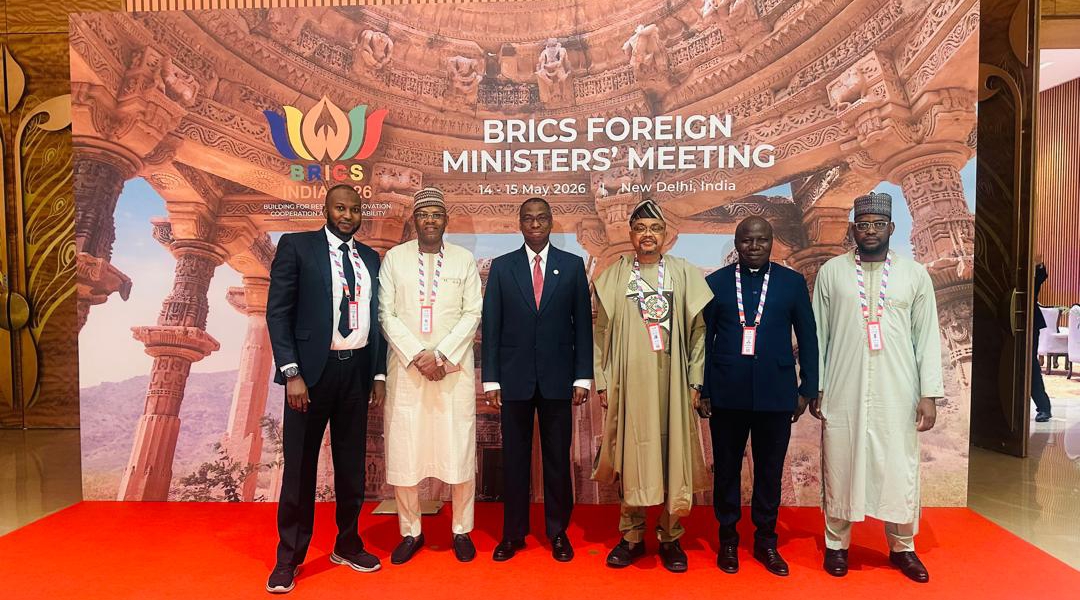
Nigeria has reaffirmed its commitment to strengthening ties with BRICS nations and advancing South-South cooperation at the 18th BRICS Foreign Ministers’ Meeting held in New Delhi, India.
Representing the Federal Government at the high-level meeting, Permanent Secretary of the Ministry of Foreign Affairs, Ambassador Dunoma Umar Ahmed, described BRICS as a vital platform for promoting cooperation, innovation, resilience, and sustainable development among emerging economies.
Ahmed, who delivered Nigeria’s national statement during the meeting chaired by India’s External Affairs Minister, Subrahmanyam Jaishankar, commended India for hosting the summit and expressed Nigeria’s readiness to deepen collaboration with BRICS member countries.
He stated that Nigeria remains focused on economic reforms aimed at reducing dependence on oil despite prevailing global economic challenges, energy market instability, and security pressures. According to him, the Federal Government is prioritising growth in agriculture, manufacturing, and services as part of efforts to build a more diversified and resilient economy.
The Permanent Secretary also underscored Nigeria’s leadership role within the Economic Community of West African States (ECOWAS), especially in areas of peacebuilding, democratic governance, mediation, and regional security initiatives aimed at tackling terrorism and instability in West Africa.
Highlighting Nigeria’s progress in digital innovation, Ahmed said the country’s growing technology ecosystem has continued to attract global recognition through fintech solutions, digital enterprises, and creative industries.
He cited initiatives such as the Digital Literacy for All (DL4ALL) programme and the 3 Million Technical Talent (3MTT) initiative as part of the government’s efforts to improve digital capacity and equip citizens with technology-driven skills.
Ahmed stressed the importance of increased cooperation among BRICS nations in areas of technology transfer, innovation, and knowledge exchange to bridge development gaps and drive inclusive economic growth.
He further noted that regional integration remains central to Nigeria’s foreign policy objectives, adding that the country continues to support free movement, trade liberalisation, and collective security efforts within the ECOWAS sub-region.
On development financing, Ahmed expressed support for the expansion of the BRICS New Development Bank, describing it as a strategic institution capable of supporting infrastructure development and sustainable growth across developing countries.
Speaking on environmental sustainability, he said Nigeria’s Energy Transition Plan is designed to achieve net-zero carbon emissions by 2060 through investments in renewable energy, sustainable agriculture, and green financing initiatives.
The Permanent Secretary reaffirmed Nigeria’s commitment to the Paris Climate Agreement and the United Nations Sustainable Development Goals, while emphasising the importance of BRICS in fostering solidarity, inclusiveness, and mutual respect among nations of the Global South.
He added that the administration of President Bola Ahmed Tinubu remains committed to implementing reforms that promote fiscal discipline, sustainable development, and long-term economic transformation.
Ahmed stated that Nigeria is ready to work closely with BRICS partners in shaping a more inclusive, resilient, and prosperous global order anchored on cooperation and shared progress.