Nigeria Can Adapt China’s Poverty Reduction Strategies to Local Realities – Stakeholders
Oru Leonard
Stakeholders at a strategic workshop in Abuja have urged Nigeria to study and adapt relevant elements of China’s poverty reduction strategies to address the country’s persistent poverty, unemployment and inequality.
They made the call at a workshop organised by the Diplomatic Correspondents’ Association of Nigeria (DICAN), which examined the relevance of China’s poverty reduction experience to Nigeria.
In a goodwill message, the Permanent Secretary, Ministry of Foreign Affairs, Ambassador Dunoma Umar Ahmed, said Nigeria could draw useful lessons from China’s development experience while ensuring that such lessons were adapted to the country’s unique social, political and economic realities.
Ahmed, who was represented by Kimiebi Ebienfa, said China’s experience demonstrated the importance of long-term planning, infrastructure-led development, targeted poverty reduction programmes and effective mobilisation of domestic resources.
He, however, cautioned against attempting to replicate the Chinese model wholesale, stressing that Nigeria must design policies that reflect its institutions, values and socio-economic conditions.
According to him, relevant elements of the Chinese experience could be adapted to improve agricultural productivity, strengthen social protection, promote public-private partnerships and increase investment in human capital.
He also emphasised the need for transparency, accountability, effective implementation and continuous monitoring of poverty reduction programmes.
The Permanent Secretary urged development partners to support Nigeria with technical expertise, financing, knowledge exchange and international experience that align with the country’s development priorities.
He further highlighted the role of the media, particularly diplomatic correspondents, in promoting public understanding of development policies, scrutinising government programmes and strengthening accountability through accurate and balanced reporting.
Ahmed reaffirmed the commitment of the Ministry of Foreign Affairs to deepening international cooperation and promoting partnerships capable of attracting responsible investment, technology transfer and capacity-building opportunities to Nigeria.
Speaking on behalf of the Chinese Ambassador to Nigeria, Yu Dunhai, the Counselor of the Economic and Commercial Office of the Chinese Embassy, Sun Xuekun, said China had lifted more than 800 million people out of poverty since the beginning of its reform and opening-up in 1978.
According to Sun, the achievement represented more than 70 per cent of global poverty reduction and transformed China from one of the world’s poorest countries into a major contributor to global poverty alleviation efforts.
He said nearly 100 million rural residents were living below the poverty line at the end of 2012, but all had been lifted out of poverty by the end of 2020.
Sun said China removed 98.99 million rural residents, 832 impoverished counties and 128,000 impoverished villages from poverty status during the period.
He added that China eradicated absolute poverty and achieved its poverty reduction target under the United Nations 2030 Agenda 10 years ahead of schedule.
According to him, the achievement was driven by strong government leadership, targeted poverty alleviation policies and sustained economic development.
Sun disclosed that China invested nearly 1.6 trillion yuan in special poverty alleviation funds and deployed more than three million officials and village work-team members to support poverty reduction efforts.
He explained that China gradually shifted from broad poverty relief programmes to targeted interventions based on detailed assessments of households and communities.
The interventions included industrial development, relocation from areas with difficult living conditions, educational support, ecological compensation and expanded social protection.
He also identified infrastructure development, including roads, drinking water, electricity, telecommunications, education and healthcare, as important components of China’s approach to addressing the structural causes of poverty.
Sun said China had also established mechanisms to prevent people who had escaped poverty from falling back into poverty, including a five-year transition period and strengthened monitoring and assistance systems.
The Chairman of DICAN, Idehai Frederick, said Nigeria could benefit from adapting relevant aspects of China’s poverty alleviation experience while taking local realities into consideration.
Frederick described the workshop as timely, noting that Africa’s poverty challenge required practical solutions and closer examination of development models that had produced measurable results.
He said the assessment of Nigeria’s poverty reduction efforts through the lens of China’s experience was particularly important amid economic adjustments, food security concerns and ongoing reforms.
Drawing from a recent study tour of China by African media executives, Frederick said participants observed rural revitalisation projects and modernisation initiatives that could provide useful lessons for developing countries.
He called for expanded fellowship opportunities, media exchange programmes and technical journalism training for DICAN members, while also advocating stronger engagement between the association and the Chinese business community.
Frederick stressed that Nigeria should adapt rather than replicate China’s poverty reduction model, identifying data-driven interventions at household and community levels, infrastructure development, mutually beneficial economic partnerships and development assistance aligned with the Sustainable Development Goals as key areas for consideration.
He also urged Nigeria to take advantage of China’s zero-tariff policy for African exports by strengthening local supply chains, improving product standards and expanding non-oil exports to the Chinese market.
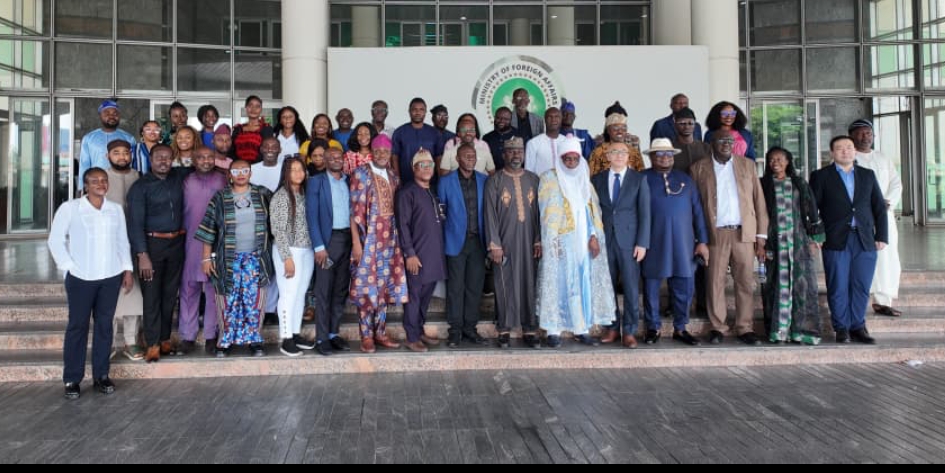
The workshop brought together representatives of traditional institutions, policymakers, diplomats, media practitioners and other stakeholders to examine poverty alleviation strategies and lessons Nigeria could draw from international development experiences.