China’s Poverty Reduction Model Offers Lessons, Not a Blueprint for Nigeria — Dr Maho
Oru Leonard
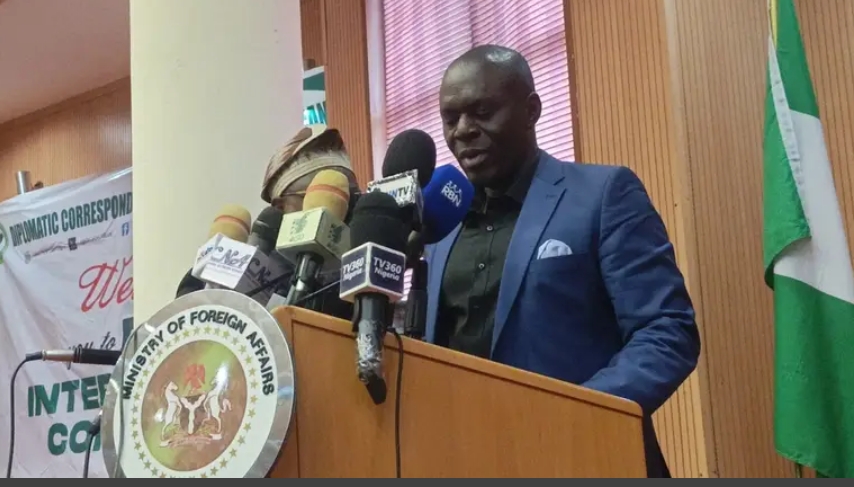
Media scholar and public affairs analyst, Dr Austin Maho in Nigeria, has urged Nigerian journalists and diplomatic correspondents to critically examine international development models and adapt useful lessons to Nigeria’s peculiar socio-economic and political realities.
Maho made the call at a workshop organised by the Diplomatic Correspondents’ Association of Nigeria (DICAN), where he examined Nigeria’s poverty alleviation efforts alongside China’s development and poverty reduction experience.
Speaking on the theme, he said China’s success in lifting millions of people out of extreme poverty demonstrated the importance of strong political leadership, data-driven planning, targeted interventions and sustained policy commitment.
Drawing from his participation in a July 2026 conference in Yinchuan, Ningxia Province, China, attended by policymakers and scholars from the Global South, Maho said a major focus of the discussions was how China succeeded in lifting hundreds of millions of people out of poverty and what lessons developing countries could draw from the experience.
According to him, China moved nearly 99 million people out of poverty between 2012 and 2020, while more than 100,000 villages were connected with paved roads as part of its broader poverty reduction programme.
He, however, cautioned that Nigeria should not attempt to copy the Chinese model wholesale, stressing that differences in governance structures, economic systems, institutional capacity and socio-political conditions make direct replication unrealistic.
“China’s poverty reduction model offers lessons, not a blueprint, for Nigeria,” Maho said, stressing that Nigeria needs adaptation rather than adoption.
He identified weak data infrastructure, limited administrative capacity, insecurity, rapid population growth, unemployment and pressure on public services as some of the factors that require Nigeria-specific solutions.
Maho argued that poverty reduction must be treated as a national development priority supported by measurable targets, reliable data and continuous evaluation.
He also charged diplomatic correspondents with playing a more active role in scrutinising international development partnerships and assessing their actual impact on Nigerians.
According to him, journalists should serve as “translators and accountability agents” by moving beyond official announcements to examine whether foreign-backed programmes are delivering measurable benefits.
He urged media organisations to establish dedicated development diplomacy beats, strengthen data journalism, fact-check international partnerships and develop scorecards for monitoring poverty-related indicators at state and local government levels.
Maho said journalists should pay particular attention to projects in agriculture, infrastructure, digital education, healthcare and rural development, assessing not only what governments and development partners promise but what communities actually receive.
He warned that failure to properly contextualise foreign development models could result either in their uncritical promotion or the blanket rejection of potentially useful ideas.
“The media has a responsibility to help citizens understand development policies and hold public officials accountable for results,” he said.
Maho concluded that Nigeria could draw valuable lessons from China’s experience, but must develop solutions consistent with its federal democratic structure, economic realities and institutional capacity.
He stressed that the media has a critical role to play in ensuring that development partnerships translate into tangible improvements in the lives of Nigerians.