The Kuje Statement, “All Is Fair in Politics” and the Danger to Nigeria’s Democracy
Oru Leonard
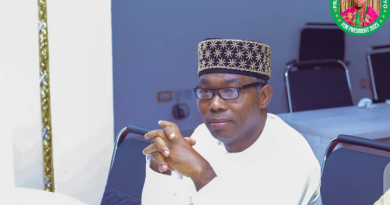
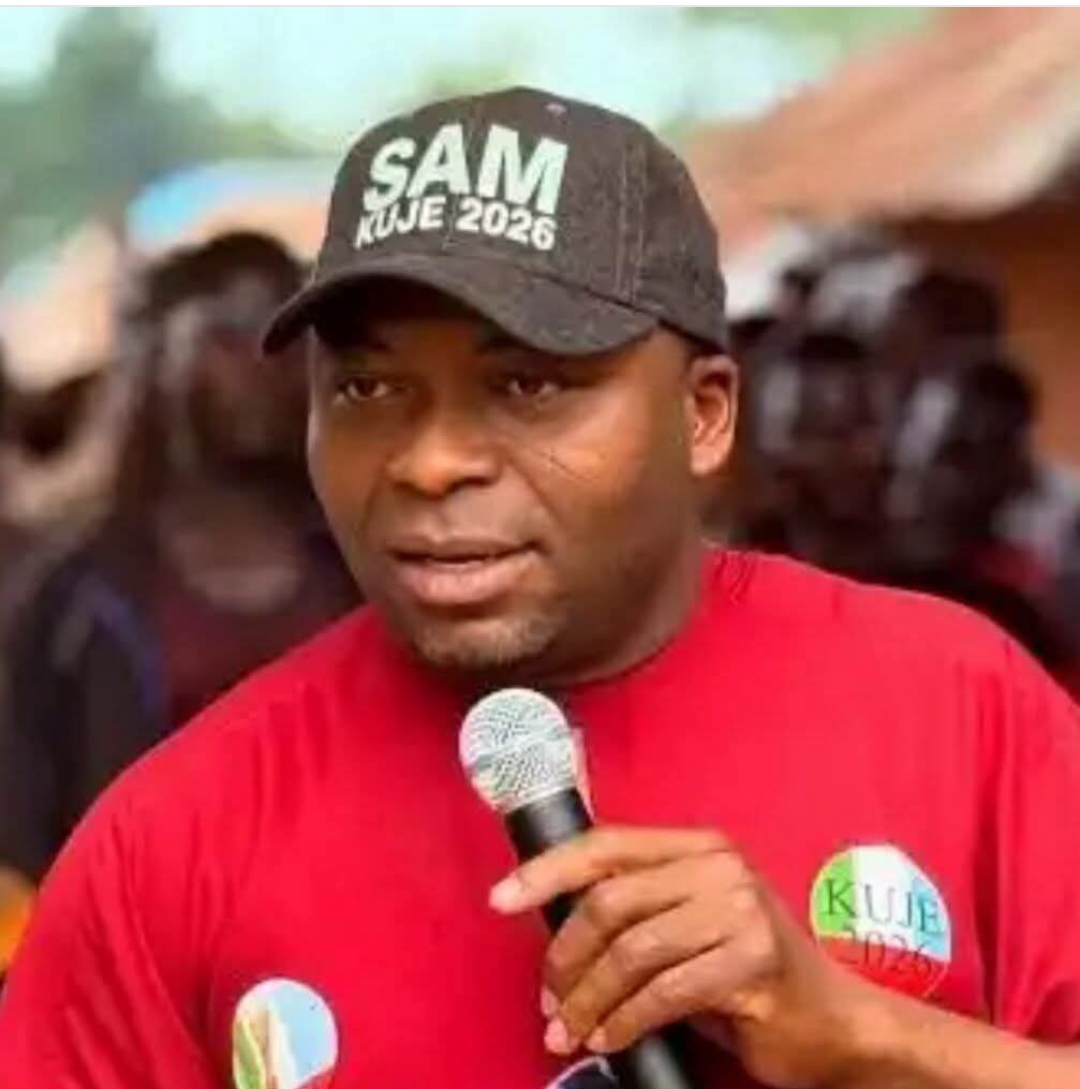
The viral video in which the Chairman of Kuje Area Council, Hon. Danjuma Samuel Shekwolo, allegedly called on residents who do not support President Bola Ahmed Tinubu’s second-term bid to leave the Area Council, should not be dismissed as another political outburst.
If the statement is accurately represented in the video, it raises a fundamental question about the kind of democracy Nigeria is building: Can a citizen be made to feel unwelcome in his or her own community simply because of political preference?
Political competition is an essential component of democracy. Citizens have the constitutional right to support a candidate, oppose a candidate, remain undecided or refuse to participate altogether. That freedom does not disappear because an election is approaching.
This is why the reported statement is particularly troubling. A public office holder, especially at the grassroots level, has a responsibility to represent all residents, irrespective of political affiliation. The office of an Area Council chairman is not an APC office, PDP office or Labour Party office. It is a public trust.
The controversy also brings to mind the reported comment attributed to President Tinubu during his interaction with Catholic bishops that “all is fair in politics.” Whatever the context in which that statement was made, it is important that political actors do not interpret it as a licence for intimidation, exclusion or threats against citizens.
There must be a clear distinction between political toughness and political intolerance.
Nigeria has witnessed enough examples of how inflammatory political rhetoric can gradually transform into hostility among citizens. Words spoken by political leaders carry weight because supporters may interpret them as permission to act. What begins as a political statement can become harassment, exclusion and, in extreme circumstances, violence.
The Lagos and Mama Chukwudi lessons
The experience of Lagos politics provides an important warning. Over the years, political competition in Lagos has demonstrated both the power of organised political structures and the dangers of creating an environment in which political loyalty becomes intertwined with access, acceptance and influence.
The story of “Mama Chukwudi” similarly reminds Nigerians of the human dimension of political language. Behind every political argument are ordinary citizens—traders, workers, students, families and community members—whose lives should not become casualties of political rivalry.
Politics should never become a test of citizenship.
You cannot tell a Nigerian that because he or she does not support a particular candidate, the person should leave a Nigerian community. Nigeria belongs to all Nigerians.
Security agencies should take the matter seriously
The appropriate response, however, should not be mob action, political retaliation or another round of inflammatory statements.
Security and relevant law-enforcement authorities should examine the video, establish its authenticity and determine precisely what was said and in what context. If the statement amounts to a threat, incitement or violation of the law, the appropriate legal process should follow.
This is not about silencing political speech. It is about establishing the boundaries between legitimate political expression and rhetoric that could endanger public order or the rights of citizens.
Political leaders must also understand that their words can have consequences far beyond the moment in which they are spoken.
Tinubu’s second-term bid should not divide Nigerians
President Tinubu has every constitutional right to seek re-election, just as Nigerians have the right to support or reject his candidacy.
The 2027 election should therefore be a contest of ideas, performance, policies and persuasion, not a contest over who has the right to live or participate in a community.
Those seeking Tinubu’s re-election should convince Nigerians with the achievements of his administration. Those opposing him should present their alternative vision. Let the people decide.
That is democracy.
The Kuje controversy therefore offers an opportunity for political leaders across the country to draw a line in the sand: political loyalty must never become a condition for citizenship.
Nigeria has endured enough political violence, ethnic suspicion and partisan hostility. What the country needs ahead of 2027 is not more incendiary rhetoric but responsible leadership capable of telling supporters that political opponents are not enemies of the state.
The security agencies should act with dispatch—not necessarily to punish a politician merely for making an unpopular statement, but to establish the facts, assess the potential threat and prevent inflammatory political rhetoric from escalating into real-world intimidation or violence.
And perhaps most importantly, political leaders must remember one simple truth:
Governments come and go. Political parties win and lose. But the Nigerian people remain.
The ballot box should determine who governs Nigeria—not threats, intimidation or the declaration that those who disagree should leave.
Cover Photo: Hon. Danjuma Samuel Shekwolo,