ACCI, Stakeholders Push Business-Friendly Tax Reforms to Protect MSMEs, Boost Economic Growth
Oru Leonard
The Abuja Chamber of Commerce and Industry has called for the implementation of balanced and business-friendly tax reforms capable of protecting Micro, Small and Medium Enterprises (MSMEs) while driving sustainable economic growth across Nigeria.
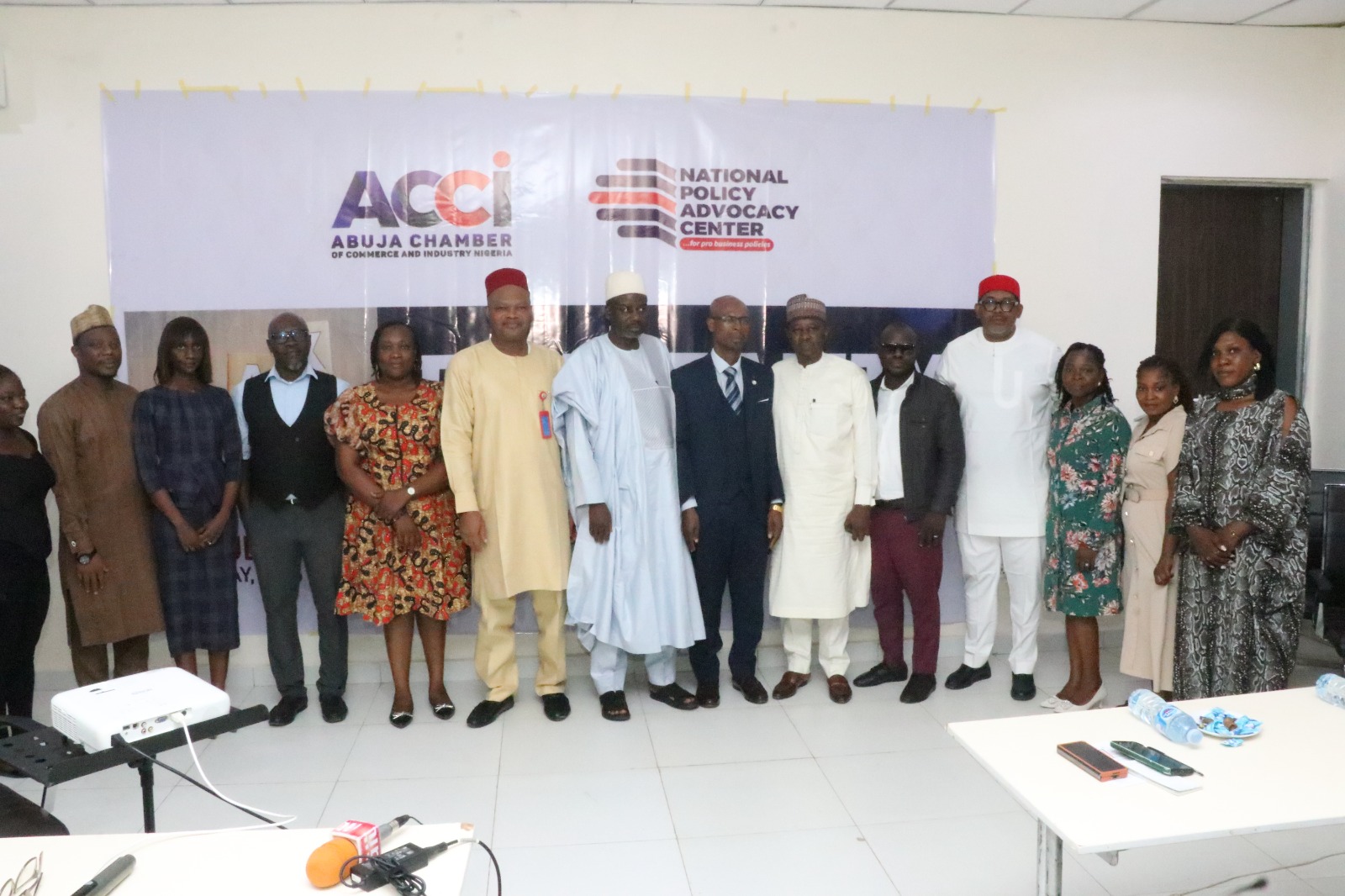
The call was made on Tuesday during a high-level roundtable organised by the Chamber through its National Policy Advocacy Centre, themed “Tax Reality: Ripple Effects on Industry and Commerce.” The engagement brought together stakeholders from government agencies, taxation bodies, the organised private sector, and the wider business community to deliberate on the implications of Nigeria’s ongoing tax reforms.
Discussions at the forum focused on key legislations, including the Nigeria Tax Act 2025, the Nigeria Tax Administration Act 2025, the Nigeria Revenue Service (Establishment) Act 2025, and the Joint Revenue Board (Establishment) Act 2025.
Delivering the keynote address, the 2nd Deputy President of ACCI and Chairman of NPAC, Aliyu Idi Hong, said although the reforms are intended to modernize tax administration and harmonize processes, government must ensure that implementation aligns with prevailing economic realities confronting businesses nationwide.
According to him, Nigerian businesses, especially MSMEs, continue to face severe economic pressures, including inflation, foreign exchange instability, rising energy costs, poor infrastructure, insecurity, multiple taxation, and limited access to affordable financing.
He warned that reforms that increase compliance obligations without corresponding improvements in the operating environment could reduce competitiveness, discourage investment, and shrink the tax base.
“Taxation must support enterprise growth, industrialisation, investment attraction and job creation. No economy can tax businesses into prosperity,” he stated.
In his welcome remarks, the Director General of ACCI, Agabaidu Jideani, described the engagement as part of the Chamber’s commitment to policy advocacy, stakeholder enlightenment, and constructive economic dialogue.
He explained that the roundtable aimed to deepen public understanding of the ongoing reforms, address misconceptions surrounding the new tax framework, and provide businesses with practical insights into the implications and opportunities within the emerging tax regime.
Jideani also highlighted the strategic roles of specialized ACCI centres, including the ACCI BEST Centre, the Nigerian Chamber of Commerce Dispute Resolution Centre, the Abuja Trade Centre, and NPAC in promoting enterprise development and economic growth.
Speaking on the topic, “MSMEs and the Vulnerable, Exemptions, Reliefs and No Burden Assurances: The Tax Reform Acts in Perspective,” distinguished tax expert and former President of the Chartered Institute of Taxation of Nigeria, Innocent Chinyere Ohagwa, described taxation as both a civic responsibility and an instrument of national trust.
He noted that the reforms contain strategic incentives designed to ease the burden on small businesses and vulnerable groups, including exemptions for companies with annual gross turnover not exceeding ₦100 million and fixed assets below ₦250 million.
According to him, qualifying small companies would enjoy zero Companies Income Tax, exemption from Development Levy, VAT obligations, withholding tax requirements, and certain Capital Gains Tax liabilities from January 1, 2026.
Also speaking, the Executive Director of NPAC, Chidiebere Onwumere, urged businesses to focus on adapting to the new tax regime through compliance and constructive stakeholder engagement rather than prolonged resistance to the reforms.
He disclosed that NPAC is working with businesses to identify unclear provisions, engage tax authorities for clarifications, and develop practical compliance guides for key sectors while sustaining dialogue with the Federal Inland Revenue Service.
The roundtable ended with stakeholders calling for sustained collaboration between government and the organised private sector to ensure that tax reforms achieve their objectives without undermining business sustainability.
Participants expressed confidence that recommendations from the dialogue would help build a more inclusive, investment-friendly, efficient, and growth-oriented tax environment capable of supporting national development and economic resilience.