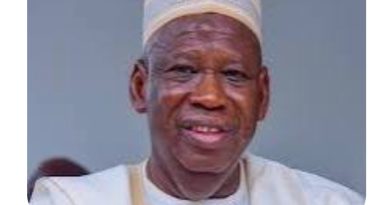
Onuigbo calls for collective action on Climate Change, warns of growing threat to Nigeria
Oru Leonard
Former member of the House of Representatives and sponsor of Nigeria’s Climate Change Act 2021, Rt. Hon. Sam Onuigbo, has called for stronger collective action on climate governance, warning that climate change now poses a direct threat to Nigeria’s economy, security and national stability.
Onuigbo made the call on Wednesday while delivering a keynote address at the EnviroNews Media Literacy Training on Climate Change Governance, Gender Mainstreaming and the UNFCCC and Minamata Convention held at Hapag Lloyd House in Abuja.
Speaking on the theme, “From Personal Effort to National Action: Reimagining Climate Change Governance in Nigeria,” the former lawmaker said climate change was no longer a distant environmental concern but a lived reality affecting communities across the country.
He said the impact of floods, desertification, drought, coastal erosion and rising temperatures had continued to disrupt livelihoods, destroy infrastructure and worsen insecurity nationwide.
According to him, the shrinking Lake Chad Basin remains one of the clearest examples of ecological degradation and its security implications in Nigeria.
“Communities dependent on the lake for survival experienced displacement, economic collapse, forced migration and social instability,” he said.
Onuigbo noted that competition over diminishing natural resources had contributed significantly to recurring farmer-herder conflicts in several parts of the country.
He said global institutions had increasingly recognised climate change as not only an environmental issue but also a developmental, economic and humanitarian challenge capable of undermining sustainable growth.
Rt. Hon. Sam Onuigbo traced the evolution of global climate governance from the 1992 Rio Earth Summit to the Kyoto Protocol and the Paris Agreement, stressing that climate action required coordinated efforts from governments, institutions, businesses, civil society and citizens.
He described climate change as “the cumulative result of years of small decisions made without regard for their collective consequences, including deforestation, poor waste management, delayed policies and unsustainable consumption patterns”.
Highlighting Nigeria’s legislative response, Onuigbo recalled that earlier climate bills failed to secure presidential assent before the eventual passage of the Climate Change Act in 2021.
He explained that the law established the National Council on Climate Change chaired by the President and created a framework for emissions reduction, climate financing and sustainable development.
“The Climate Change Act represented Nigeria’s formal institutional acceptance of climate change as a strategic national challenge requiring coordinated governance mechanisms,” he said.
Onuigbo said the Act mandated Ministries, Departments and Agencies to integrate climate action into their operations through dedicated climate change desks.
He added that climate governance must not remain an isolated environmental issue but should be mainstreamed into agriculture, transportation, housing, infrastructure and energy planning.
The former national Assembly member also emphasised the importance of legislative oversight, saying laws alone could not solve the climate crisis without proper implementation and accountability.
Commending recent reforms under the administration of Bola Ahmed Tinubu, he said the removal of fuel subsidy and the implementation of the Electricity Act 2023 demonstrated growing commitment to Nigeria’s climate transition agenda.
According to him, decentralisation of electricity generation would enable states to strengthen renewable energy development and improve energy access.
He further cited ongoing initiatives including sovereign green bonds, compressed natural gas programmes, rural solar electrification and climate-smart agriculture as important steps toward sustainable development.
Onuigbo also stressed the importance of climate financing, noting that the Climate Change Fund established under the Act would support mitigation and adaptation projects across critical sectors.
He said climate action should be viewed not only as an environmental necessity but also as an economic opportunity capable of driving industrialisation, innovation and job creation.
Addressing journalists at the training, Onuigbo described the media as critical partners in climate governance.
“Journalism is the bridge between scientific knowledge and public consciousness,” he said, urging media organisations to invest in climate literacy, investigative reporting and specialised environmental desks.
He also called for stronger participation by women and youths in climate governance, noting that both groups remained disproportionately affected by climate-related disasters despite playing key roles in environmental advocacy and community resilience efforts.
On the Minamata Convention, Onuigbo warned against the dangers of mercury pollution, particularly from artisanal mining activities, saying unsafe mercury use continued to threaten public health and ecosystems.
He urged Nigerian universities and research institutions to generate locally relevant climate data capable of informing policy decisions and adaptation strategies.
Onuigbo urged governments, businesses, civil society organisations and citizens to embrace collective responsibility in confronting climate change.
“Climate action is no longer optional; the future of Nigeria’s development will depend significantly on how successfully it responds to the climate challenge today” he said
Earlier in his opening remarks, Michael Simire, Publisher of EnviroNews Nigeria and Executive Director of Advocacy and Campaigns for Sustainability (Endvocas), described the conference as timely, stressing that climate impacts across Nigeria are becoming more severe and demand informed public engagement.
According to him, journalists play a central role in shaping public understanding of climate change, environmental governance, and sustainability policies.
“Journalists are not just storytellers; they are agenda-setters, watchdogs, educators, and catalysts for change. When the media is empowered with knowledge, context, and clarity, society benefits from better governance, stronger advocacy, and more inclusive decision-making,” he, said.
Simire noted that the training aimed to deepen media understanding of the United Nations Framework Convention on Climate Change (UNFCCC) and the Minamata Convention on Mercury while strengthening gender-sensitive environmental reporting.
The Publisher emphasised that women and girls remain disproportionately affected by climate change and mercury pollution, yet continue to be underrepresented in environmental policy spaces.
In her keynote address on behalf of the National Network Coordinator of the Climate and Sustainable Development Network (CSDevNet), Doose Joanna Hannu said climate change is no longer a future threat but a present-day crisis affecting livelihoods and vulnerable communities across Africa.
“We are gathered because the future is being written in real time, and the media will decide how that future is understood,” Hannu said.
She stressed that while governments negotiate policies and scientists generate data, the media remains responsible for translating technical climate issues into language the public can understand and act upon.
Also speaking at the event, Founder and Global Lead of the Women Environmental Programme, Priscilla Achakpa, said the role of the media in addressing these challenges cannot be overstated.
She explained that the media serves as a bridge between scientific knowledge, policy discussions, and public understanding.
“As we engage over the next two days, I encourage us all to use this platform to build stronger partnerships, deepen our knowledge, and renew our commitment to environmental justice and sustainable development.
Together, we can amplify the voices of those most affected and promote gender-responsive climate solutions,” she said.