Nigeria Launches National Industrial Relations Policy, Targets End to Workplace Conflicts
Oru Leonard
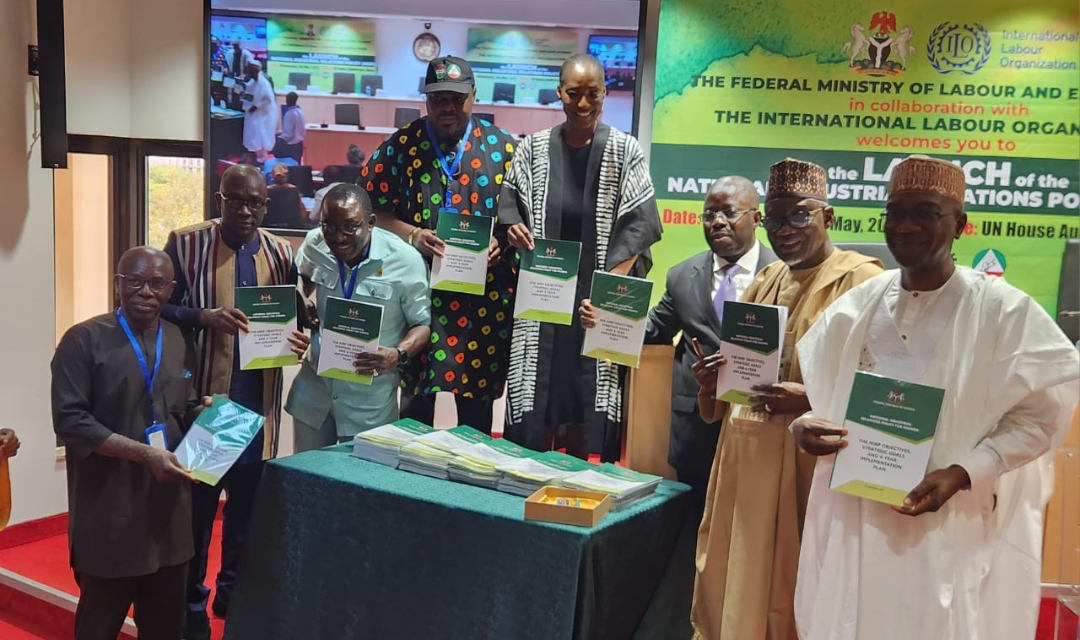
The Federal Government of Nigeria has formally launched Nigeria’s first-ever National Industrial Relations Policy (NIRP), setting out an ambitious framework to promote industrial harmony, protect workers’ rights, and drive inclusive economic growth.
Unveiling the policy at the UN House in Abuja, the Minister of Labour and Employment, Muhammadu Maigari Dingyadi, described the initiative as a decisive step toward institutionalising dialogue, strengthening labour institutions, and reducing the frequency of industrial disputes across the country.
He said the policy comes at a critical time when Nigeria’s labour environment faces challenges ranging from technological disruption to insecurity and the urgent need for job creation.
“For decades, our industrial relations system has operated without a unifying framework. This policy now provides the compass to guide engagement among government, employers, and workers,” the minister stated.
The NIRP is built on three core pillars—social dialogue, rights at work, and productivity. According to Dingyadi, the government will strengthen platforms such as the National Labour Advisory Council and sectoral joint councils to ensure continuous engagement among stakeholders.
He reaffirmed Nigeria’s commitment to international labour standards in line with conventions of the International Labour Organization, including freedom of association, elimination of forced and child labour, and non-discrimination in the workplace.
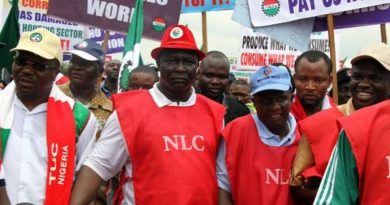
The minister revealed that the policy is the outcome of six years of extensive consultations involving key labour stakeholders, including the Nigeria Labour Congress (NLC), the Trade Union Congress of Nigeria (TUC), and the Nigeria Employers’ Consultative Association (NECA).
He outlined key implementation measures, including reforms to labour institutions such as the Industrial Arbitration Panel, nationwide capacity-building programmes on dispute resolution, and the establishment of a National Industrial Relations Observatory to detect and prevent conflicts before they escalate.
The policy also seeks to extend labour protections to Nigeria’s vast informal sector, which accounts for over 80 percent of the workforce, by integrating artisans, market associations, and platform workers into dispute resolution and social protection systems.
Dingyadi called on labour unions and employers to embrace constructive engagement, urging that strikes should remain a last resort while employers must commit to fair negotiations and respect for collective agreements.
He linked the policy to the Renewed Hope Agenda of President Bola Ahmed Tinubu, noting that industrial peace is essential for job creation, poverty reduction, and economic stability.
Also speaking at the event, the Director of the ILO, Vanessa Phala, described the policy as a “transformative milestone” anchored on inclusivity and national ownership. She pledged continued technical support to ensure effective implementation.
In a goodwill message, the President of the NLC, Joe Ajaero, welcomed the policy as a roadmap for resolving longstanding industrial relations challenges, particularly the frequent disregard for collective bargaining agreements.
He emphasised that the success of the policy would depend on sustained commitment by all parties to uphold fairness, social dialogue, and respect for workers’ rights.
Stakeholders agreed that while the launch marks a major milestone, the real test lies in implementation, with expectations that the policy will foster industrial stability, boost investor confidence, and improve working conditions nationwide.