FG Strengthens Coordination, Expands Social Protection Efforts to Tackle Poverty, Humanitarian Challenges
Oru Leonard
The Federal Government has reaffirmed its commitment to strengthening coordination across humanitarian interventions and expanding investments in social protection programmes as part of ongoing efforts to address poverty, insecurity, and humanitarian challenges nationwide.
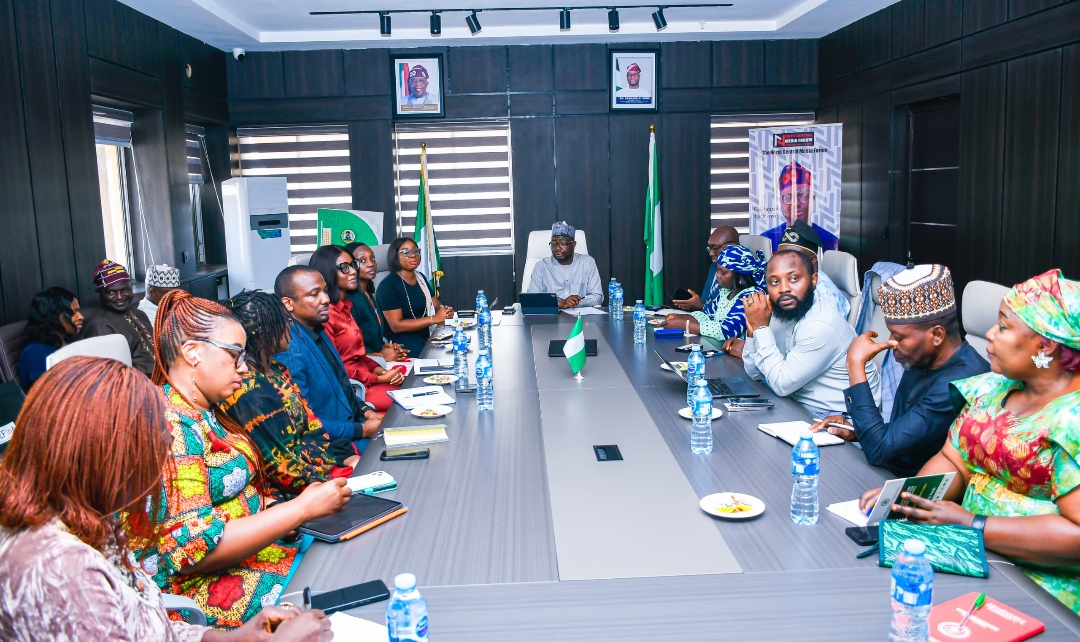
This assurance was given by the Honourable Minister of Humanitarian Affairs and Poverty Reduction, Bernard M. Doro, during a courtesy visit by officials of Enhancing Financial Innovation and Access (EFinA) to the Ministry’s headquarters in Abuja.
Dr. Doro stated that the Ministry operates an open-door engagement framework designed to foster collaboration among government institutions, development partners, civil society organisations, and the private sector in order to improve service delivery to vulnerable Nigerians.
He described poverty as one of Nigeria’s most pressing national challenges, citing persistent multidimensional deprivation in healthcare, education, housing, food security, and livelihoods. According to him, the situation has been exacerbated by insecurity, displacement, conflict, and climate-related shocks, all of which continue to strain emergency response systems and weaken long-term development planning.
The Minister stressed that poverty and insecurity are closely linked, noting that deprivation and unemployment often increase vulnerability to crime and instability. He added that strengthening social protection systems remains essential not only for poverty reduction but also for promoting national stability and resilience.
Dr. Doro also highlighted ongoing reforms under the Ministry’s “One Humanitarian and One Poverty Response System,” an initiative aimed at harmonising interventions across agencies, eliminating duplication, and improving efficiency, accountability, and impact.
He observed that fragmented interventions, weak data integration, and uncoordinated social registers have continued to hinder effective targeting and resource optimisation. According to him, Nigeria’s challenge is not the absence of interventions, but the lack of effective coordination.
The Minister explained that the new framework would deepen institutional collaboration, strengthen data integration, and establish unified delivery systems to ensure interventions reach intended beneficiaries while reducing leakages and improving transparency.
Despite resistance to reforms, he maintained that the government remains committed to building a more accountable and technology-driven humanitarian response system capable of delivering measurable results.
Dr. Doro further called on development partners, donor agencies, civil society organisations, and the private sector to sustain support for efforts aimed at building a more coordinated and impactful humanitarian and social protection architecture in Nigeria.
Earlier, the Chief Executive Officer of Enhancing Financial Innovation and Access (EFinA), Foyinsolami Akinjayeju, noted that although financial inclusion in Nigeria has risen to approximately 74 percent, progress driven largely by digital payments has yet to translate into stronger financial resilience for many citizens.
She identified persistent gaps in savings, insurance uptake, pension participation, and access to affordable credit, particularly among women and rural populations. Mrs. Akinjayeju advocated a shift from access-focused financial inclusion to meaningful usage, supported by stronger digital public infrastructure and improved coordination among regulators, financial institutions, and development partners.
The meeting was attended by Directors and senior officials of the Ministry, including Mr. Valentine Ezulu and Mrs. Janet McDickson, aides of the Honourable Minister, alongside members of the EFinA delegation.