Nigeria, UNODC Unveils National Strategy to Tackle Organised Crime
Oru Leonard
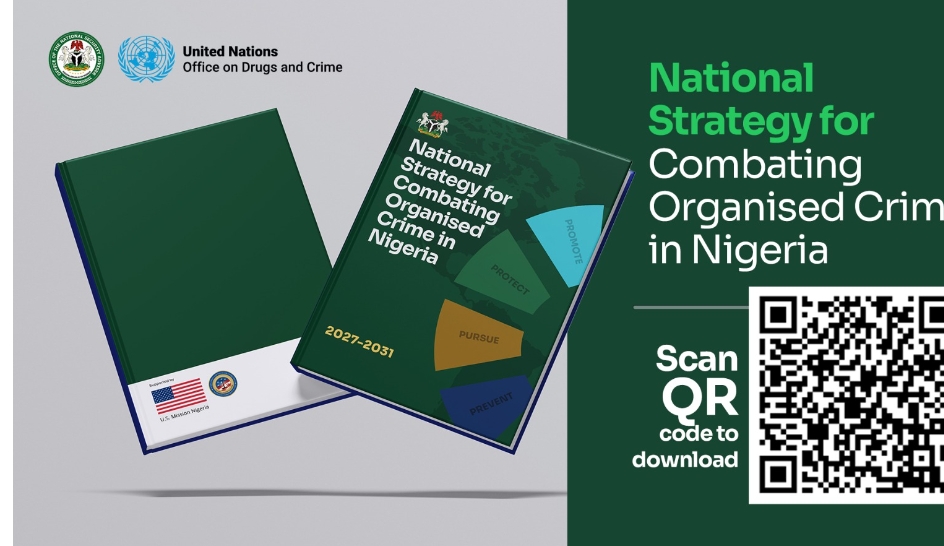
ABUJA, August 17, 2026 — Nigeria has unveiled a comprehensive National Strategy for Combating Organised Crime, aimed at strengthening the country’s response to criminal networks, protecting communities and enhancing national security.
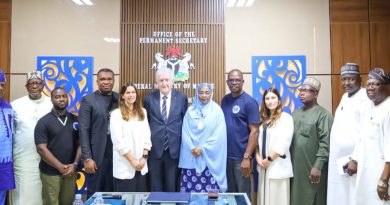
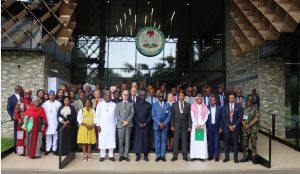
The strategy was formally launched in Abuja at an event attended by senior government officials, security and law enforcement agencies, international partners, civil society organisations and other stakeholders.
Developed through extensive consultations among relevant government institutions, with technical support from the United Nations Office on Drugs and Crime (UNODC), the strategy provides a coordinated framework for preventing, detecting, investigating and prosecuting organised crime, as well as dismantling criminal networks operating within Nigeria and across its borders.
The framework also prioritises the protection of victims and witnesses, recognising the need for a people-centred approach to the fight against organised crime.
Organised criminal activities, including cybercrime, drug trafficking, human trafficking, migrant smuggling, environmental crimes and other forms of illicit activity, have continued to evolve, exploiting technology, cross-border movements and economic vulnerabilities.
The urgency of a stronger response was underscored by recent UNODC findings. The UNODC World Drug Report 2025 estimated that about 316 million people used drugs globally in 2023, while criminal networks continued to expand illicit markets and exploit international connections and digital technologies.
The UNODC Global Report on Trafficking in Persons 2024 also reported a rise in identified trafficking victims following the COVID-19 pandemic, with children accounting for nearly 40 per cent of victims.
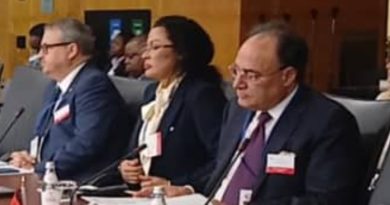
Speaking on behalf of the National Security Adviser, the National Coordinator of the National Counter Terrorism Centre (NCTC), Major General Adamu G. Laka, stressed the need for stronger collaboration among security and law enforcement institutions.
Laka said a coordinated response to organised crime was essential to safeguarding national security and stability, noting that all stakeholders must make concerted efforts to confront criminal networks.
He emphasised that no single agency could successfully defeat organised crime in isolation, making intelligence sharing, joint investigations, coordinated operations and partnerships with communities and international organisations critical to the success of the strategy.
The UNODC Country Representative, Cheikh Touré, and the Director of the United States Department of State’s Bureau of International Narcotics and Law Enforcement Affairs (INL), Tolliver Derrick, commended Nigeria for adopting a whole-of-government and whole-of-society approach to combating organised crime.
They noted that the strategy aligns with international best practices, including the principles contained in the UNODC Organised Crime Strategy Toolkit, which promotes coordinated, victim-centred and rights-based approaches.
Discussions at the launch focused on strengthening national coordination, improving inter-agency and regional cooperation, enhancing specialised operational capabilities, and ensuring that criminal investigations are conducted in line with the rule of law and international standards.
Project officials, including representatives of the NCTC and national consultants, subsequently presented the strategy’s key objectives, implementation roadmap, assessment of organised crime trends in Nigeria and the Gulf of Guinea, as well as its monitoring and evaluation framework.
Participants agreed that the launch marked the beginning of a new phase in Nigeria’s campaign against organised crime, with emphasis now shifting from policy formulation to effective implementation and measurable results.
The strategy is expected to provide stronger protection for communities affected by organised crime while improving institutional capacity to confront criminal networks and their financial and operational structures.
For Nigerians affected by drug trafficking, cybercrime, human trafficking, migrant smuggling, environmental crimes and other illicit activities, the new strategy is positioned as a framework for safer communities, stronger institutions and enhanced national security.
The initiative received funding support from the United States Department of State’s Bureau of International Narcotics and Law Enforcement Affairs (INL).
(UNODC Media)