IRWA Nigeria Inaugurates New Executive, Advocates Stronger Right of Way Management for Infrastructure Growth
Njideka Ozoalor
ABUJA — The International Right of Way Association (IRWA), Chapter 84 Nigeria, has inaugurated a new executive committee and called for improved management and maintenance of Right of Way (ROW) corridors to support sustainable infrastructure development across the country.
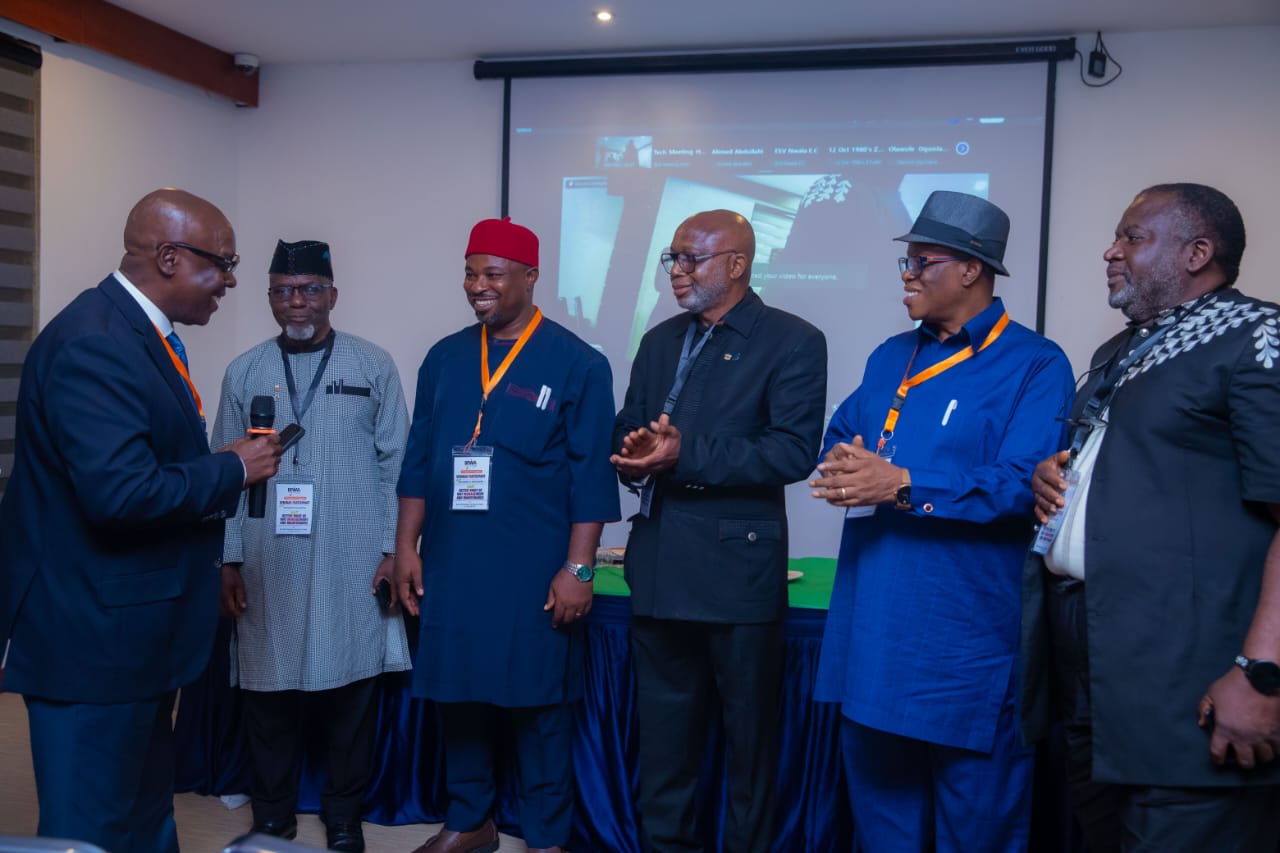
The inauguration took place during the chapter’s Annual Seminar held at Bon Hotel Octagon, Jahi District, Abuja, under the theme, “Better Right of Way Management and Maintenance.”
The event brought together professionals from the infrastructure, oil and gas, and valuation sectors to examine best practices in Right of Way management and maintenance, with participants emphasizing that effective transport corridor management is critical to unlocking Nigeria’s infrastructure potential.
Delivering the keynote address, Director of Railway Services at the Federal Ministry of Transportation, Engr. James Zirra, identified the mismanagement of acquired Right of Way as one of the major obstacles to infrastructure development in Nigeria.
Drawing from his experience in railway transportation and ROW acquisition coordination, Zirra stressed the need for proactive maintenance strategies rather than reactive responses.“The future of Nigeria’s infrastructure depends not only on what we build, but on how effectively we protect, manage and maintain what we build,” he said.
Speaking on behalf of the oil and gas sector, Zimuzo H. Ozuah of the Nigerian National Petroleum Company (NNPC) described Right of Way as a strategic national asset that should be effectively harnessed to drive development and improve operational efficiency.
He observed that while the Petroleum Industry Act (PIA) 2021 introduced reforms relating to ROW acquisition, its effectiveness remains constrained by provisions of the Land Use Act and the Oil Pipelines Act, which regulate surface access, compensation, and pipeline rights.
Ozuah called for a review of the Land Use Act to address existing gaps and improve coordination in Right of Way governance.
“Stricter regulations alone are not enough. Right of Way governance must become more integrated, forward-looking, and institutionally coordinated if it is to deliver long-term value and public safety,” he said.
Joining virtually from Canada, IRWA International President, Mr. Koby T. Godwin, highlighted global best practices in Right of Way administration, emphasizing the importance of data management and effective communication among project stakeholders in reducing disputes and improving project outcomes.
The Guest of Honour and President of the Nigerian Institution of Estate Surveyors and Valuers (NIESV), ESV Mallam Bature Ali Muhammad, urged professionals in the sector to continually upgrade their skills to meet evolving industry demands and economic realities.
According to him, the seminar would help redefine the competencies required for efficient land acquisition and infrastructure corridor management.
At the conclusion of the seminar, members elected a new executive to lead IRWA Chapter 84 Nigeria. The team is headed by President Idongesit I. U. Akpan, alongside Vice President Ikechukwu Henry Nwachukwu, Secretary Aminu Shuaibu, Treasurer Philip Nwachukwu, and International Director Kola Olayode.
In his acceptance speech, Akpan reaffirmed the association’s commitment to advancing professionalism, ethics, and education within the Right of Way industry.
He outlined key priorities for his administration, including strengthening professional credential programmes, ensuring the chapter contributes meaningfully to infrastructure policy discussions, and expanding opportunities for members through IRWA’s global network.
Akpan also emphasized the importance of community engagement in infrastructure development, noting that successful projects require collaboration between developers and host communities.
“IRWA exists at the intersection of progress and people. As we deliver the corridors that power our communities, we must also ensure that host communities are engaged, respected, and treated as true partners in the process,” he said.
Stakeholders at the seminar agreed that strengthening Right of Way management frameworks and institutional coordination would be essential to safeguarding infrastructure investments and accelerating Nigeria’s development agenda.