Forest Guards and the Illusion of Security: Why Nigeria Needs a Citizens’ Security Town Hall Now
By Citizen Bolaji O. Akinyemi
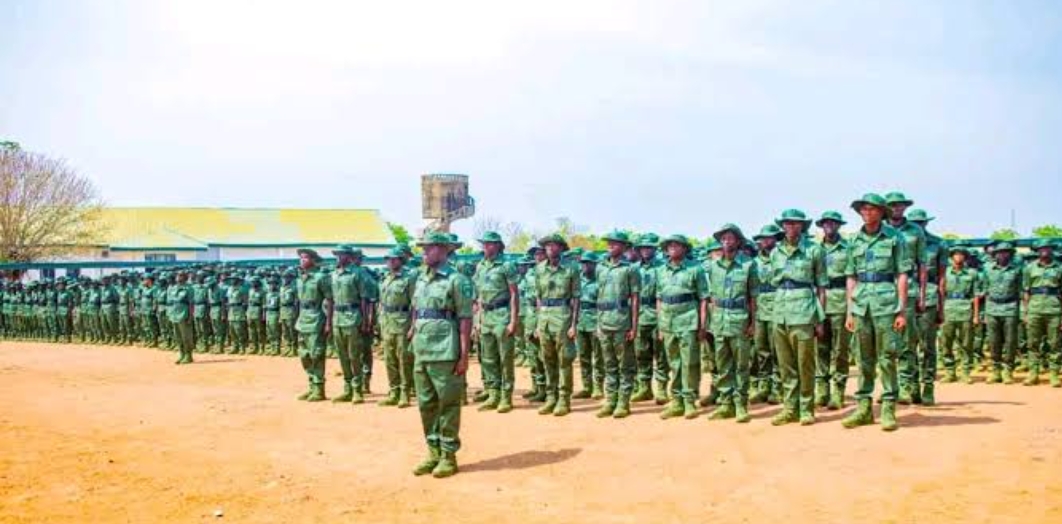
On December 27, 2025, the Federal Government announced with considerable fanfare the graduation of over 7,000 Forest Guards recruited from seven frontline states under the Presidential Forest Guards Initiative.
The announcement was impressive. The language was reassuring. The objectives were noble. The guards were trained, certified, equipped, and immediately deployed. Nigerians were told that the initiative would deny terrorists, kidnappers, bandits, and other criminal elements sanctuary within our forests.
Whatever informed limiting the recruitment of National Forest Rangers to “7 front line state” in a nation of 36 states deserves public interogation.
Six months later, a simple question deserves an answer:
How far?
Where is the evidence that the deployment has significantly altered the security landscape?
Have kidnappings reduced?
Have communities previously abandoned to criminals been recovered?
Have forests once occupied by terrorists and bandits been reclaimed?
Have farmers returned safely to their farms?
Have local governments regained effective control of territories once dominated by criminal gangs?
These are not opposition questions. They are citizenship questions.
In every serious nation, public policies are measured not by the quality of their announcements but by the impact of their implementation.
Nigeria has become too comfortable celebrating intentions while avoiding accountability for outcomes.
The graduation of 7,000 Forest Guards may be commendable. The real issue, however, is whether their deployment has translated into measurable security gains.
Another question arises.
The initiative was specifically designed around seven so-called frontline states. Did deployment remain restricted to those states, or were some of the guards deployed elsewhere?
Does regional forest where crocodile has dance before in military operations not deserve to have officers in the Rangers?
More importantly, why should the concept itself be restricted?
If local recruitment is effective in Borno, Kebbi, Yobe, Adamawa, Niger, Kwara, and Sokoto, why should it not be effective in Ogbomosho, Oke-Ogun, Ibarapa, Akoko, Ekiti, Ogun, and every other region where forests have become safe havens for criminal elements?
The philosophy behind the initiative is actually sound.
People who know the terrain understand the terrain.
People who understand the terrain can gather better intelligence.
People trusted by local communities can obtain information strangers cannot access.
Security, like politics, is local.
The hunter who knows every footpath in a forest may possess intelligence worth more than sophisticated surveillance equipment.
The farmer who understands unusual movements in his environment may provide warnings that save lives.
The traditional ruler who understands the social dynamics of his community often knows when danger is approaching long before government intelligence reports arrive.
Yet Nigeria continues to operate a security architecture that too often excludes the very people who suffer the consequences of insecurity.
This is why the time has come for something bigger than Forest Guards.
The Federal Government should convene a National Citizens’ Security Town Hall Meeting.
Not another conference of officials speaking to officials.
Not another gathering where government praises itself while citizens listen politely.
A genuine town hall.
A platform where traditional rulers, hunters, vigilantes, retired military officers, retired police officers, farmers, transport workers, youth groups, academics, religious leaders, civil society organisations, and security experts can place their practical experiences on the table.
Government does not possess a monopoly of wisdom.
The security agencies do not possess a monopoly of intelligence.
The citizens who live daily with insecurity possess valuable knowledge that can contribute to national solutions.
There is wisdom in our villages.
There is intelligence in our markets.
There is experience among our retired officers.
There is practical knowledge among our hunters and community defenders.
There is innovation among our young people.
The tragedy is that much of this knowledge never reaches the policy table.
What Nigeria requires today is not pride but partnership.
Not bureaucracy but collaboration.
Not propaganda but measurable results.
No government should be ashamed to admit that the nation’s security challenges require broader consultation.
In fact, the willingness to listen is often the first sign of strong leadership.
Pride has never defeated insurgency.
Press statements have never stopped kidnappers.
Official ceremonies have never secured forests.
Only effective strategies, implemented with sincerity and supported by citizens, can accomplish that.
The security challenge confronting Nigeria belongs to all of us.
The responsibility for finding solutions must therefore involve all of us.
If government is uncertain about the next steps, Nigerians are ready to contribute.
The table is waiting.
The citizens are waiting.
The nation is waiting.
The question is whether those entrusted with power are willing to listen.@officialABAT @NuhuRibadu @seyiamakinde @ARISEtv @EiENigeria
#CitizensSecurityTownHall #ForestGuards #HowFarNigeria #SecureNigeria