DEBATING THE 2027 ELECTIONS
Nick Dazang
Debates are pivotal to elections. They constitute their integral part and they define them.
Apart from the fact that debates engender contestation, which comes with the territory of democracy itself, and they enable voters to evaluate the competence and policies which candidates bring to the table, they are storied and are anchored in antiquity.
Interestingly, the first major debates, the seven famous ones between Abraham Lincoln and Stephen Douglas, were not presidential. They were debates for the Senatorial District of Illinois.
Nonetheless, the debates, which held in 1858, set a precedent and a template for face-to-face political discourse.
Also, the next major debate in 1956, was a surrogate one, rather than between the presidential nominees. It featured Eleanor Roosevelt, for the Democratic Party and Margaret Chase, for the Republican Party.
It was 1960 that marked a breakthrough. On 26th September 1960, John F. Kennedy of the Democratic Party and Richard M. Nixon of the Republican Party met in Chicago for the world’s first televised presidential debate. The svelte, dapper and better prepared Kennedy prevailed.
Following a sixteen-year hiatus, the U.S. presidential debates have continued unabated to the present. For the United States, elections are nearly decided by these debates.
Additionally, they attract huge audiences. The first presidential debate of 1960 drew an audience of 66 million while the 2016 presidential debate between Donald Trump and Hillary Clinton drew a record-breaking audience of 84 million.
It is a measure of the high premium Americans place on these debates that when former President Joe Biden put up a lackluster performance against Donald Trump on 27th June 2024, at Atlanta, Georgia, he faced a revolt by his fellow Democrats.
Though our democracy in the First and Second Republics were muscular and ideology-driven, it was not until in the Fourth Republic, which was inaugurated in 1999, that we saw a semblance of organized presidential and governorship debates.
This came through the instrumentality of the Nigeria Election Debate Group(NEDG). The NEDG is a non-profit, non-partisan coalition. It consists of the Broadcasting Organizations of Nigeria(BON) and various civil society organizations. It organizes television and radio debates(which are streamed online) for presidential, vice-presidential and governorship candidates.
In co-ordinating these high-profile debates, the NEDG aims to deepen our democracy by giving voters a platform to assess candidates’ abilities, policies and plans.
Alas, in spite of the NEDG’s noble and uplifting mandate, its flagship platform has been cavalierly short-shrifted by the candidates who ought to latch onto it to market themselves and their agendas. For instance, ahead of the 2023 General Elections, a debate on the economy, organized by the NEDG, in collaboration with the Nigerian Economic Summit Group(NESG), was shunned by the presidential candidates of that election year.
By the same token, a town-hall debate organized by the Centre for Democracy and Development(CDD), in collaboration with ARISE Television, on Sunday, 6th November proved to be a near-fiasco.
Two major presidential candidates, former Vice President Atiku Abubakar, then of the Peoples Democratic Party(PDP) and Chief Bola Ahmed Tinubu of the All Progressives Congress(APC) failed to show up. The former(Atiku Abubakar), was represented by his former running mate, Godwin Okowa. The APC, through its Presidential Campaign Council, thereafter stated that its candidate, Chief Tinubu, was not attending any of the 2023 election debates due to his “hectic campaign schedule”.
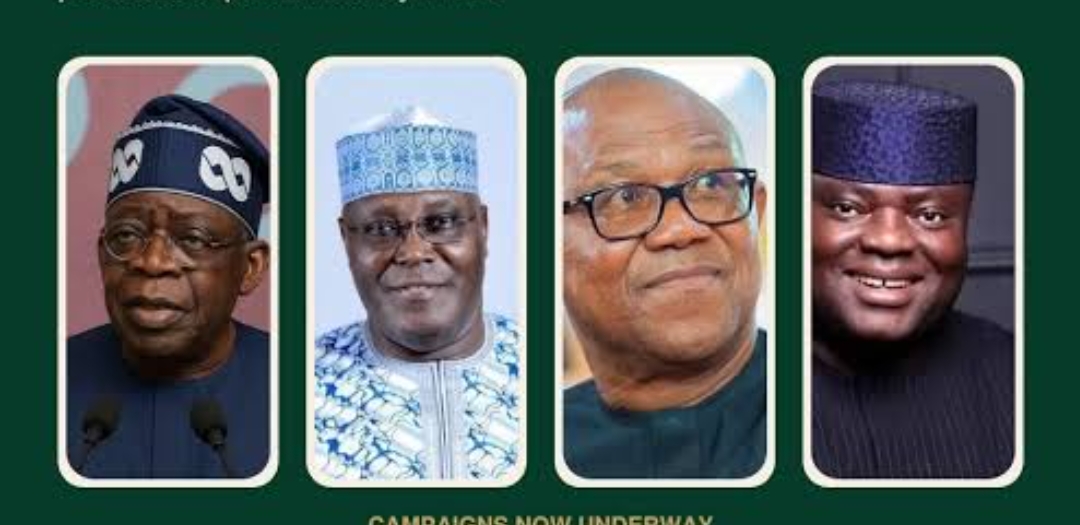
It is intriguing, if not curious, that in this campaign season, the candidate of the African Democratic Congress(ADC), Atiku Abubakar, is making his attendance of any presidential debate(s) contingent on the participation of the incumbent President, Bola Ahmed Tinubu.
What candidates, in our clime, do not appreciate is that when they fail to show up for debates, they send signals, loud and clear, that diminish and de-market their persons and their substances. They say, in effect, to voters that they do not have the heft or the savvy to be president.
They send the message, wittingly or unwittingly, that they are deficient and that they are unprepared to govern. Additionally, they send the message that they, and their ideas, cannot withstand public scrutiny and that, ultimately, they cannot be held accountable.
Worse is that their non-appearance sends the unmistaken and discourteous message that they do not respect the voters. For if verily their intention is to serve the people, rather than luxuriate in the appurtenances of power, logic and common sense demand that they come down from their high horses and that they do some lucid explaining.
But perhaps because, in some instances, the presidential tickets were procured, in the first place, through the conduct of dubious primaries; and perhaps because there are grand designs in the offing, either to manipulate the electoral process or to buy votes, outright, voters may be viewed condescendingly or even taken for granted.
Whichever message(s) these candidates intend to send, it is becoming increasingly clear, with the benefit of the recent Osun State Off-Cycle Governorship Election, that voters are wisening up to the antics and shenanigans of unscrupulous politicians. Bearers of truckloads of Naira can come to grief on Election Day. This is especially so when voters are determined to protect the sanctity of their mandates.
Besides, the challenges staring us in the face – those of heightened insecurity, squalid poverty, decrepit infrastructure, hunger, youth unemployment, disease, an economy in free fall, unbridled corruption – are so dire that candidates must explain to us how they intend to over come them in the shortest possible time.
These challenges represent such clear and present danger to the Nigerian State that they can no longer be swept under the bulging carpet of incompetence and haughtiness. Neither can they be covered with the thin and fragile veneer of our fault lines, which our politicians are adept at exploiting.
Like the Americans, we should institutionalize our presidential and governorship debates via the NEDG and its sundry collaborators. We should structure our debates around issues and between candidates. The debates should be prerequisites for the exalted offices of President and Governor. Since it is a serious requirement for office, proxies and surrogates should not speak for the candidates.
But even before we achieve the aforementioned, we should, in the interim, institute a culture of naming and shaming of those who willfully shun these crucially important debates. A register should be opened and their names chronicled for posterity in this book of eternal infamy and disgrace.