
2027 Elections: INEC Sets Up AI Unit, Partners Tech Platforms To Check Fake Results
Oru Leonard
The Independent National Electoral Commission (INEC) has established a dedicated Artificial Intelligence (AI) unit and commenced the deployment of ChatGPT as part of measures to tackle digital misinformation, fabricated election results and other technology-driven threats ahead of Nigeria’s 2027 general elections.
INEC Chairman, Professor Joash Amupitan (SAN), disclosed this at the National Summit on Electoral Information Integrity in Abuja, explaining that the commission was strengthening its institutional capacity to identify and respond to emerging threats posed by artificial intelligence.
He said the increasing accessibility of AI tools had made it possible for individuals and organised groups to produce convincing fake videos, cloned voices, fabricated official announcements and manipulated election results capable of misleading voters and undermining confidence in the electoral process.
According to him, the commission is moving beyond traditional election security measures to address threats originating from digital platforms, where false information can spread rapidly before official clarification becomes available.
Amupitan explained that the newly established AI unit would monitor emerging technologies, identify digital vulnerabilities and develop strategies for responding to misinformation and coordinated disinformation campaigns.
He added that ChatGPT was being deployed to strengthen INEC’s institutional response to misinformation and support strategic communication during the electoral process.
The chairman disclosed that the commission was also building the capacity of its Information and Communications Technology, voter education and communications departments to monitor public information channels, verify suspicious content and respond promptly to misleading electoral information.
As part of its strategy, the commission is pursuing stronger collaboration with major technology companies to prevent fabricated electoral information from gaining widespread circulation.
Amupitan said INEC had entered into memoranda of understanding with some technology companies, particularly TikTok, while seeking stronger working relationships with Facebook, Instagram, WhatsApp, YouTube, Telegram and X.
He said the commission was also working with international partners, including the European Union, to establish a coordinated communication framework for addressing false electoral information.
The proposed arrangement is expected to facilitate rapid identification and response to fake election announcements, manipulated media content and impersonation of electoral officials.
The INEC chairman identified the possibility of AI-generated election results and fabricated announcements as major concerns ahead of the 2027 polls.
He warned that individuals could generate false results and circulate them online under the guise of authentic polling-unit figures, creating confusion and potentially triggering political tensions.
He also identified the possibility of using cloned voices and manipulated videos to announce fictitious election postponements, cancellation of voting or directives purportedly issued by INEC.
Amupitan said such developments could undermine public confidence in the commission, particularly where fabricated information circulates faster than official responses.
He further highlighted the dangers of AI-generated political content during campaign restrictions, citing the 2023 Slovak parliamentary election, where an allegedly fabricated audio recording involving political figures circulated shortly before voting.
Beyond election-day activities, the commission is also examining the vulnerability of its Continuous Voter Registration processes to digital manipulation.
Amupitan identified fraudulent registration portals, fake operational directives and manipulated registration statistics as potential sources of confusion and electoral fraud.
He said INEC was reviewing the security of its web-based registration processes and promoting safer application-based procedures to minimise impersonation and other forms of digital abuse.
The chairman called for a coordinated national response involving journalists, telecommunications operators, security agencies, civil society organisations, independent fact-checkers and technology companies.
He particularly urged journalists to establish direct communication with designated INEC officials to facilitate rapid verification of electoral information before publication.
He also advocated voter education campaigns in Nigerian Pidgin and local languages, especially through WhatsApp and other widely used communication platforms.
According to him, citizens must be equipped to identify common misinformation techniques before encountering them, a strategy known as prebunking.
Despite the commission’s technological initiatives, Amupitan cautioned that artificial intelligence alone could not guarantee credible elections without transparency, institutional accountability and responsible human conduct.
He recalled the evolution of Nigeria’s electoral technology, from the Smart Card Reader introduced during the tenure of former INEC Chairman, Professor Attahiru Jega, to the Bimodal Voter Accreditation System (BVAS).
He said technological innovations must be accompanied by integrity among the individuals and institutions responsible for their deployment.
The chairman also warned about the ‘liar’s dividend’, a situation in which the proliferation of AI-generated fake content makes people increasingly suspicious of genuine recordings and authentic evidence.
He maintained that the challenge before electoral institutions was not simply to adopt new technologies but to ensure that public trust was protected.
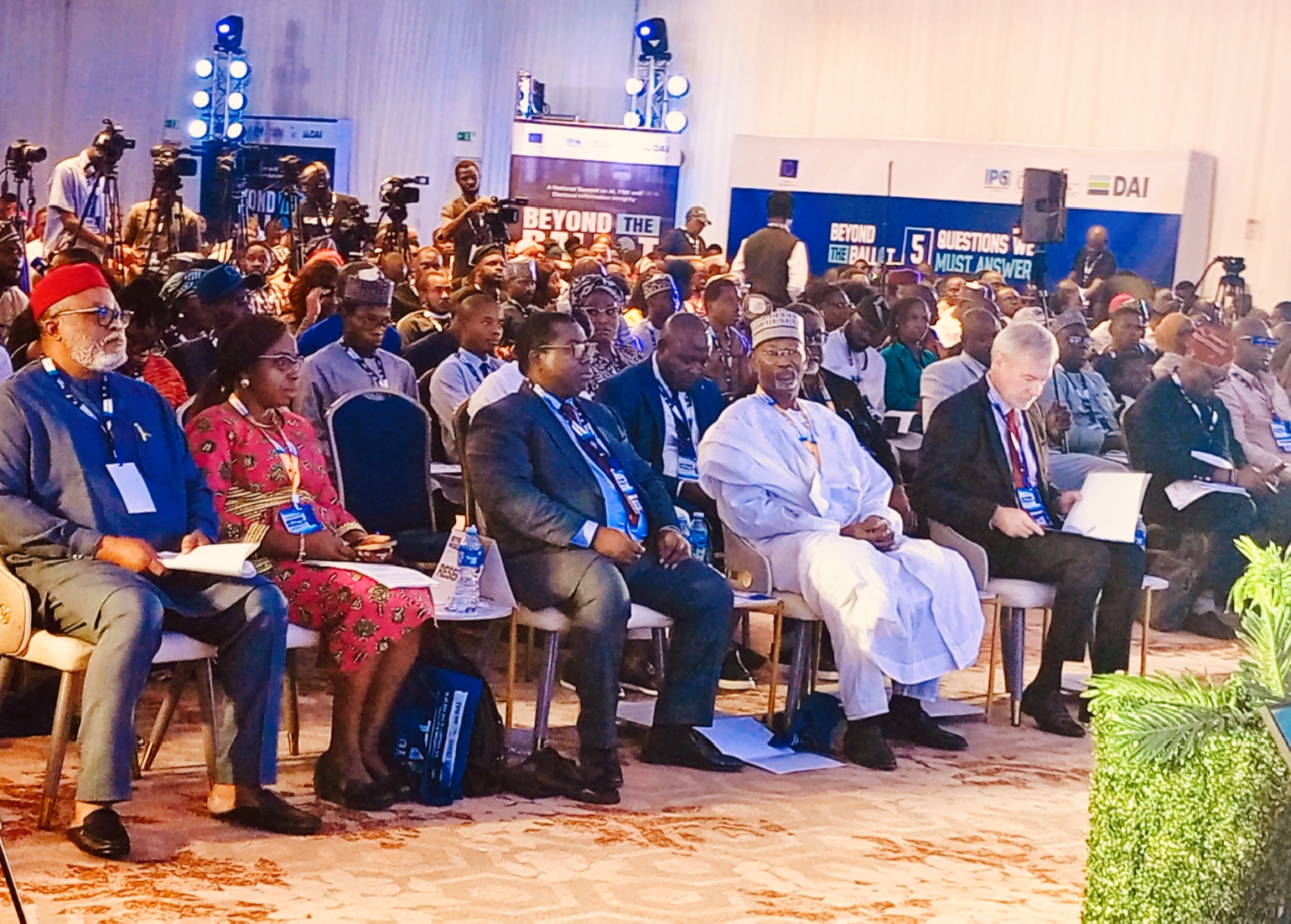
The National Summit on Electoral Information Integrity, themed Beyond the Ballot: AI, FIMI and the Integrity of the Nigerian 2027 Elections, brought together electoral officials, journalists, security agencies, civil society organisations and technology stakeholders.
The summit was organised under the European Union Support to Democratic Governance in Nigeria (EUSDGN III) framework, with former INEC Chairman, Professor Attahiru Jega, the European Union Ambassador to Nigeria and ECOWAS, and representatives of the International Press Centre and Centre for Media and Society among the participants.
With Nigeria’s presidential and National Assembly elections scheduled for January 16, 2027, INEC faces the task of ensuring that technological innovations do not become instruments for manipulating voters, manufacturing election results or weakening confidence in the democratic process.


