YARI, THE FACE OF TINUBU’S RE-ELECTION BID: FROM CAMPAIGN DEMOCRACY TO PERFORMANCE DEMOCRACY
What the APC Campaign Council Means for Nigerians—and Why Citizens Must Not Surrender the Osun Lesson.
By Citizen Bolaji O. Akinyemi
The All Progressives Congress has unveiled its Presidential Campaign Council for the 2027 election.
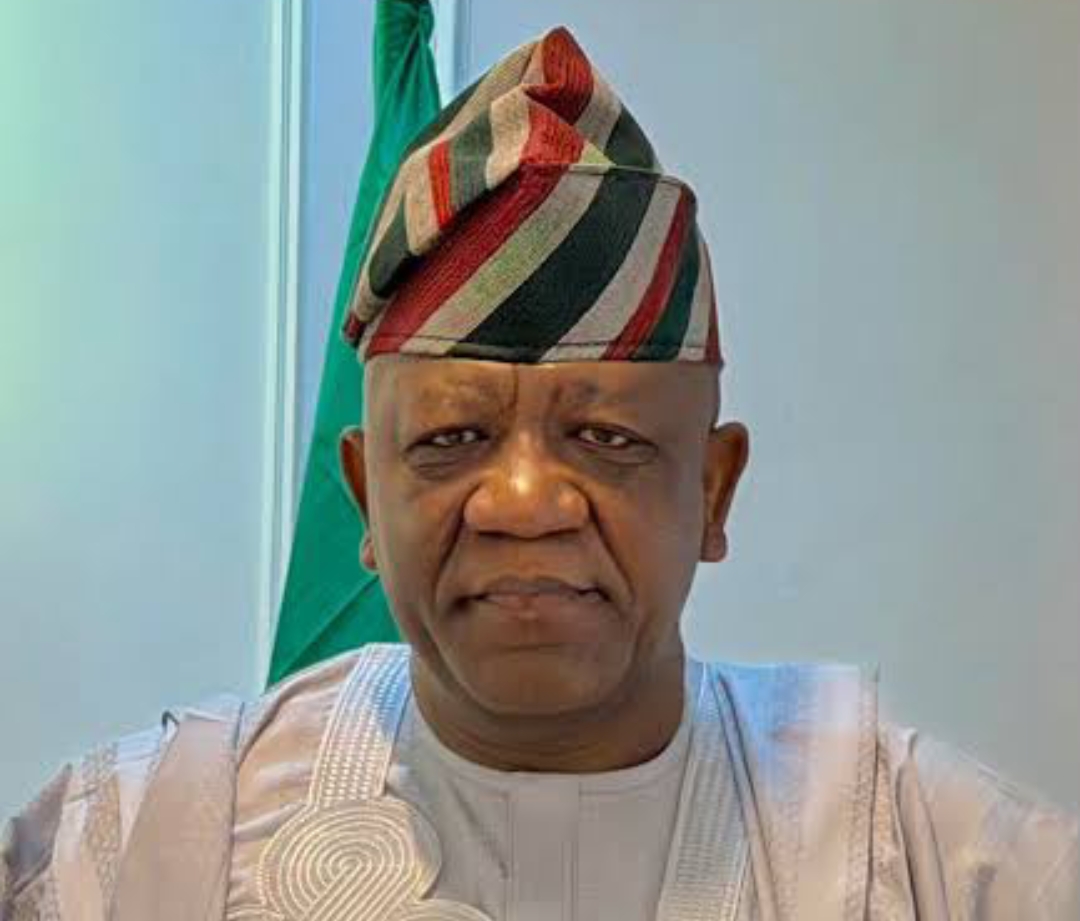
At the centre of the structure is Senator Abdul’aziz Yari, former Governor of Zamfara State, appointed Director-General. President Bola Ahmed Tinubu will chair the council, Vice President Kashim Shettima and APC National Chairman, Professor Nentawe Yilwatda, will serve as Vice Chairmen, while Imo State Governor, Hope Uzodimma, will serve as Secretary.
The council brings together governors, senators, ministers, party leaders, strategists, lawyers, media professionals and political mobilisers from across Nigeria.
In simple terms, the APC has assembled its war machine for 2027!
But Nigerians must ask a question that goes beyond the strength or competence of the machine:
What exactly is this machine being assembled to win?
Is it being assembled merely to win an election?
Or is it being assembled to win the confidence of Nigerians through a demonstrable record of performance?
That distinction is at the heart of Nigeria’s democratic crisis.
For decades, Nigeria has perfected what I have chosen to call Campaign Democracy—a system in which enormous energy, money, emotions, identity, propaganda and political mobilisation are invested in winning elections, while comparatively little attention is given to creating measurable obligations between those who seek power and the citizens who confer it!
The result is a democracy that becomes extremely active before an election and disappointingly inactive after it!
2027 must not be another edition of the same old story.
*YARI: THE FACE OF THE CAMPAIGN*
Senator Abdul’aziz Yari is now the face of the APC campaign machinery.
That choice deserves scrutiny.
Not because Yari is a Muslim.
Not because he comes from Northern Nigeria.
But because Nigerians have every right to interrogate the political philosophy, antecedents, record and priorities of those being entrusted with the responsibility of asking the nation for another mandate.
Let me, however, correct an important historical point.
Yari did not introduce Sharia in Zamfara State. He inherited it.
It was former Governor Ahmed Sani Yerima who, in 1999, introduced the Sharia system of administration in Zamfara State, making it the first state in Nigeria to extend Sharia into the criminal justice system. The development subsequently influenced the adoption of expanded Sharia systems in other northern states.
Yari therefore met the Sharia legacy; he did not originate it.
That correction is important to me because Performance Democracy must begin with factual accountability.
We cannot demand truth from government and, at the same time, build our political arguments on historical inaccuracies.
But correcting that fact does not remove the larger question surrounding the choice of Yari.
What does the elevation of a northern political heavyweight mean when placed within a campaign already led by a Muslim-Muslim presidential ticket?
What political coalition is the APC building for 2027?
What ideological tendencies will have influence within that coalition?
And what does this mean for the future of Nigeria as a plural and multi-religious nation?
These are legitimate questions.
They should not be dismissed.
*MY CONCERN ABOUT THE MUSLIM-MUSLIM TICKET*
Let me be clear about my position.
My concern is not with Islam.
It is not with Muslims.
It is not with the right of any Muslim Nigerian to aspire to the highest office in the land.
My concern is about the possibility of political Islam, religious mobilisation and fundamentalist tendencies gaining disproportionate influence over the Nigerian State.
There are Nigerians who fear that some fundamentalist elements may see political power not simply as an opportunity to govern Nigeria, but as an instrument for advancing an agenda that seeks to dominate the Nigerian space.
I will not pretend that such fears do not exist.
They do.
But we must also be careful not to turn legitimate concern into an indiscriminate accusation against Muslims as a people.
Nigeria must never become a prize to be conquered by any religion or ideology.
Not by Muslims.
Not by Christians.
Not by traditionalists.
Not by any ideological movement.
Nigeria belongs to all Nigerians.
That is why I insist that the strongest answer to religious domination is not Christian domination.
It is not counter-religious mobilisation.
It is constitutional citizenship and Performance Democracy.
*THE MUSLIM-MUSLIM TICKET: LET PERFORMANCE ANSWER THE QUESTION*
President Tinubu and Vice President Shettima represent Nigeria’s first elected Muslim-Muslim presidential ticket since the return to democratic rule in 1999.
The response of citizens should neither be hysteria nor complacency.
The question should be simple:
What has the ticket done with the mandate entrusted to it?
If it performs, we must acknowledge performance.
If it fails, we must hold it accountable.
Religion must not become an excuse for failure.
Religion must not become a shield against scrutiny.
And religion must not become the instrument through which citizens are divided while government escapes accountability.
This is where the APC campaign council becomes important.
If Yari is the face of the campaign, then Nigerians must look beyond the face and interrogate what the campaign is bringing to the table.
What is the APC asking Nigerians to vote for in 2027?
A personality?
A religion?
A region?
A party?
Or a record of performance?
*WHAT SHOULD NIGERIANS EXPECT FROM THE APC CAMPAIGN?*
The APC has assembled a formidable political structure.
Yari has political experience.
The council has governors.
It has senators.
It has ministers.
It has experienced campaigners.
It has lawyers.
It has media professionals.
It has mobilisers.
It has people who understand elections.
Good.
But Nigeria does not merely need people who understand how to win elections.
Nigeria needs people who understand how to make democracy deliver.
If the APC wants Nigerians to vote for President Tinubu for another term, then the campaign should not merely produce another manifesto.
Give Nigerians a Performance Manifesto.
Tell us:
What was promised?
What has been delivered?
What has not been delivered?
How much was budgeted?
How much was spent?
What did the expenditure produce?
Who benefited?
What should Nigerians expect before the end of the first term?
What should Nigerians expect by 2027?
And perhaps the most important question:
Who takes responsibility when the promised result does not happen?
This is what I call Performance Democracy.
*THE APC CAMPAIGN COUNCIL SHOULD NOT BE THE ONLY THING NIGERIANS ARE ORGANISING*
This is where Osun becomes important.
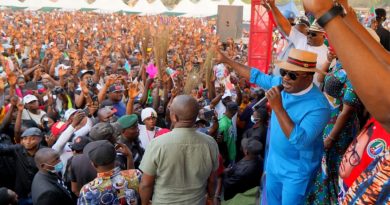
Something happened in Osun that Nigerians must not allow to disappear into the history of another election.
The citizens demonstrated that the political establishment does not always have the final word.
The bookmakers do not have the final word.
The campaign financiers do not have the final word.
The celebrities do not have the final word.
The political parties do not have the final word.
The people do.
That is the lesson of Osun.
And that lesson must not end with who won or who lost.
The deeper lesson is that citizens discovered their power.
Now we must organise that power.
Not as APC.
Not as PDP.
Not as Labour.
Not as ADC.
Not as an ethnic movement.
Not as a Christian movement.
Not as a Muslim movement.
Not as an anti-Tinubu movement.
But as a citizens’ movement for measurable democratic performance.
*CITIZENS MUST BUILD THEIR OWN PERFORMANCE STRUCTURE*
If political parties can establish campaign councils, citizens should establish their own Citizens’ Performance Council around every election.
The APC can appoint its Director-General.
The PDP can appoint its own.
Other political parties can do the same.
But citizens must appoint themselves as the Directors-General of their own democratic destiny.
We must stop allowing political parties to define the entire conversation.
Let every presidential candidate answer the same questions:
1. What are your five most important national priorities?
2. What measurable results will you deliver in your first 100 days?
3. What will you deliver within one year?
4. What will you deliver before the end of your first term?
5. How will you finance these promises?
6. What is your implementation timetable?
7. What data will citizens use to measure your performance?
8. Who will independently verify your claims?
9. What happens when you fail to meet your targets?
10. What will you publish quarterly so Nigerians can track your performance?
This is how we begin to move from Campaign Democracy to Performance Democracy.
*WE MUST STOP VOTING FOR PROMISES WITHOUT SCORECARDS*
Nigeria has suffered from an extraordinary imbalance.
Politicians are required to win elections.
They are not required, with equal seriousness, to win performance scorecards.
Campaigns are extensively monitored.
Governments are poorly monitored.
Political speeches are recorded.
Government outcomes are not adequately recorded.
Campaign expenditure attracts attention.
The return on public expenditure frequently does not.
This democratic absurdity must end.
The citizen should be asking:
How many kilometres of roads were promised? How many were delivered?
How many jobs were promised? How many sustainable jobs were created?
How many megawatts were promised? What was actually achieved?
How many children were promised quality education? What happened to learning outcomes?
How many hospitals were promised? What changed in healthcare delivery?
What happened to insecurity?
What happened to food prices?
What happened to the value of the naira?
What happened to electricity?
What happened to productivity?
These are not opposition questions.
They are citizenship questions.
*THE BURDEN OF CAMPAIGN DEMOCRACY*
Campaign Democracy is expensive.
It requires money for mobilisation, rallies, advertising, logistics, influence, social media, political structures and, sometimes, inducements.
The consequence is that political competition becomes a competition between financial war chests rather than competing visions of national development.
The Nigerian citizen becomes a consumer of political entertainment.
Candidates arrive with promises.
Crowds cheer.
Songs are played.
Money is distributed.
Speeches are made.
Votes are collected.
The politicians return to government.
The citizens return to poverty.
This is the cycle Performance Democracy must break.
The fundamental question can no longer be:
“Who can win?”
The question must become:
“Who can perform?”
And then:
“How will we know?”
*THE APC SHOULD WELCOME THIS CHALLENGE*
There is nothing anti-democratic about asking the APC to prove its case.
If the party believes its record is strong, it should welcome a performance-based election.
The campaign council has assembled some of the most experienced political actors in the country.
That experience should now be deployed not merely to sell the President, but to subject the administration’s record to measurement.
Let the campaign publish the achievements.
Let citizens interrogate them.
Let independent experts verify them.
Let other parties publish their alternatives.
Let citizens compare.
Then let the ballot decide.
That would be a significant movement away from personality politics towards Performance Democracy.
*THE REAL OPPOSITION IS NOT ANOTHER PARTY*
There is a deeper point.
The greatest opposition Nigerians must organise in 2027 is not necessarily against APC, PDP, Labour or any other political party.
It is against unaccountable government.
A government that performs should be supported.
A government that fails should be challenged.
A government that belongs to our party but performs poorly should be challenged.
A government that belongs to another party but performs well should be acknowledged.
That is citizenship.
That is how democracy grows.
*RELIGION MUST NOT DISTRACT US FROM PERFORMANCE*
There will be attempts during the 2027 campaign to make religion, ethnicity, region and personality the centre of political conversation.
Citizens must resist the trap.
If APC is Muslim-Muslim, ask what it has delivered.
If another party is Muslim-Christian, ask what it will deliver.
If another party presents a Christian-Christian ticket, ask what it will deliver.
If another candidate is Yoruba, Igbo, Hausa, Fulani, Middle Belt or from any other Nigerian identity, ask the same question:
What will you do for Nigeria?
Identity may tell us who a politician is.
It does not tell us what government will accomplish.
Religion may tell us what a person believes.
It does not build a road.
It does not generate electricity.
It does not create a job.
It does not reduce inflation.
It does not secure a community.
Government does.
And government must therefore be measured by what government does.
*FROM OSUN TO NIGERIA*
The citizens’ experience in Osun should now become a national democratic laboratory.
Let Osun become the place where Nigeria learned that citizens can move beyond passive voting into active democratic evaluation.
Let every constituency begin building a citizen scorecard.
Let citizens document government promises.
Let civil society collect data.
Let universities analyse government performance.
Let professional bodies verify claims.
Let journalists follow the money.
Let churches and mosques teach responsible citizenship rather than partisan loyalty.
Let young Nigerians use technology to track projects.
Let citizens ask candidates to sign measurable performance covenants.
Then, after the election, let those covenants become the basis for continuous accountability.
**The election must end.
The accountability must not.**
*THE 2027 QUESTION*
The APC has built its campaign council.
Other parties will build theirs.
Money will flow.
Political alliances will shift.
New slogans will emerge.
Social media will become a battlefield.
Celebrities will campaign.
Religious and ethnic narratives will compete for attention.
Political consultants will manufacture messages.
But underneath all of this is one question Nigerian citizens must refuse to abandon:
*WHO WILL PERFORM?*
Not who has the biggest crowd.
Not who has the richest sponsor.
Not who has the loudest social media army.
Not who has the strongest ethnic structure.
Not who has the most powerful godfather.
Not who can distribute the most money.
Not even who can produce the most convincing campaign speech.
Who will perform?
That is the question that should define 2027.
*A MESSAGE TO YARI AND THE APC CAMPAIGN COUNCIL*
To Senator Abdul’aziz Yari and the entire APC Presidential Campaign Council:
Nigeria does not need another election campaign that merely asks Nigerians to believe.
Nigeria needs a campaign prepared to prove.
Do not merely tell us that the administration has performed.
Give us the data.
Do not merely tell us that Nigeria is recovering.
Show us the indicators.
Do not merely tell us that reforms are working.
Show us who is benefiting.
Do not merely ask Nigerians to trust.
Give Nigerians the instruments with which we can verify.
If the APC believes its performance deserves another mandate, then let the 2027 election become Nigeria’s first truly national referendum on measurable governmental performance.
That would be bigger than APC.
It would be bigger than President Tinubu.
It would be bigger than the opposition.
It would be bigger than 2027.
It would be a new democratic culture.
*THE CITIZENS’ RESPONSIBILITY*
But citizens must also take responsibility.
We cannot demand Performance Democracy while remaining spectators.
We must organise.
We must document.
We must measure.
We must compare.
We must question.
We must verify.
We must reject inducement.
We must refuse to allow religion to blind us to performance or ethnicity to excuse failure.
We must stop asking only:
“Who are you supporting?”
And begin asking:
“What are you measuring?”
That is the political revolution Nigeria needs.
The APC has announced its Campaign Council.
Citizens must now announce theirs—not as a rival political party, but as the permanent accountability institution of the Nigerian people.
The political parties can campaign until election day.
The citizens must continue measuring until the last day of the government they elected.
That is the transition:
*FROM CAMPAIGN DEMOCRACY TO PERFORMANCE DEMOCRACY.*
And the journey that began in Osun must not end in Osun.
It must become Nigeria’s democratic inheritance.