
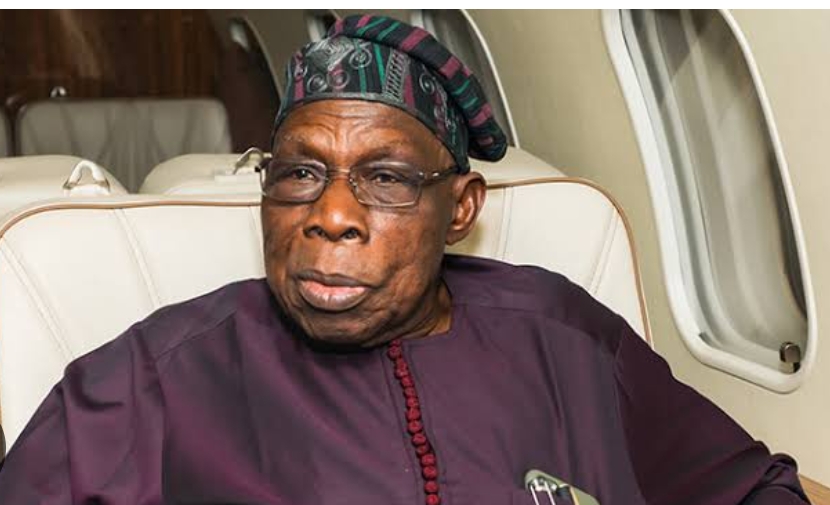
TDF Accuses Obasanjo of Economic Mismanagement, Defends Tinubu’s Reforms
Oru Leonard
The Democratic Front (TDF) has criticised former President Olusegun Obasanjo over his recent comments on Nigeria’s economic situation, accusing him of contributing to widespread poverty through policies implemented during his administration.
The group was reacting to Obasanjo’s remarks at the Financial Times Africa Summit 2026 in London, where he reportedly blamed President Bola Tinubu’s economic reforms for worsening poverty among Nigerians.
In a statement jointly signed by its Chairman, Mallam Danjuma Muhammad, and Secretary, Chief Wale Adedayo, TDF described the former President’s comments as hypocritical and politically motivated.
The group argued that Obasanjo’s administration depleted Nigeria’s foreign exchange reserves in an attempt to sustain the value of the naira, instead of investing adequately in electricity, infrastructure and other productive sectors of the economy.
According to TDF, the former President operated multiple foreign exchange windows, which allegedly encouraged arbitrage and the round-tripping of subsidised dollars, gradually weakening the country’s foreign reserves and undermining local production.
It further accused the Obasanjo administration of prioritising currency and petroleum subsidies at the expense of sustainable economic development, claiming that these policies contributed to Nigeria’s multidimensional poverty crisis.
The group also faulted the former President’s privatisation programme, arguing that the sale of government-owned enterprises resulted in job losses, increased dependence on imported goods and reduced the government’s capacity to invest in critical sectors.
TDF maintained that Obasanjo’s economic policies contributed to the emergence of approximately 86 million Nigerians living in multidimensional poverty by 2007.
It therefore rejected the former President’s assessment of Tinubu’s economic reforms, insisting that the current administration had allowed the naira to reflect its actual market value rather than continue costly interventions in the foreign exchange market.
The group also highlighted what it described as the social and economic benefits of Tinubu’s intervention programmes, including wage and pension increases, payment of outstanding pension liabilities, student loans, consumer credit facilities, SMEDAN-supported loans to small businesses and cash transfers to vulnerable Nigerians.
It argued that these initiatives represented significant progress compared with the National Poverty Eradication Programme (NAPEP), established during Obasanjo’s administration in 2001.
TDF further alleged that the former President’s criticism of Tinubu was politically motivated and intended to create an advantage for his preferred presidential candidate ahead of the next general election.
The group consequently urged Nigerians to disregard what it described as politically driven criticisms of the Tinubu administration’s economic policies.


