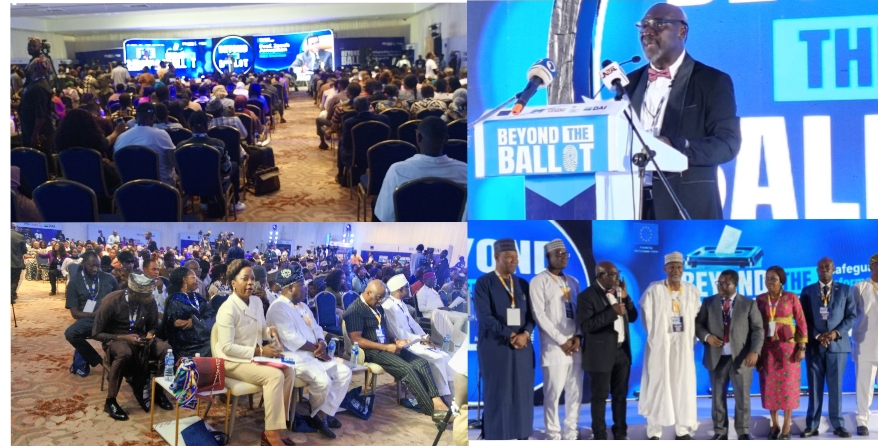
2027 ELECTIONS: EU, IPC WARN AGAINST GROWING THREAT OF AI-DRIVEN MISINFORMATION
Oru Leonard
The European Union (EU) and the International Press Centre (IPC) have raised concerns over the growing threat of artificial intelligence (AI)-generated misinformation to Nigeria’s electoral process ahead of the 2027 general elections.
They warned that the increasing use of AI to produce fake videos, cloned voices, fabricated election results and misleading political announcements could undermine voters’ confidence, electoral credibility and democratic stability.
The warning was issued at a two-day summit on electoral information integrity in Abuja, attended by stakeholders from the Independent National Electoral Commission (INEC), security agencies, political parties, media organisations, technology platforms, fact-checking organisations, civil society and academia.
Speaking at the event, Executive Director of IPC, Lanre Arogundade, described political misinformation and disinformation as growing challenges to Nigeria’s democracy, warning that their speed of circulation and increasing sophistication required urgent and coordinated responses.
Arogundade cited findings by the Nigeria Fact Checkers Coalition during the 2023 general elections, which showed that 63 per cent of presidential and National Assembly claims examined were completely false.
He disclosed that false information moved to another digital platform within an average of 11 minutes, while more than 1.2 million accounts following leading presidential candidates were identified as inauthentic.
He also expressed concern over the 26.7 per cent voter turnout recorded during the 2023 elections, the lowest since 1999, noting that the credibility of electoral information remained critical to citizens’ participation in the democratic process.
According to him, the growing use of AI-generated content, manipulated videos, cloned voices and forged result sheets has introduced new dimensions to election-related misinformation, including the possibility of genuine information being wrongly dismissed as fabricated.
He stressed that Nigeria must move beyond awareness campaigns to establish a coordinated system for identifying emerging threats, verifying information, escalating incidents and providing timely and credible public communication.
The IPC Executive Director said the summit was designed to develop a common understanding of electoral information threats and establish practical mechanisms for addressing them ahead of 2027.
He disclosed that the meeting was expected to produce an Electoral Information Integrity Response Protocol, an Abuja Commitment outlining stakeholders’ responsibilities and implementation timelines, as well as a Nigerian Electoral Information Integrity Partnership to sustain collaboration.
Former INEC Chairman, Professor Attahiru Jega, described the summit as timely, urging participants to use the opportunity to make meaningful contributions towards strengthening Nigeria’s electoral system.
Jega expressed confidence that the deliberations would generate useful recommendations, calling on stakeholders to participate actively in developing sustainable solutions.
Also speaking, European Union Ambassador to Nigeria and ECOWAS, Gautier Mignot, warned that elections could be manipulated through false information without any direct interference with ballot papers or voting materials.
He explained that fabricated polling-unit announcements could misdirect voters, while false election results could trigger public distrust and confusion before official figures were released.
Mignot observed that although misinformation primarily targets information, its ultimate objective is to weaken public confidence in democratic institutions.
He acknowledged the benefits of artificial intelligence in improving communication, translation and accessibility but warned that the technology could equally make deception easier to produce and more difficult to identify.
The EU Ambassador identified early preparedness, operational partnerships and protection of democratic rights as three critical priorities for Nigeria ahead of the 2027 elections.
He urged electoral institutions to establish effective communication channels, clearly define responsibilities and develop rapid-response mechanisms to address false information before it escalates.
He also advocated stronger cooperation among INEC, journalists, fact-checkers and technology companies, while emphasising that such partnerships must respect the independence and professional responsibilities of each institution.
According to him, journalists must retain editorial independence, fact-checkers must be free to reach independent conclusions, INEC must operate within its statutory mandate, while technology platforms must demonstrate transparency in their decisions and provide appropriate avenues for review.
Mignot further cautioned against using the fight against misinformation as a justification for suppressing legitimate criticism, restricting press freedom or treating political disagreements as security threats.
He drew attention to the growing online targeting of women through impersonation, fabricated social media publications and coordinated digital abuse, calling for inclusive access to reliable electoral information in local languages and accessible formats.
The EU envoy reaffirmed the European Union’s commitment to supporting Nigeria-led initiatives to safeguard electoral integrity, stressing that the country’s electoral choices must remain exclusively in the hands of Nigerians.
He urged the summit participants to translate their discussions into practical commitments, clearly defined responsibilities and measurable implementation timelines.
The initiative is supported by the EU-funded Support to Democratic Governance in Nigeria programme and is aimed at strengthening the country’s capacity to identify, prevent and respond to threats to electoral information integrity ahead of the 2027 general elections.