UI Don Calls for Greater Investment in Postharvest Engineering to Boost Nigeria’s Food Security
Oru Leonard
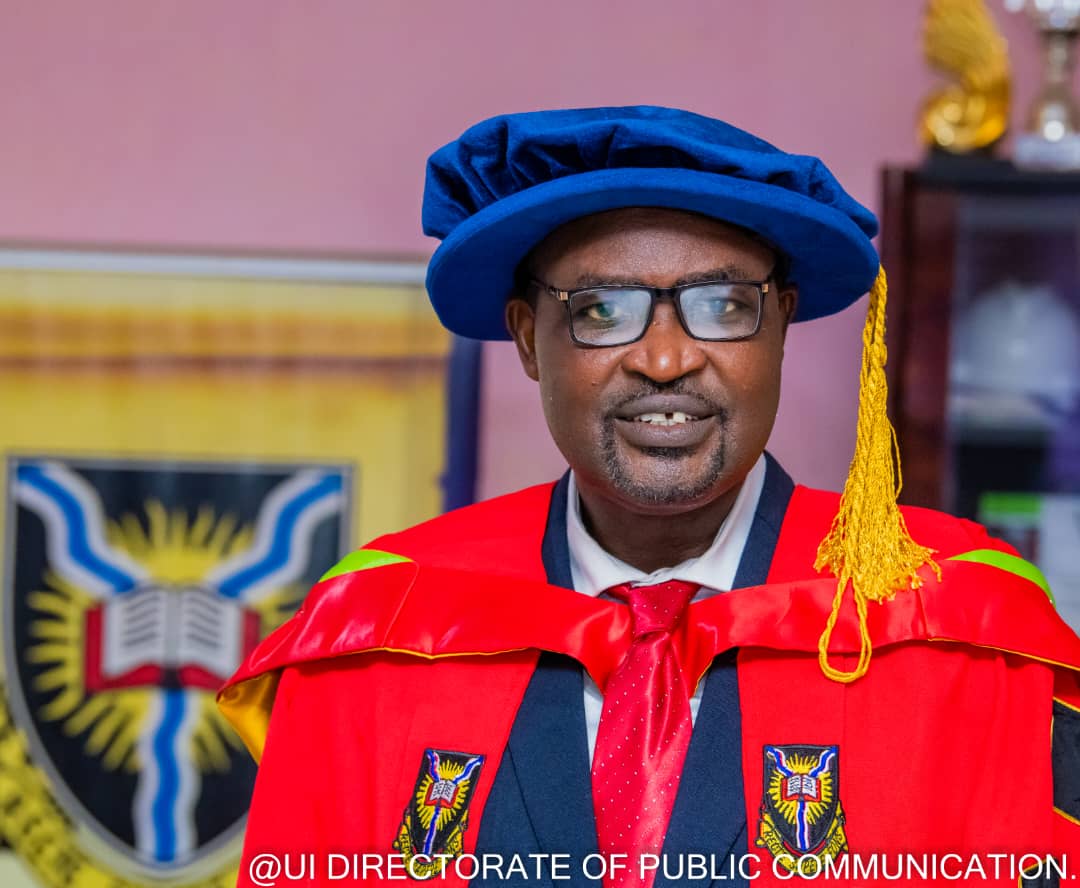
A Professor of Postharvest Engineering, Energy Studies and Environmental Management at the University of Ibadan (UI), Professor Ademola Kabir Aremu, has urged the Federal Government and other stakeholders to invest more in postharvest engineering, describing it as a critical and cost-effective solution to reducing food losses and improving Nigeria’s food security.
Professor Aremu made the call while delivering the 618th Inaugural Lecture of the University of Ibadan on behalf of the Faculty of Technology.
Delivering a lecture titled “Another Challenge: Crops, Crops Everywhere but Little Food on the Table: The Postharvest Engineer’s Struggles,” the don said Nigeria’s persistent food insecurity is driven not only by inadequate production but also by the enormous quantity of food lost after harvest due to poor handling, processing, storage, transportation and distribution systems.
He noted that despite improvements in agricultural production over the years, millions of Nigerians continue to experience food shortages because a significant proportion of harvested crops never reaches consumers.
According to him, many agricultural development programmes have failed to deliver the expected results because they focus mainly on increasing food production while paying insufficient attention to postharvest management.
Professor Aremu identified poor infrastructure, inadequate storage facilities, inefficient handling practices, limited access to modern technologies and the impact of climate change as major contributors to postharvest losses, particularly in developing countries.
He observed that although Nigeria’s agricultural policy promotes modernization across production, processing, storage and distribution, the limited application of postharvest engineering continues to undermine the attainment of these objectives.
The professor explained that postharvest engineering helps bridge the gap between food abundance and scarcity through improved harvesting methods, processing technologies, efficient storage systems, modern packaging, transportation and value addition, ensuring that more agricultural produce gets to consumers in good condition.
He further disclosed that about one-third of food produced globally is lost or wasted annually, with Sub-Saharan Africa accounting for significant losses before food reaches consumers. In Nigeria, he said, fruits, vegetables, tomatoes and tubers are among the commodities most affected, resulting in reduced food availability, lower farmers’ incomes, rising food prices and worsening household food insecurity.
Professor Aremu also highlighted the growing role of renewable energy in preserving agricultural produce, citing solar-powered drying, cooking and storage technologies as practical solutions for rural communities with limited electricity access.
He maintained that reducing postharvest losses would not only improve food availability but also increase farmers’ earnings, lower food prices, minimise environmental waste and contribute to sustainable national development.
The inaugural lecturer called on government to invest in rural infrastructure, including access roads, cold-chain facilities, storage systems and renewable energy technologies, while promoting food processing, value addition and digital platforms that provide farmers with timely market information.
He also advocated stronger collaboration among governments, universities, research institutions, development partners, farmers and the private sector to develop and commercialise innovative technologies that reduce food losses across the agricultural value chain.
Professor Aremu further recommended the introduction of compulsory courses on postharvest food losses in tertiary institutions, the establishment of dedicated centres of excellence for postharvest studies and the expansion of agricultural extension services to facilitate the adoption of research findings by farmers.
He reiterated that greater investment in postharvest engineering remains one of the most effective pathways to tackling hunger, strengthening household food security and ensuring that more food produced in Nigeria reaches consumers instead of being lost after harvest.
The lecture was the 15th inaugural lecture in the University of Ibadan’s 2025/2026 academic session.
(UI Media)