Nigeria Reaffirms Commitment to AU Peace, Security Agenda, Condemns Xenophobic Attacks
Oru Leonard
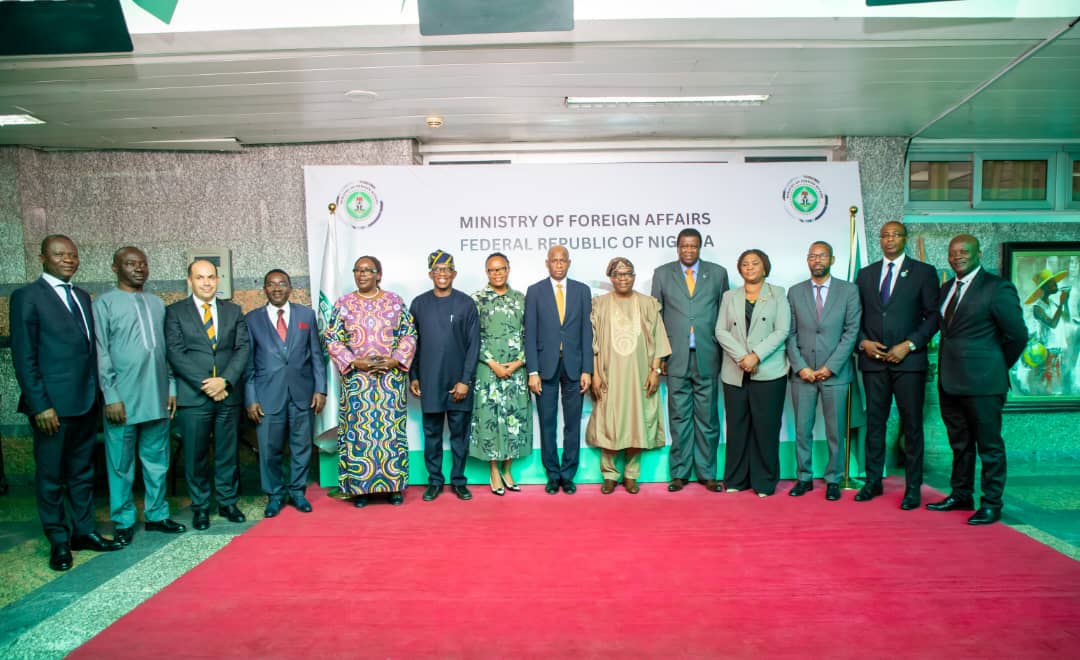
Abuja, July 1, 2026 – Nigeria has reaffirmed its commitment to advancing peace, security, democratic governance and regional integration across Africa as the Honourable Minister of State for Foreign Affairs, Ambassador Sola Enikanolaiye, received a high-level delegation of the African Union (AU) Peace and Security Council (PSC) in Abuja.
The delegation, led by Nigeria’s Permanent Representative to the African Union and Chairperson of the AU Peace and Security Council for June 2026, Ambassador Nasir Aminu, alongside the AU Commissioner for Political Affairs, Peace and Security, Ambassador Bankole Adeoye, visited the Ministry of Foreign Affairs following the Third Annual Joint Consultative Meeting between the AU Peace and Security Council and the ECOWAS Mediation and Security Council held in Abuja.
Ambassador Enikanolaiye thanked the delegation for its congratulatory message on his appointment and reiterated Nigeria’s unwavering support for the African Union’s goals of promoting peace, security, democracy, good governance and regional integration. He described the AU Peace and Security Council as a vital institution for conflict prevention, peacebuilding and political governance, while commending the growing collaboration between the AU and ECOWAS in tackling the continent’s evolving security challenges.
The minister stressed that Africa continues to grapple with terrorism, violent extremism, transnational organised crime, unconstitutional changes of government and humanitarian crises, calling for stronger cooperation among African institutions, improved governance frameworks and more effective conflict prevention mechanisms.
He also expressed Nigeria’s concern over recent xenophobic attacks against African nationals in South Africa, particularly Nigerians, describing the incidents as contrary to the ideals of African unity and solidarity.
Enikanolaiye disclosed that, on the directive of President Bola Ahmed Tinubu, the Federal Government evacuated affected Nigerians through government-funded repatriation flights to ensure their safe return home.
The minister urged the African Union to prioritise the issue on its peace and security agenda, emphasising that Africans should feel safe in every part of the continent. He further advocated stronger implementation of the AU’s free movement agenda and called on member states to address migration challenges through inclusive governance, economic development and expanded opportunities for citizens.
On peace financing, Enikanolaiye reiterated Nigeria’s longstanding position that Africa must establish sustainable and predictable funding mechanisms for its peace and security architecture. He noted that excessive dependence on external funding weakens African ownership of peace support operations and cited the ECOWAS Community Levy as a successful model that could be adapted at the continental level. He also reaffirmed Nigeria’s support for the implementation of United Nations Security Council Resolution 2719 (2023) while urging African countries to increase domestic funding for peace initiatives.
Earlier, Ambassador Nasir Aminu said the AU-ECOWAS consultative meeting reviewed emerging security threats, ongoing peace initiatives, sustainable financing for peace support operations and implementation of Resolution 2719.
Speaking on behalf of the AU Commission, Ambassador Bankole Adeoye commended Nigeria’s leadership in promoting peace, stability and regional integration across Africa.
He praised the country’s active role in the Peace and Security Council and reaffirmed the Commission’s commitment to working closely with ECOWAS and other regional bodies to address Africa’s security challenges.
He also stressed the importance of increased domestic financing, stronger institutional coordination and greater political commitment by member states to strengthen African ownership of peace operations.
Both sides reaffirmed their commitment to advancing peace, democratic governance and sustainable development across Africa through closer collaboration between the African Union, ECOWAS and member states, while agreeing to sustain regular consultations to strengthen collective responses to emerging security challenges.