Book on Sports Reforms Unveils Roadmap for Sustainable Growth in Nigeria
Oru Leonard
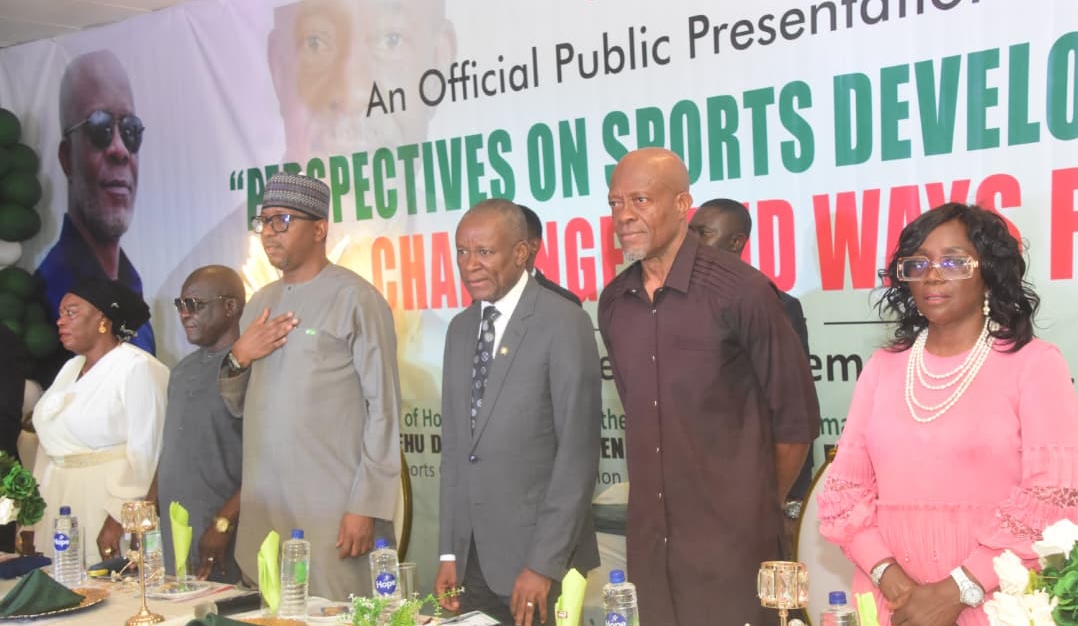
A new book offering a strategic blueprint for transforming Nigeria’s sports sector was unveiled in Abuja on Thursday, with leading sports administrators, former ministers, athletes, and stakeholders advocating sustainable funding, institutional reforms, and greater private-sector participation to unlock the nation’s sporting potential.
The book, Perspectives on Sports Development in Nigeria: Challenges and Ways Forward, authored by Dr. Emmanuel Edem Ikpeme, examines the historical evolution of sports in Nigeria, identifies key challenges hindering the sector’s growth, and proposes practical solutions aimed at repositioning sports as a driver of economic development, youth empowerment, and national unity.
The unveiling ceremony attracted prominent figures in the sports industry, including Chairman of the National Sports Commission (NSC), Mallam Shehu Dikko; former Minister of Sports Development, Senator John Owan Enoh; former Minister of Youth and Sports Development, Solomon Dalung; Director-General of the NSC, Hon. Bukola Olopade; federation officials, athletes, and sports administrators.
In the book’s preface, Dr. Ikpeme observed that despite various government initiatives such as the National Sports Festival, school sports competitions, and the National Sports Industry Policy (NSIP), the sector continues to grapple with inadequate funding, deteriorating infrastructure, weak governance frameworks, limited application of sports science, and recurring anti-doping concerns.
The author also provides detailed insights into the development of major sports including football, athletics, basketball, boxing, volleyball, wrestling, table tennis, rugby, swimming, taekwondo, and weightlifting. He advocates increased investment in sports science, sports psychology, and athlete welfare as critical factors for sustained success.
Dr. Ikpeme further highlighted reforms introduced under the administration of President Bola Ahmed Tinubu, including the approval of a ₦5 billion sports infrastructure bond, the exemption of the National Sports Commission from the Treasury Single Account (TSA), and increased budgetary allocations to the sector.
Speaking as Chairman of the occasion, Senator John Owan Enoh described the publication as a significant contribution to Nigerian sports development, noting that scholarly works such as Dr. Ikpeme’s provide an opportunity to evaluate past efforts, identify gaps, and chart a sustainable path forward.
Reflecting on his tenure as Sports Minister, Enoh recalled measures taken to ensure athletes received competition allowances before international events, improve the timely provision of sporting kits, and address anti-doping issues that had threatened Nigeria’s reputation in global sports.
According to him, those interventions restored confidence in sports administration and laid a stronger foundation for future growth.
As Special Guest of Honour, NSC Chairman Mallam Shehu Dikko commended the author for documenting the realities facing Nigerian sports and proposing practical solutions. He disclosed that after reviewing the manuscript and contributing the foreword, he encouraged the author to include a chapter on the ongoing reforms under President Tinubu in future editions.
Dikko noted that many of the challenges highlighted in the book are already being addressed through comprehensive reforms focused on governance, funding, and infrastructure development.
He explained that the restoration of the National Sports Commission has reduced bureaucracy, enhanced professionalism, and improved decision-making by enabling the Commission to report directly to the Presidency.
On funding, Dikko said the removal of sports financing from the TSA has eliminated delays that previously affected athletes’ preparations and payments. He added that budgetary allocations to sports have increased significantly and that President Tinubu has directed the timely release of approved funds to support athletes and sporting programmes.
The NSC Chairman also announced plans to establish a Sports Development Fund and utilise infrastructure bonds to rehabilitate and construct sporting facilities nationwide. He revealed that the Moshood Abiola National Stadium in Abuja, along with several other stadiums and university sports facilities, would soon undergo major rehabilitation.
Director-General of the NSC, Hon. Bukola Olopade, also commended the author, describing the publication as a valuable contribution to the sports sector. He agreed that while the challenges identified in the book are real, the current administration is already implementing measures to address them.
Former Minister of Youth and Sports Development, Solomon Dalung, described the book as essential reading for sports administrators, policymakers, and young Nigerians interested in the future of sports development.
Drawing from his experience in office, Dalung identified inadequate funding as one of the most persistent challenges facing the sector, lamenting that funds for international competitions were often released after events had already commenced, thereby affecting athletes’ preparation and performance.
He urged government to recognise sports as a multi-billion-naira industry capable of generating employment, wealth, and broader national development. Dalung also advocated the creation of a dedicated Sports Trust Fund to provide sustainable financing for athletes, infrastructure, and long-term development programmes.
In his vote of thanks, Dr. Ikpeme expressed appreciation to individuals who contributed to his professional development and the successful completion of the book. He paid tribute to former sports administrator Dr. Amos Adamu for his mentorship, acknowledged Senior Pastor Matthew Morakinyo of God City International Church for spiritual guidance, thanked Hon. Olopade for his professional support, and praised the book’s editor, Professor Ken Onukweje, for refining the manuscript.
He also expressed gratitude to Mallam Shehu Dikko, distinguished guests, sports administrators, military officers, church members, and other participants for their support and presence at the event.
The book concludes that while Nigeria possesses abundant sporting talent, unlocking its full potential will require deliberate investment, policy consistency, effective governance, and stronger collaboration between government and the private sector to achieve sustainable success on the global stage.