INEC Chairman Hails Osun Poll as ‘Gold Standard’, Announces November Mock Accreditation Ahead of 2027
Oru Leonard
The Chairman of the Independent National Electoral Commission (INEC), Prof. Joash Amupitan, SAN, has described the August 15, 2026 Osun State governorship election as a “gold standard” for electoral administration, while announcing a nationwide mock accreditation exercise for November ahead of the 2027 general elections.
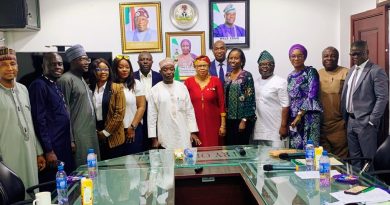
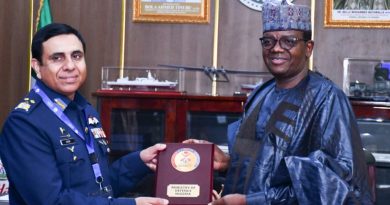
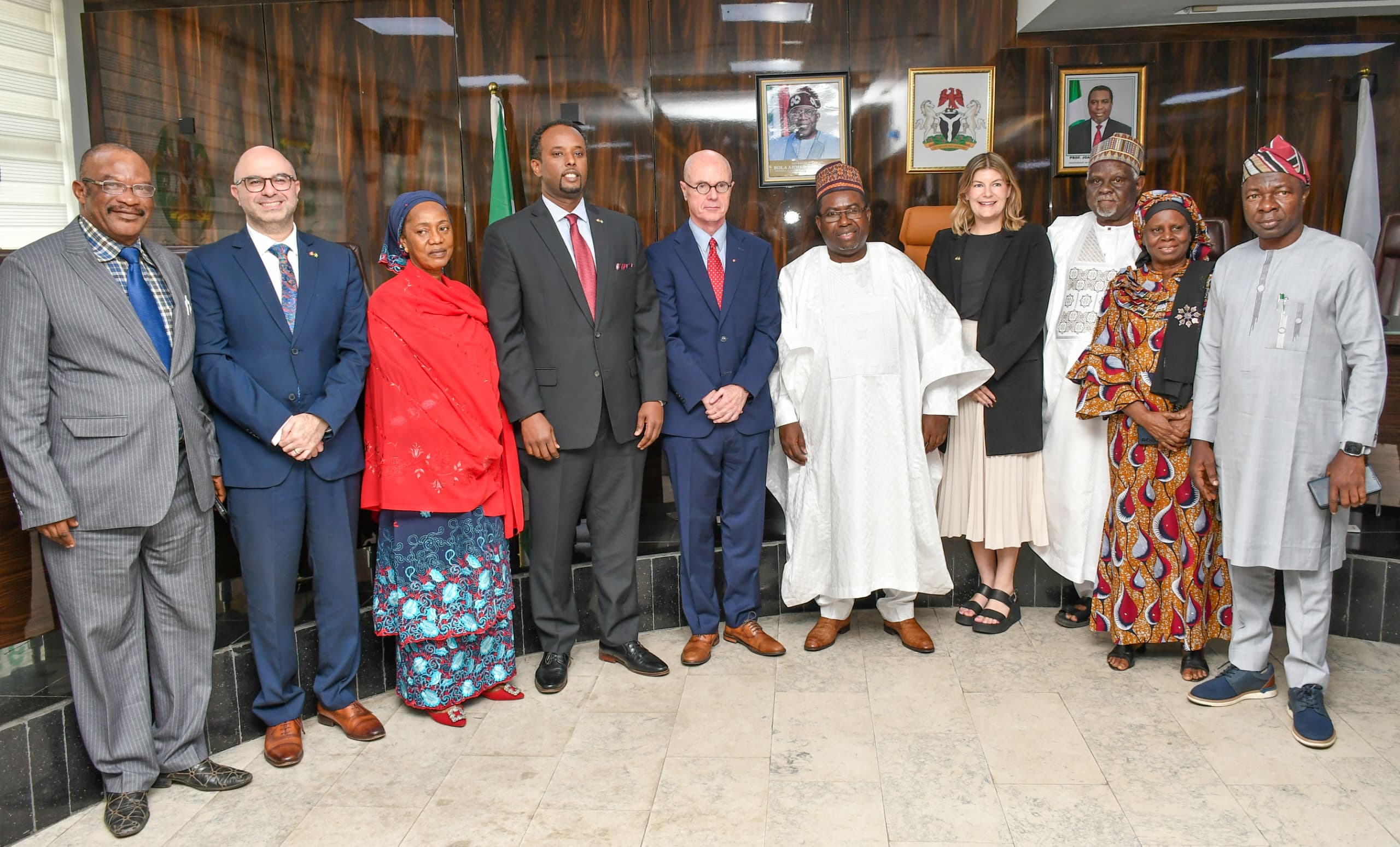
Amupitan disclosed this on Friday in Abuja when he separately received the Chargé d’Affaires of the Canadian High Commission in Nigeria, Mr David Sproule, and the newly appointed Country Representative of the Konrad Adenauer Stiftung (KAS), Mr Moritz Sprenker, on courtesy visits to INEC headquarters.
The INEC Chairman said the Osun election demonstrated the benefits of administrative preparedness, effective deployment of technology and proactive management of emerging challenges.
According to him, 3,556 out of the 3,763 polling units in Osun State, representing 94.5 per cent, opened for accreditation and voting by 8:30 a.m.
He attributed the successful early commencement of voting to the effective deployment of the Bimodal Voter Accreditation System (BVAS), seamless transmission of results to the INEC Result Viewing (IReV) portal and the proactive response of field officials.
“We view the success in Osun not as a final destination, but as the gold standard that will guide our preparations for 2027,” Amupitan said.
He said the Commission would conduct a nationwide mock accreditation exercise in November 2026 to rigorously test the BVAS and other aspects of its electoral preparations ahead of the 2027 general election.
Amupitan appreciated Canada’s continued partnership and support for Nigeria’s electoral process, particularly in strengthening the Commission’s readiness for the exercise.
The INEC Chairman also disclosed that the Commission needed to undertake a voter revalidation exercise, particularly for elderly voters whose registration records date back to 2011.
He, however, explained that the exercise could not be undertaken before the 2027 elections due to time constraints, stressing that it remained important for future electoral processes to prevent delays and other challenges.
The Commission, he said, was preparing for the Presidential and National Assembly elections scheduled for January 16, 2027, and the Governorship and State Houses of Assembly elections slated for February 6, 2027.
Amupitan also recalled that public campaigns and rallies for the 2027 elections officially commenced on August 19, 2026, while INEC had participated in the signing of the first National Peace Accord on issue-based campaigns by presidential candidates and political party chairmen.
Canada pledges continued support
Receiving the Canadian delegation, Amupitan said the visit underscored the longstanding relationship between Nigeria and Canada, particularly in the areas of democracy, rule of law and good governance.
He commended Canada for its support for electoral governance, civic education, institutional strengthening and gender inclusion in Nigeria.
He identified five areas for enhanced cooperation with Canada: consolidating the technological gains recorded during the Osun election; improving electoral inclusion for persons with disabilities, women, youths and other underrepresented groups; strengthening institutional capacity through technical assistance and training; combating election-related misinformation; and supporting the November mock accreditation exercise.
Amupitan further disclosed that INEC had established a dedicated Artificial Intelligence Unit to support data management, voter registration and results transmission, while ensuring that AI technologies were not misused.
Sproule commended INEC for its commitment to conducting free, fair and credible elections and reaffirmed Canada’s readiness to support areas identified by the Commission, including election observation.
He expressed particular interest in increasing the participation of women and other segments of society in the electoral process, expressing confidence in INEC’s ability to deliver credible elections.
INEC, KAS deepen partnership
In a separate meeting with KAS Country Representative, Moritz Sprenker, Amupitan congratulated him on his appointment and described the foundation as a longstanding partner of INEC.
He commended KAS for its contributions to constitutional democracy, the rule of law and good governance.
The INEC Chairman said the Commission and KAS had collaborated on regulatory frameworks for political parties, including technical retreats in Uyo, Akwa Ibom State, and Lagos, which contributed to preparations for the Osun election.
He listed civic education and democratic culture, electoral technology, institutional capacity building, combating misinformation, inclusion of persons with disabilities and marginalised groups, and interagency dialogue for peaceful elections as priority areas for further collaboration.
Responding, Sprenker said KAS operates in more than 100 countries and has been active in Nigeria for over 25 years, working with government, civil society, academia and the media.
He recalled a capacity-building workshop on procurement organised with INEC in Lagos in March 2026 and expressed the foundation’s continued commitment to strengthening its partnership with the Commission.
Amupitan used both engagements to reassure Nigeria’s international partners of INEC’s independence, neutrality and commitment to electoral integrity.
He said the Commission was also scaling up its logistical preparations to deploy approximately 1.4 million ad-hoc personnel across more than 176,000 polling units nationwide for the 2027 General Election.