WORLD EVIRONMENT DAY: NIEE Calls for Climate-Resilient Cities, Sustainable Waste Management in Abuja
Oru Leonard
The Nigerian Institution of Environmental Engineers (NIEE), Abuja Chapter, has called for urgent action to address the growing challenges of urbanization and climate change, stressing the need for resilient cities, sustainable waste management systems, and stronger environmental governance across Nigeria.
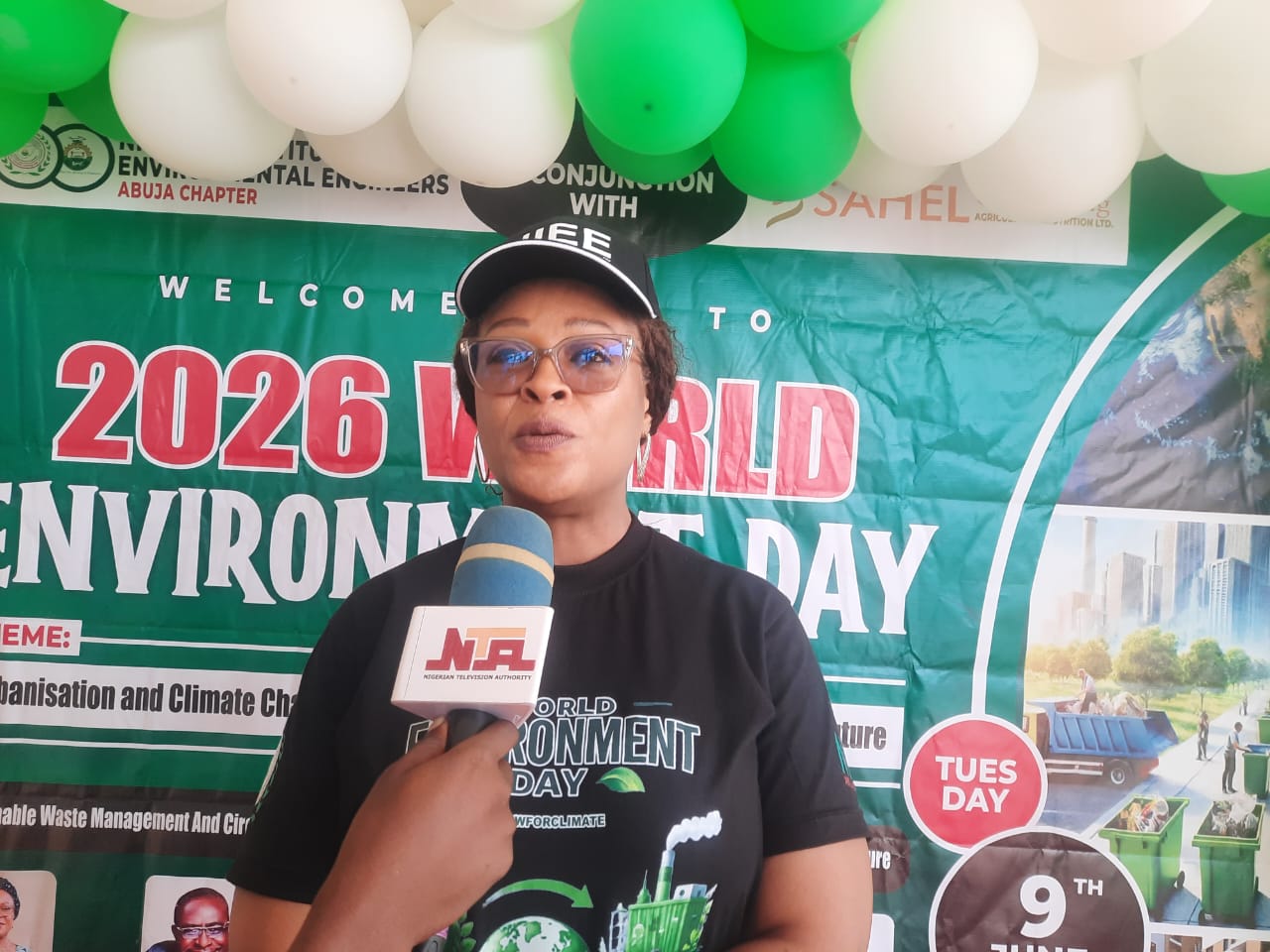
The call was made during the 2026 World Environment Day celebration held in Abuja in partnership with Sahel Consulting Agriculture and Nutrition Limited, under the theme, “Urbanization and Climate Change: Building Resilient Cities for a Sustainable Future.”
Speaking at the event, Chairman of the NIEE Abuja Chapter, Engr. Uche Patrick-Obikile, said rapid urban growth in cities such as Abuja is placing increasing pressure on infrastructure, planning systems, and environmental sustainability.
She noted that uncontrolled development, construction on floodplains, blocked drainage channels, and the loss of green spaces have become critical environmental challenges requiring urgent engineering and policy interventions.
According to her, environmental issues should no longer be viewed solely as policy concerns but as engineering challenges that demand practical and innovative solutions.
Engr Uche highlighted the event’s technical focus on “Sustainable Waste Management and Circular Economy: Waste to Wealth, Waste to Energy, Organic Waste to Biogas and Manure,” describing the circular economy as a transformative model capable of converting waste into economic opportunities, renewable energy, and agricultural inputs.
She said modern environmental management approaches have demonstrated that materials once regarded as waste can be transformed into valuable resources, creating jobs and supporting sustainable development.
The chapter chairman also emphasized the importance of youth engagement in environmental sustainability, pointing to the participation of students in a quiz competition and the launch of a new Schools Environmental Club initiative.
She encouraged young people to develop a deeper understanding of environmental issues, describing them as future engineers, scientists, and environmental advocates who will shape the country’s environmental future.
She also commended the institution’s partners, sponsors, and stakeholders for supporting environmental advocacy and sustainable development initiatives, noting that environmental stewardship requires collaboration among government agencies, the private sector, academia, civil society, and citizens.
The NIEE Chapter Chairman also praised Sahel Consulting Agriculture and Nutrition Limited for its partnership, saying the collaboration demonstrates the value of integrating expertise from engineering, agriculture, nutrition, and sustainable development to address environmental challenges.
In his address, National Chairman of NIEE, Engr. Caius Ikem Umekesiobi, underscored the growing impact of climate change on urban centres and the need for sustainable urbanization strategies.
He observed that while cities drive economic growth, innovation, and improved living standards, they also contribute significantly to greenhouse gas emissions, environmental degradation, and unsustainable resource consumption.
Umekesiobi warned that climate-related disasters, including floods, droughts, and heatwaves, are placing increasing strain on urban infrastructure and communities.
He called on engineers, environmental professionals, policymakers, and citizens to work together in developing climate-resilient infrastructure and sustainable urban systems capable of withstanding future environmental shocks.
According to him, resilient cities must incorporate green technologies, efficient waste management systems, improved water resource management, and sustainable transportation networks.
The NIEE national chairman further advocated stronger public awareness campaigns and policy frameworks that prioritize climate-resilient infrastructure while protecting natural ecosystems amid rapid urban expansion.
He reaffirmed the institution’s commitment to collaborating with local and international organizations to promote knowledge sharing, innovation, and best practices in environmental engineering and sustainable development.
Umekesiobi urged stakeholders to move beyond discussions and adopt practical measures that support environmental sustainability, stressing that engineering expertise must be leveraged to build cities that are both productive and environmentally responsible.
The World Environment Day celebration also featured technical sessions, stakeholder engagements, recognition of contributions to environmental sustainability, and activities aimed at promoting environmental consciousness among young people.
Participants agreed that addressing the twin challenges of urbanization and climate change requires innovative engineering solutions, stronger partnerships, and sustained commitment to building resilient and sustainable cities for future generations.