THE SEASONS AND GOVERNMENT OF DIVINE BLESSING: An Apostolic Teaching on How God Changes the Channels Through Which His Blessing Flows
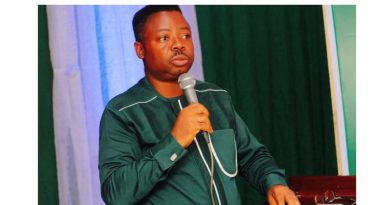
Citizen Bolaji Akinyemi
Key Texts: Genesis 39–41; Exodus 16–17; Deuteronomy 2–8; Joshua 5:10–12; Nehemiah 1–2; 2 Kings 6–7; Psalm 23:5
There is a mystery about divine blessing that the Church must understand: God does not always bless a man through the same channel in every season of his life.
There are seasons when God uses another man’s authority to open what you cannot legally access. There are seasons when God Himself becomes your government and takes direct responsibility for your survival. There are seasons when God brings you into your own territory of authority and expects your hands to become His instrument of blessing. And there are seasons when enemies surround you, yet God turns the siege itself into the theatre of your abundance.
Therefore, a change in the method of provision is not necessarily a withdrawal of God’s provision. It may be evidence that your season has changed.
1. THE SEASON OF SUPERNATURAL FAVOUR — WHEN GOD USES AUTHORITY ABOVE YOUR LIMITATIONS
Joseph entered Egypt without status, property or legal freedom. He was a slave.
Yet slavery could not imprison God’s purpose for him.
«“The LORD was with Joseph, and he was a successful man.” — Genesis 39:2»
God blessed Joseph while he was still legally a slave. The blessing first manifested through the hands of Potiphar, then through the prison authorities, and finally through Pharaoh himself.
The most remarkable moment came when Pharaoh transferred governmental authority to Joseph:
«“See, I have set thee over all the land of Egypt.” — Genesis 41:41»
Pharaoh removed his ring and put it on Joseph’s hand (Genesis 41:42). The ring represented delegated authority. Joseph’s circumstances had said, “You are a slave.” God’s favour caused the highest authority in the land to say, “You are now a ruler.”
This is a season in which your capacity is greater than your legal position.
God can put your blessing in the hands of someone whose authority is greater than the limitations surrounding you.
Nehemiah illustrates a related principle. Jerusalem lay in ruins, and Nehemiah was an exile serving in the Persian royal court. But when the burden of God came upon him, the Lord moved through King Artaxerxes. The king issued letters and authorised resources for Nehemiah’s journey and the rebuilding of Jerusalem (Nehemiah 2:1–8).
Apostolic principle: Never conclude that your present legal, social or economic limitation is the final definition of your future. There are seasons in which God will use the authority of another to create access for you.
But understand this: the person may be the instrument; God remains the source.
2. THE TRANSITIONAL SEASON — WHEN GOD BECOMES YOUR GOVERNMENT
Israel left Egypt but had not yet entered Canaan.
They had exited Pharaoh’s government but had not yet arrived in their promised inheritance.
They were in the wilderness.
The wilderness was a transitional space. It was not Egypt, and it was not yet Canaan. In that season, God assumed extraordinary responsibility for Israel.
He became their Provider:
Manna came from heaven (Exodus 16:4–15).
He became their Water Source:
Water came from the rock (Exodus 17:1–6).
He became their Guide:
A pillar of cloud led them by day and fire by night (Exodus 13:21–22).
He became their Defence and Commander:
When Amalek attacked Israel, Moses stood on the mountain while Joshua led the fighting below, and Israel prevailed through the strategy God gave them (Exodus 17:8–13).
God also gave Israel victory over Sihon king of the Amorites and Og king of Bashan (Numbers 21:21–35). Their victories were not merely the result of military superiority; God instructed them where to go, whom to confront and how to possess territory.
Deuteronomy repeatedly records that God went before Israel and gave their enemies into their hands (Deuteronomy 2:31–33; 3:21–22).
He provided clothing and preserved their bodies:
«“Thy raiment waxed not old upon thee, neither did thy foot swell, these forty years.” — Deuteronomy 8:4»
This is an extraordinary season: God does for you what you do not yet have the governmental, economic or territorial capacity to do for yourself.
But the wilderness was never intended to be permanent.
There is a danger in becoming so accustomed to supernatural provision that you refuse to mature into responsibility.
3. THE SEASON OF GOVERNANCE — WHEN GOD BLESSES THROUGH YOUR OWN HANDS
When Israel crossed into Canaan, something remarkable happened.
The manna ceased.
«“And the manna ceased on the morrow after they had eaten of the old corn of the land.” — Joshua 5:12»
Why?
Because the season had changed.
Israel had entered the land where they were expected to cultivate, labour, build, harvest and govern.
The cessation of manna was not the cessation of blessing.
It was the transformation of the channel of blessing.
In the wilderness, God fed them directly.
In Canaan, God blessed the work of their hands.
This is a critical apostolic lesson.
There is a season when you pray, “Lord, give me.”
There comes another season when God says, “I have given you; now build.”
Deuteronomy 28:8 speaks of God commanding blessing upon the work of His people’s hands.
The mature believer must therefore discern the difference between dependency and divine partnership.
When God brings you into your sphere of governance, influence, business, ministry, leadership or responsibility, He may deliberately withdraw certain forms of supernatural dependency because He has activated your hands.
Your hands become extensions of His government.
Your field becomes an altar.
Your labour becomes an instrument.
Your competence becomes a vessel.
Your influence becomes a channel through which others are blessed.
The question in this season is no longer merely, “What will God do for me?” but, “What has God placed in my hands through which He intends to bless others?”
4. THE SEASON OF SIEGE — WHEN GOD MAKES YOUR ENEMIES WITNESSES OF YOUR BLESSING
There are seasons when you have entered neither a place of ease nor abundance, but a place of siege.
Samaria was under siege.
There was famine in the city, and human resources had collapsed. Yet Elisha declared:
«“Tomorrow about this time shall a measure of fine flour be sold for a shekel…” — 2 Kings 7:1»
The mechanism God used was astonishing.
Four lepers went into the enemy camp and discovered that the Lord had caused the Syrians to hear the sound of an advancing army. The Syrians fled, leaving behind their tents, food, animals, silver and gold.
The very army that had come to destroy Israel became the unwitting supplier of Israel’s abundance.
The enemy became the warehouse.
The siege became the pathway.
The threat became the testimony.
There is a season when the people who have positioned themselves against you become unwilling witnesses to what God is doing through you.
David experienced this principle:
«“Thou preparest a table before me in the presence of mine enemies.” — Psalm 23:5»
Notice: the table is not necessarily prepared after the enemies disappear.
Sometimes God blesses you in their presence.
The presence of opposition does not prove the absence of God’s favour.
Indeed, there are seasons when the intensity of opposition becomes the backdrop against which the greatness of divine favour is revealed.
THE APOSTOLIC DISCERNMENT: KNOW YOUR SEASON
The tragedy is not that the method of blessing changes.
The tragedy is failing to recognise that the season has changed.
Joseph needed Pharaoh’s authority in one season, but eventually Joseph himself became the authority through which Egypt was preserved.
Israel needed manna in the wilderness, but eventually they had to cultivate Canaan.
Samaria needed deliverance from siege, but the deliverance came through a mechanism nobody could have predicted.
Therefore:
In your slavery season, look for divine favour.
In your wilderness season, trust God’s provision.
In your governance season, activate your hands.
In your siege season, watch for God’s strategy.
And above all, understand this:
GOD IS THE SOURCE; THE SEASON DETERMINES THE CHANNEL.
Do not worship the channel because God used it.
Do not mourn the channel when God changes it.
Do not call the end of manna the end of blessing.
Do not mistake transition for abandonment.
Do not mistake opposition for divine rejection.
The God who blessed Joseph through Pharaoh can bless you through another.
The God who fed Israel with manna can sustain you in the wilderness.
The God who stopped the manna can activate your hands in Canaan.
The God who emptied the Syrian camp can make your enemies participate in your testimony.
The blessing has not changed because the channel has changed.
The God of the season remains the God of the blessing.
And the mature believer asks not merely:
“Lord, bless me.”
but:
“Lord, show me my season, show me Your government in this season, and show me the channel through which Your blessing is now ordained to flow.”
That is the wisdom of the sons of Issachar:
«“…which were men that had understanding of the times, to know what Israel ought to do.” — 1 Chronicles 12:32»
Discern the season. Recognise the government of God. Identify the channel. Then move with God.
Citizen Bolaji Akinyemi, Apostle|Nation Builder, is the President of The Voice Of His Word Ministries, an Itinerary Apostolic Teaching Platform, he is also the Convener of the Apostolic Round Table.
+234 803 304 1236