189 Journalists Killed in Two Years, Six in Seven Cases Go Unpunished – UNESCO Maryam Aminu At least 189 journalists were killed in violent attacks across the world in 2024 and 2025, yet perpetrators were brought to justice in only a fraction of the cases, with six out of every seven killings going unpunished, the United Nations Educational, Scientific and Cultural Organization (UNESCO) has disclosed. The figures have raised fresh concerns about the dangers confronting journalists and the growing threats to press freedom, particularly as Nigeria prepares for its 2027 general elections. The warning came during a virtual event organised by Safer-Media Initiative on Monday, November 2, to mark the International Day to End Impunity for Crimes Against Journalists. The event brought together journalists and other stakeholders to discuss the safety of media professionals, the spread of misinformation and the role of credible journalism in sustaining democracy. Presenting a message from UNESCO’s Director-General, the Head of Communication and Information at the UNESCO Abuja Office, Yachat Nuhu, said the figures were contained in the organisation’s 2026 Director-General’s Report on the Safety of Journalists and the Danger of Impunity. She said 67 per cent of the journalists killed during the period died in conflict zones, while new forms of danger were making the profession increasingly risky. Among these threats were drone attacks, which claimed 50 journalist lives between 2024 and 2025, as well as gender-based online violence, particularly targeting women journalists. Nuhu warned that attacks against journalists do not only put their lives at risk but also deprive the public of access to information and weaken press freedom. She, however, pointed to some progress in the global fight against impunity, noting that cases of unpunished journalist killings in countries not affected by conflict had declined by 17 percentage points since 2012. According to her, UNESCO had supported more than 70 national mechanisms for the protection of journalists worldwide through the United Nations Plan of Action on the Safety of Journalists. The organisation had also worked with its partners to train more than 53,000 judicial and law enforcement officials in 160 countries, as well as 3,600 parliamentarians, to improve the protection of journalists and strengthen accountability. Speaking on Nigeria’s efforts, Nuhu said UNESCO had been working with the judiciary over the past two to three years to improve understanding of issues surrounding journalists’ safety and freedom of expression. She explained that the engagement brought journalists and judicial officers together to discuss the challenges media professionals face and provide an opportunity for journalists to share their experiences directly with members of the judiciary. One of the outcomes, she said, was the development of a curriculum for law students and legal education institutions in Nigeria, which she described as the first of its kind in Africa. The curriculum is intended to help future lawyers better understand issues relating to journalists, press freedom and freedom of expression. Nuhu said UNESCO worked with relevant government institutions, the Ministry of Justice, journalism institutions, academics and other partners to develop the material and prepare lecturers to teach it. While admitting that much more needed to be done, she said Nigeria was making efforts to improve journalist protection and tackle impunity. She called on governments, media organisations and civil society groups to do more to protect journalists against threats, whether they occur online or offline. “Protecting journalists means defending freedom of expression. It means strengthening democracy and safeguarding everyone’s rights to know,” she said while reading the Director-General’s message. Also speaking at the event, the Executive Director and Chief Executive Officer of Safer-Media Initiative, Peter Iorter, drew attention to the growing influence of artificial intelligence and the need for newsrooms to prepare for the challenges that come with it. He recalled that the organisation launched its Artificial Intelligence and Media Project on November 2, 2025, with support from UNESCO’s International Programme for the Development of Communication (IPDC). The project, he said, was designed to help journalists understand both the opportunities and risks associated with artificial intelligence. So far, it has trained 107 journalists across Nigeria and examined how media organisations and individual journalists are adopting the technology in their work. However, the assessment revealed gaps, including limited training and the absence of clear institutional policies to guide the responsible use of AI in newsrooms. Iorter said the organisation had since developed resources to help media houses establish guidelines for the ethical and responsible use of artificial intelligence. He thanked UNESCO for its support, noting that the project was part of efforts to prepare journalists and newsrooms for the changing demands of the profession. On the issue of journalists’ safety, Iorter said the consequences of attacks against media professionals went far beyond the individuals directly affected. He warned that when attacks are ignored or perpetrators escape punishment, journalists may begin to censor themselves, avoid sensitive issues or withdraw from public discussions for fear of becoming targets. He gave the example of journalists facing online harassment, saying some could be forced to temporarily leave digital platforms, limiting their ability to report, interact with audiences and contribute to important conversations. Iorter also expressed concern over the use of artificial intelligence to create deepfakes and other fabricated content, which could be used to discredit genuine reports and make it increasingly difficult for the public to distinguish credible journalism from manipulated information. He said the situation was particularly worrying as Nigeria approaches the 2027 general elections, when voters would need reliable information to assess candidates, examine their records and make informed choices. According to him, when journalists are intimidated and fabricated content floods the information space, citizens risk losing access to the facts needed to participate meaningfully in the democratic process. He described the media as an important pillar of Nigeria’s democracy, pointing to its role in holding public officeholders accountable and providing space for discussions on governance, human rights, corruption and other national issues. He warned that these responsibilities become increasingly difficult to fulfil when journalists face threats without any meaningful accountability. Rather than the usual format of keynote speeches and panel discussions, Safer-Media Initiative adopted an open-mic approach, allowing journalists and other participants to speak freely about their experiences and concerns. Iorter said the decision was deliberate, as the organisation wanted journalists, especially those working in difficult environments, to have an opportunity to speak about the risks they encounter while carrying out their duties. He said the experiences shared during the engagement would help provide useful information for future interventions aimed at improving journalists’ safety. Participants raised concerns about their personal security, the protection mechanisms available to them and the support they could receive when attacked because of their work. Responding to the concerns, Iorter reminded journalists that their safety must come before the pressure to get a story. He acknowledged the difficult position reporters often find themselves in when covering emergencies, noting that while other people may be running away from danger, journalists are sometimes expected to move towards it to document events. “As a journalist, you first of all need to be alive for you to report the story. So, your safety matters. Your safety first before any other thing,” he said. His remarks served as a reminder that no assignment should come at the expense of a journalist’s life and that media organisations must take the safety of their staff seriously. The event, held under the global theme, “Threats Evolve. Impunity Endures,” highlighted the changing nature of threats against journalists and the continuing failure to bring perpetrators to justice. The International Day to End Impunity for Crimes Against Journalists is observed annually on November 2 following its proclamation by the United Nations General Assembly through Resolution A/RES/68/163. The resolution urged Member States to take concrete steps to address the culture of impunity surrounding crimes against journalists. November 2 was chosen to commemorate the assassination of two French journalists in Mali on the same date in 2013.
Maryam Aminu
At least 189 journalists were killed in violent attacks across the world in 2024 and 2025, yet perpetrators were brought to justice in only a fraction of the cases, with six out of every seven killings going unpunished, the United Nations Educational, Scientific and Cultural Organization (UNESCO) has disclosed.
The figures have raised fresh concerns about the dangers confronting journalists and the growing threats to press freedom, particularly as Nigeria prepares for its 2027 general elections.
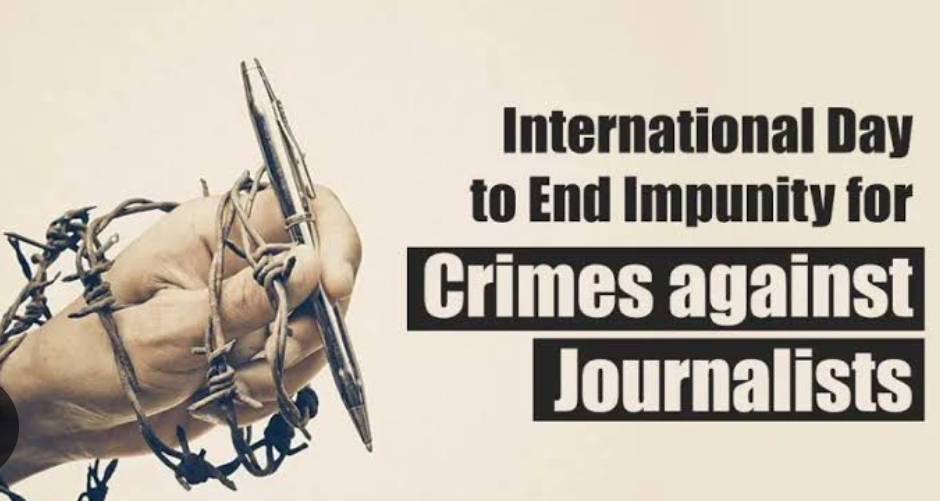
The warning came during a virtual event organised by Safer-Media Initiative on Monday, November 2, to mark the International Day to End Impunity for Crimes Against Journalists.
The event brought together journalists and other stakeholders to discuss the safety of media professionals, the spread of misinformation and the role of credible journalism in sustaining democracy.
Presenting a message from UNESCO’s Director-General, the Head of Communication and Information at the UNESCO Abuja Office, Yachat Nuhu, said the figures were contained in the organisation’s 2026 Director-General’s Report on the Safety of Journalists and the Danger of Impunity.
She said 67 per cent of the journalists killed during the period died in conflict zones, while new forms of danger were making the profession increasingly risky.
Among these threats were drone attacks, which claimed 50 journalist lives between 2024 and 2025, as well as gender-based online violence, particularly targeting women journalists.
Nuhu warned that attacks against journalists do not only put their lives at risk but also deprive the public of access to information and weaken press freedom.
She, however, pointed to some progress in the global fight against impunity, noting that cases of unpunished journalist killings in countries not affected by conflict had declined by 17 percentage points since 2012.
According to her, UNESCO had supported more than 70 national mechanisms for the protection of journalists worldwide through the United Nations Plan of Action on the Safety of Journalists.
The organisation had also worked with its partners to train more than 53,000 judicial and law enforcement officials in 160 countries, as well as 3,600 parliamentarians, to improve the protection of journalists and strengthen accountability.
Speaking on Nigeria’s efforts, Nuhu said UNESCO had been working with the judiciary over the past two to three years to improve understanding of issues surrounding journalists’ safety and freedom of expression.
She explained that the engagement brought journalists and judicial officers together to discuss the challenges media professionals face and provide an opportunity for journalists to share their experiences directly with members of the judiciary.
One of the outcomes, she said, was the development of a curriculum for law students and legal education institutions in Nigeria, which she described as the first of its kind in Africa.
The curriculum is intended to help future lawyers better understand issues relating to journalists, press freedom and freedom of expression.
Nuhu said UNESCO worked with relevant government institutions, the Ministry of Justice, journalism institutions, academics and other partners to develop the material and prepare lecturers to teach it.
While admitting that much more needed to be done, she said Nigeria was making efforts to improve journalist protection and tackle impunity.
She called on governments, media organisations and civil society groups to do more to protect journalists against threats, whether they occur online or offline.
“Protecting journalists means defending freedom of expression. It means strengthening democracy and safeguarding everyone’s rights to know,” she said while reading the Director-General’s message.
Also speaking at the event, the Executive Director and Chief Executive Officer of Safer-Media Initiative, Peter Iorter, drew attention to the growing influence of artificial intelligence and the need for newsrooms to prepare for the challenges that come with it.
He recalled that the organisation launched its Artificial Intelligence and Media Project on November 2, 2025, with support from UNESCO’s International Programme for the Development of Communication (IPDC).
The project, he said, was designed to help journalists understand both the opportunities and risks associated with artificial intelligence.
So far, it has trained 107 journalists across Nigeria and examined how media organisations and individual journalists are adopting the technology in their work.
However, the assessment revealed gaps, including limited training and the absence of clear institutional policies to guide the responsible use of AI in newsrooms.
Iorter said the organisation had since developed resources to help media houses establish guidelines for the ethical and responsible use of artificial intelligence.
He thanked UNESCO for its support, noting that the project was part of efforts to prepare journalists and newsrooms for the changing demands of the profession.
On the issue of journalists’ safety, Iorter said the consequences of attacks against media professionals went far beyond the individuals directly affected.
He warned that when attacks are ignored or perpetrators escape punishment, journalists may begin to censor themselves, avoid sensitive issues or withdraw from public discussions for fear of becoming targets.
He gave the example of journalists facing online harassment, saying some could be forced to temporarily leave digital platforms, limiting their ability to report, interact with audiences and contribute to important conversations.
Iorter also expressed concern over the use of artificial intelligence to create deepfakes and other fabricated content, which could be used to discredit genuine reports and make it increasingly difficult for the public to distinguish credible journalism from manipulated information.
He said the situation was particularly worrying as Nigeria approaches the 2027 general elections, when voters would need reliable information to assess candidates, examine their records and make informed choices.
According to him, when journalists are intimidated and fabricated content floods the information space, citizens risk losing access to the facts needed to participate meaningfully in the democratic process.
He described the media as an important pillar of Nigeria’s democracy, pointing to its role in holding public officeholders accountable and providing space for discussions on governance, human rights, corruption and other national issues.
He warned that these responsibilities become increasingly difficult to fulfil when journalists face threats without any meaningful accountability.
Rather than the usual format of keynote speeches and panel discussions, Safer-Media Initiative adopted an open-mic approach, allowing journalists and other participants to speak freely about their experiences and concerns.
Iorter said the decision was deliberate, as the organisation wanted journalists, especially those working in difficult environments, to have an opportunity to speak about the risks they encounter while carrying out their duties.
He said the experiences shared during the engagement would help provide useful information for future interventions aimed at improving journalists’ safety.
Participants raised concerns about their personal security, the protection mechanisms available to them and the support they could receive when attacked because of their work.
Responding to the concerns, Iorter reminded journalists that their safety must come before the pressure to get a story.
He acknowledged the difficult position reporters often find themselves in when covering emergencies, noting that while other people may be running away from danger, journalists are sometimes expected to move towards it to document events.
“As a journalist, you first of all need to be alive for you to report the story. So, your safety matters. Your safety first before any other thing,” he said.
His remarks served as a reminder that no assignment should come at the expense of a journalist’s life and that media organisations must take the safety of their staff seriously.
The event, held under the global theme, “Threats Evolve. Impunity Endures,” highlighted the changing nature of threats against journalists and the continuing failure to bring perpetrators to justice.
The International Day to End Impunity for Crimes Against Journalists is observed annually on November 2 following its proclamation by the United Nations General Assembly through Resolution A/RES/68/163.
The resolution urged Member States to take concrete steps to address the culture of impunity surrounding crimes against journalists.
November 2 was chosen to commemorate the assassination of two French journalists in Mali on the same date in 2013.