Plenty At The Polls, Missing In Power: The Nigerian Women Dilemma – Labour Party Chair Raises Alarm
Maryam Aminu
Nigeria’s widening gender gap in politics has been blamed on the rising influence of money-driven campaigns, with the National Chairman of the Labour Party, Nenadi Usman, warning that financial barriers are quietly shutting women out of leadership.
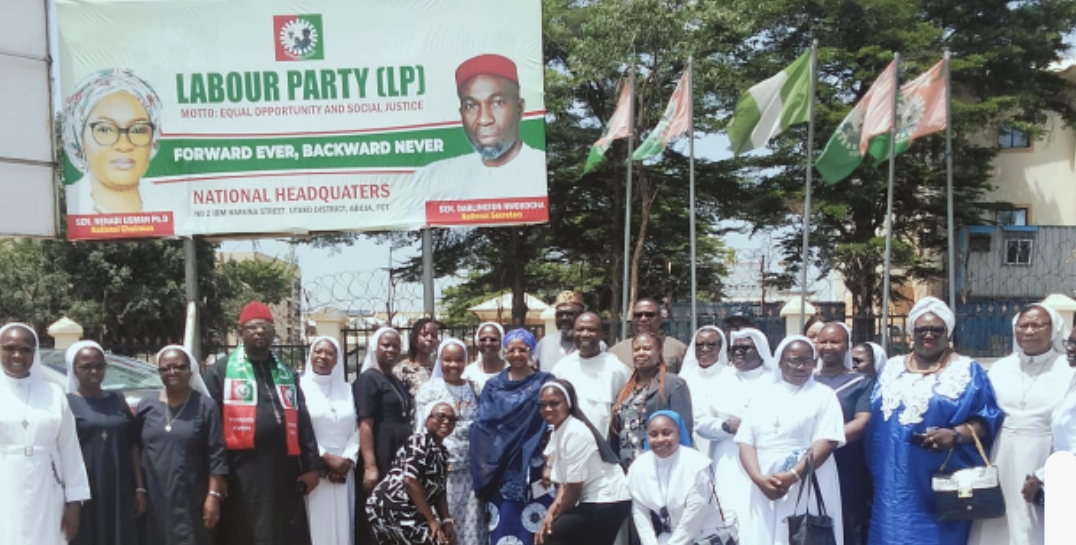
Usman raised the concern in Abuja during a meeting with a delegation from the Dominicans for Justice and Peace and the Africa Faith and Justice Network, describing the political space as one where women struggle to compete not for lack of capacity, but for lack of resources.
According to her, the high cost of elections from party primaries to general campaigns has made it nearly impossible for many qualified women to step forward.
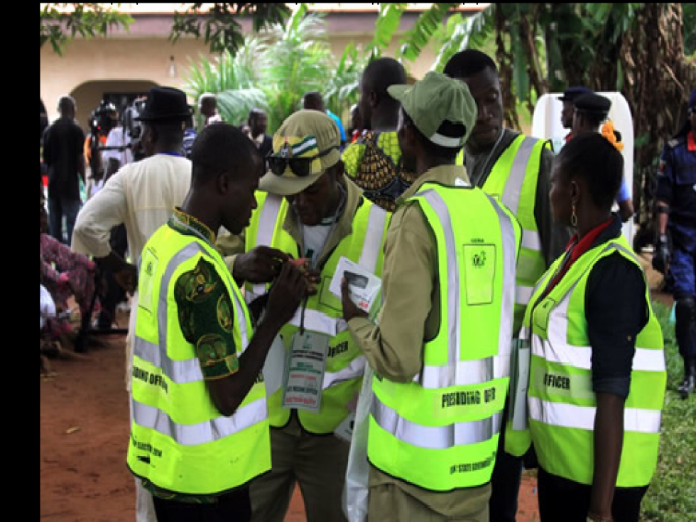
She stressed that while women form a significant portion of the voting population, they often fail to translate that numerical strength into electoral victories.
Drawing from personal experience, the former lawmaker noted a troubling pattern: female voters frequently support male candidates over their female counterparts, a trend she said weakens the collective political strength of women.
She also pointed to entrenched cultural dynamics where men influence the voting choices of their families, further limiting women’s chances at the polls.
Usman argued that internal party processes also play a decisive role.
She advocated for direct primaries, explaining that delegate-based systems tend to favour aspirants with deep pockets who can influence outcomes. In contrast, she said direct primaries offer grassroots-oriented female candidates a fairer chance, especially those with strong community ties.
Also, Sr. Eucharia Madueke of the Africa Faith and Justice Network said increasing women’s representation is not symbolic but essential for effective leadership.
She maintained that policies become more inclusive and impactful when women’s voices are adequately represented in decision-making.
Madueke emphasized that women bring lived experiences that shape better policy outcomes, particularly at the grassroots level, warning that continued underrepresentation distorts governance priorities.
On his part, Fr. Aniedi Okure called for more decisive action, urging authorities to move beyond policy declarations to enforceable laws that guarantee women’s inclusion.
He recommended a minimum of 40 per cent representation for women in political offices, noting that Nigeria’s longstanding 35 per cent affirmative action target has remained largely unmet.
He described the current level of female representation as alarmingly low and called for legal frameworks that would compel compliance, including structured quotas in legislative positions.
The discussion adds to growing calls for systemic reforms to dismantle financial and structural barriers that continue to sideline women from Nigeria’s political leadership.