Oyetola Directs NIMASA to Fast-Track CVFF Disbursement to Indigenous Shipowners
Oru Leonard
The Minister of Marine and Blue Economy, Dr Adegboyega Oyetola, has reaffirmed the Federal Government’s commitment to indigenous shipping development, directing the Nigerian Maritime Administration and Safety Agency (NIMASA), to work with approved lending institutions to accelerate the disbursement of the Cabotage Vessel Financing Fund (CVFF), to qualified beneficiaries.
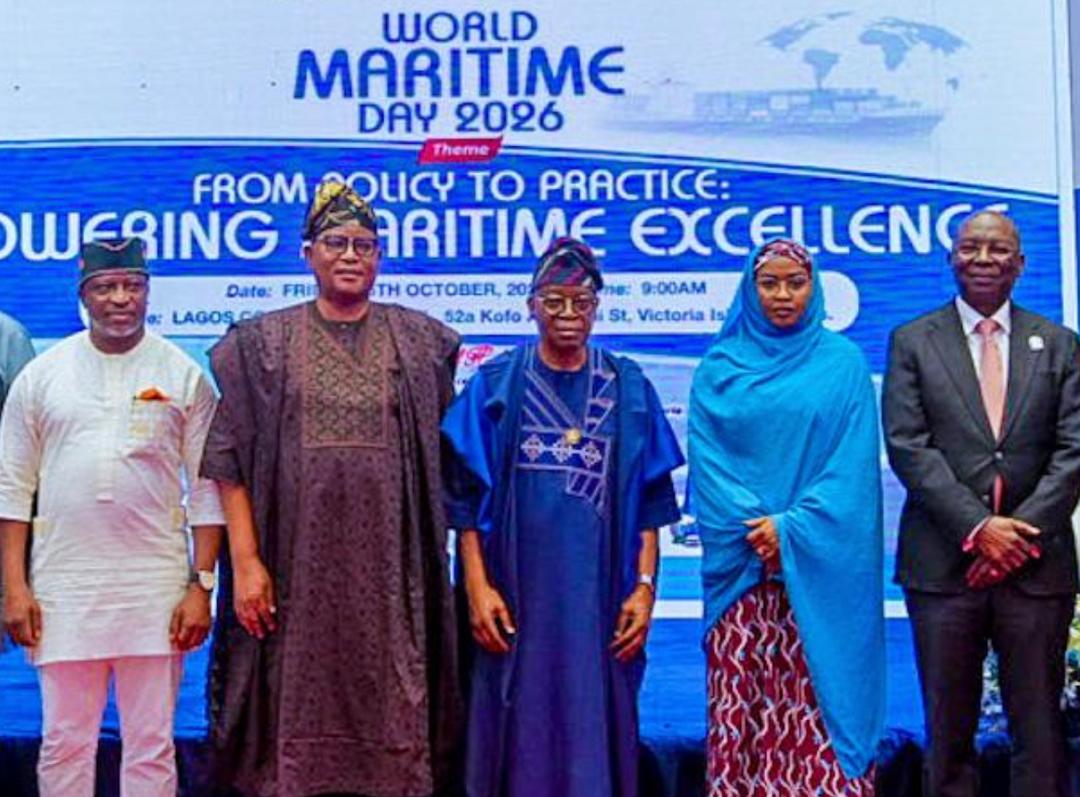
In a statement signed by Dr Bolaji Akinola, Special Adviser to the Honourable Minister, Federal Ministry of in Abuja, Oyetola gave the assurance on Friday, October 16, 2026, during the Third Quarter 2026 Citizens’ and Stakeholders’ Engagement of the Federal Ministry of Marine and Blue Economy in Victoria Island, Lagos.
He said the government remained determined to strengthen local participation in Nigeria’s maritime industry through effective implementation of the Coastal and Inland Shipping (Cabotage) Act and improved access to financing for indigenous shipowners.
Addressing stakeholders, the minister reaffirmed the administration’s commitment to building local shipping capacity and ensuring that Nigerians play a leading role in the ownership and operation of vessels involved in domestic maritime trade.
According to him, the ministry is taking steps to address concerns surrounding access to the CVFF, a financing mechanism designed to support the growth of Nigerian-owned shipping businesses.
Oyetola disclosed that he had directed NIMASA to collaborate closely with approved Primary Lending Institutions (PLIs) to facilitate the processing and disbursement of the fund to eligible applicants.
While acknowledging the need for patience in implementing the process, he maintained that the government’s commitment to advancing indigenous shipping remained firm.
“Progress may require patience, but our direction remains firm,” the minister said.
The minister described the effective deployment of the CVFF as a significant step towards strengthening Nigeria’s indigenous fleet and improving the competitiveness of local operators in the maritime sector.
He noted that access to financing would not only support vessel acquisition but could also stimulate investment across several segments of the maritime value chain, including shipbuilding, marine engineering, vessel maintenance and maritime logistics.
According to Oyetola, expanding indigenous shipping capacity is central to the government’s broader strategy of ensuring that Nigerians derive greater economic benefits from the nation’s maritime resources.
He explained that stronger local participation would create opportunities for businesses, encourage investment and support the development of technical expertise required to sustain a competitive maritime industry.
“The effective deployment of the CVFF has the potential to strengthen our indigenous fleet and stimulate investment across the maritime value chain,” he stated.
Oyetola further emphasised the importance of professional training, local expertise, support for indigenous enterprises and strategic investment in building a sustainable domestic maritime industry.
He said the government’s objective was to create an environment in which Nigerians have the opportunities, skills, financial resources and institutional support needed to own and operate maritime businesses successfully.
“Our ultimate objective is to build an industry in which Nigerians possess the opportunities, capabilities and resources to own, operate and lead,” he added.
The minister’s remarks underscore the importance of financing, regulatory implementation and capacity development in positioning Nigerian businesses to compete more effectively within the country’s maritime sector.
The successful implementation of the CVFF is expected to contribute to fleet expansion, improve access to vessel financing and strengthen local participation in coastal shipping, subject to effective administration of the fund and compliance with established eligibility requirements.
The engagement also featured a presentation by the Ambassador of the Kingdom of Denmark to Nigeria, Jens Ole Bach Hansen, on “Denmark’s Experience in Building a Sustainable Blue Economy: Lessons for Strategic Partnerships, Investment and Technology Transfer with Nigeria.”
The presentation provided a platform for discussing potential areas of cooperation between Nigeria and Denmark in sustainable marine resource management, technology transfer, investment and the development of a resilient blue economy.
Denmark’s experience was presented as a reference point for exploring strategic partnerships that could support Nigeria’s efforts to unlock the economic potential of its maritime resources.
The participation of the Danish ambassador also highlighted the importance of international cooperation in developing the skills, technology, infrastructure and investment needed to expand Nigeria’s marine and blue economy.
The Third Quarter Citizens’ and Stakeholders’ Engagement brought together government representatives and industry stakeholders to discuss policy implementation, sectoral development and opportunities for strengthening Nigeria’s maritime industry.
Source: Federal Ministry of Marine and Blue Economy.