NIGERIAN POLITICS, LEADERSHIP AND GOVERNANCE: The Alex Otti Philosophy — Doing things differently
By Citizen Bolaji O. Akinyemi
Politics is often described as a reflection of the character of a people. Leadership, on the other hand, is the mirror through which society sees its future. Governance ultimately becomes the practical expression of both.
For decades, Nigerians have clamoured for change. We complain about the quality of leadership. We lament the collapse of institutions. We criticise the corruption of politics. Yet, in many cases, we remain committed to the same methods, the same habits, and the same political culture that produced the outcomes we reject.
The truth is simple: different results require different processes.
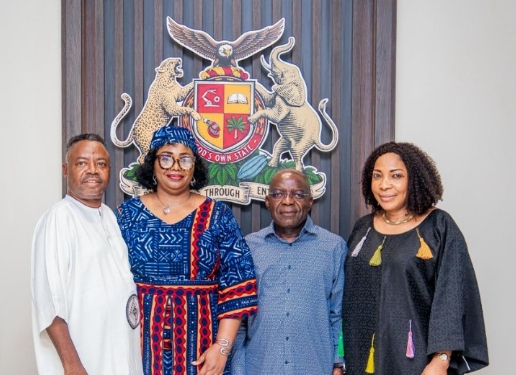
Over the last four days, I have had the privilege of observing closely the administration and leadership style of His Excellency, Dr. Alex Chioma Otti, Governor of Abia State. Beyond the visible infrastructure projects and governance reforms, what captured my attention most was something less discussed but perhaps more important—the emergence of political peace in a state once regarded as one of the most combustible political environments in Nigeria.
Abia was not always known for political civility. Like many parts of Nigeria, elections and party activities often generated tension, bitterness, division, and unnecessary hostility. Yet, within three years, the political atmosphere has changed remarkably.
Political disagreements still exist. Ambitions remain alive. Contestations continue. But increasingly, disagreements are ending in dialogue, dialogue is ending in understanding, and understanding is ending in consensus.
This transformation raises an important question.
What is the magic?
How does a leader move a political environment from perpetual conflict to relative peace within such a short period?
A public observer I interacted with perhaps gave the simplest answer.
“Have you heard of a small body, big engine before? That is Alex Otti, the man we called, small but mighty,” he said. “He is a man of peace. Nobody can give what he does not have. The peace you see in Abia politics is flowing from the spirit of the leadership itself.”
There may be profound truth in that observation.
Leadership is contagious.
The temperament of leaders often becomes the culture of institutions.
The character of those at the top frequently determines the conduct of those below.
During the banquet marking the third anniversary of the administration, Governor Otti narrated an incident that perfectly illustrated his philosophy.
An opposition aspirant had requested permission to use the Aba Township Stadium for a political event. Under the old political order, such a request would most likely have been denied. Government facilities were often treated as instruments of political suppression rather than public assets.
Governor Otti took a different view.
His directive was straightforward.
Any individual or political group willing to comply with established regulations and pay the approved fees should have access to government facilities.
According to him, democracy demands that every political actor has the right to communicate with the people. Whether the people choose to accept or reject that message is entirely their decision.
That simple decision reveals a larger philosophy.
A government confident in its performance does not fear competition.
A leader secure in his mandate does not suppress alternatives.
A democrat understands that persuasion is superior to intimidation.
On the day of the Labour Party primaries, I arrived at the Governor’s country home with my wife at approximately 1:00 p.m.
His Excellency excused himself briefly to participate in his party’s governorship primary.
Before 3:00 p.m., he had returned.
Less than two hours.
The primary had been concluded.
No violence.
No protests.
No court injunctions.
No parallel congresses.
No press conferences and counter-press conferences.
No accusations of rigging.
No breakdown of law and order.
In a nation where party primaries often resemble political warfare, the experience was almost unbelievable.
Naturally, my curiosity deepened.
What exactly was driving this culture of peace?
Governor Otti offered an answer that deserves national attention.
According to him, political ambition is difficult to manage.
However, what makes it even more dangerous is when aspirants are compelled to spend their life savings fighting battles within their own political parties.
He spoke from experience.
He has travelled that road.
He understands the frustrations, disappointments, betrayals, and emotional scars that often accompany political contests.
His conclusion was profound.
Instead of allowing his experiences to make him bitter, he chose to transform them into lessons.
Rather than institutionalising suffering, he sought to institutionalise consensus.
Rather than encouraging internal warfare, he sought to build internal understanding.
Consensus building is not easy.
It requires sacrifice.
It requires listening.
It requires patience.
It requires trust.
Most importantly, it requires leadership.
What eventually emerges publicly is often the product of extensive family discussions, consultations, negotiations, and agreements reached behind closed doors.
The result is a process that preserves dignity, reduces unnecessary expenditure, strengthens relationships, and protects the party from self-inflicted wounds.
This approach offers valuable lessons for Nigerian politics.
Perhaps the greatest difference between the old political order and what is emerging in Abia is the distinction between ownership and stewardship.
Many politicians govern as owners.
Stewards govern differently.
Owners ask, “How much can I take?”
Stewards ask, “How much can I build?”
Owners seek control.
Stewards seek impact.
Owners accumulate power.
Stewards create opportunities.
The stewardship spirit appears central to understanding the Otti governance model.
This explains why governance in Abia increasingly focuses on restoring human dignity.
Roads are not merely roads.
They are pathways to economic opportunity.
Schools are not merely buildings.
They are factories of future leadership.
Hospitals are not merely healthcare facilities.
They are instruments for preserving human worth.
Governance, in this model, is not measured by the volume of projects executed but by the dignity restored to citizens.
This is perhaps the most important lesson Nigeria must learn.
Development is ultimately about people.
Governments exist because human beings matter.
The dignity of humanity must remain the highest objective of public policy.
What Nigerians desire for the nation is gradually becoming visible in Abia.
Not perfection.
Not utopia.
Not a flawless society.
But evidence that governance can be approached differently.
Evidence that politics can be conducted differently.
Evidence that leadership can be exercised differently.
Evidence that public office can be treated as a sacred trust rather than a personal entitlement.
For many years, Nigeria has searched for answers in distant places.
Perhaps some of those answers are emerging closer to home.
The South-East has historically produced some of Nigeria’s most influential ideas about enterprise, community development, self-help, and leadership.
Today, it may once again provide an important clue about the future of governance in Nigeria.
A dot may appear insignificant.
Yet every circle begins with a dot.
The South-East may well become one of the dots that ultimately determine the shape of the Nigerian circle yet to be drawn.
As Governor Alex Chioma Otti continues his journey in public service, perhaps his greatest contribution to Nigeria may not be politics itself.
Perhaps it may not even be governance.
His greatest contribution may be institution building.
Nigeria desperately needs a new generation of leaders equipped with competence, character, courage, compassion, and a stewardship mindset.
The nation needs leaders who understand that power is a trust.
Leaders who see politics as service.
Leaders who view governance as the restoration of human dignity.
For that reason, one of the most enduring legacies Governor Otti could leave behind is the establishment of an institution dedicated to mentoring and developing future leaders.
An Alex Chioma Otti School of Leadership and Governance.
Not as a monument to a man.
But as an investment in a nation.
Not as a celebration of personality.
But as a factory for principles.
Not as a political project.
But as a leadership movement.
Nations rise and fall on the quality of their leaders.
If Nigeria is to become the country of our dreams, it must intentionally produce the kind of leaders capable of building that future.
Perhaps that is the ultimate lesson from Abia.
Doing things differently is not merely a strategy.
It is a philosophy.
And every great transformation begins with a philosophy whose time has come.@alex