Nigeria Insists on Fair Share in ECOWAS Single Currency Governance
Oru Leonard
Nigeria has called for a governance structure that guarantees fairness, equity and adequate representation for countries making significant financial contributions to the proposed ECOWAS single currency, the ECO.
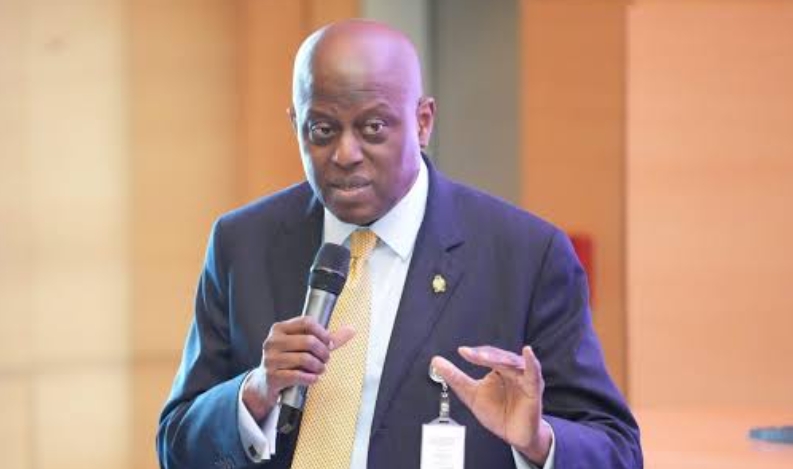
The Governor of the Central Bank of Nigeria (CBN), Mr Olayemi Cardoso, made the position known on Friday, November 20, 2026, at the Ministerial Session of the 6th Presidential Task Force Meeting on the ECOWAS Single Currency Programme in Abidjan, Côte d’Ivoire.
Cardoso, who represented Nigeria at the meeting, maintained that while the proposed monetary union must uphold the sovereign equality of all member states, its governance arrangements should also reflect the financial commitments, responsibilities and risks undertaken by individual countries.
He particularly emphasised the need to recognise the contributions of larger economies, noting that countries expected to provide substantial financial resources and institutional support should have meaningful participation in decisions affecting the union.
According to him, the institutional framework being developed for the proposed monetary union, including the location of its institutions, leadership appointments and allocation of responsibilities, must be guided by fairness and mutual accountability.
He described the deliberations as critical to the future of West Africa’s monetary integration, warning that decisions taken at this stage would determine the credibility and sustainability of the proposed arrangement.
Cardoso reaffirmed Nigeria’s commitment to the ECOWAS Monetary Cooperation Programme, describing the country’s support for the establishment of the ECO as longstanding and unwavering.
He noted that Nigeria had consistently demonstrated commitment through substantial financial contributions, technical support and compromises made to advance regional consensus.
However, he cautioned that regional solidarity should not translate into an arrangement where countries shoulder disproportionate financial responsibilities without corresponding influence in governance.
“While bigger economies continue to take up the burden, they should also be considered to play a significant role because of the risk and systemic importance they have in the sub-region,” he said.
The CBN governor further explained that major contributing countries must be able to defend their financial commitments before their respective parliaments and civil society.
He warned that governance arrangements that separate financial obligations from decision-making authority could create challenges for the long-term sustainability of the monetary union.
“Where obligations are shared but influence is not, arrangements may be agreed, but their long-term sustainability may be difficult to guarantee,” he added.
Cardoso stressed that Nigeria’s position was not an attempt to dominate other member states but a call for a governance framework that appropriately recognises its economic significance and contributions.
He said Nigeria was prepared to commit substantial financial resources, reserves and institutional capital to the success of the proposed union, adding that such commitments should be matched with appropriate responsibility, accountability and participation in governance.
He urged other delegates to embrace dialogue, mutual respect and compromise in reaching an agreement that protects the interests of all member states.
The meeting, which brought together Ministers of Finance and Central Bank Governors from member countries of the ECOWAS Presidential Task Force, focused on accelerating preparations for the phased introduction of the ECO single currency from 2027.
It also provided an opportunity for member states to examine the institutional, financial and governance structures required to establish a credible, stable and sustainable ECOWAS Monetary Union.