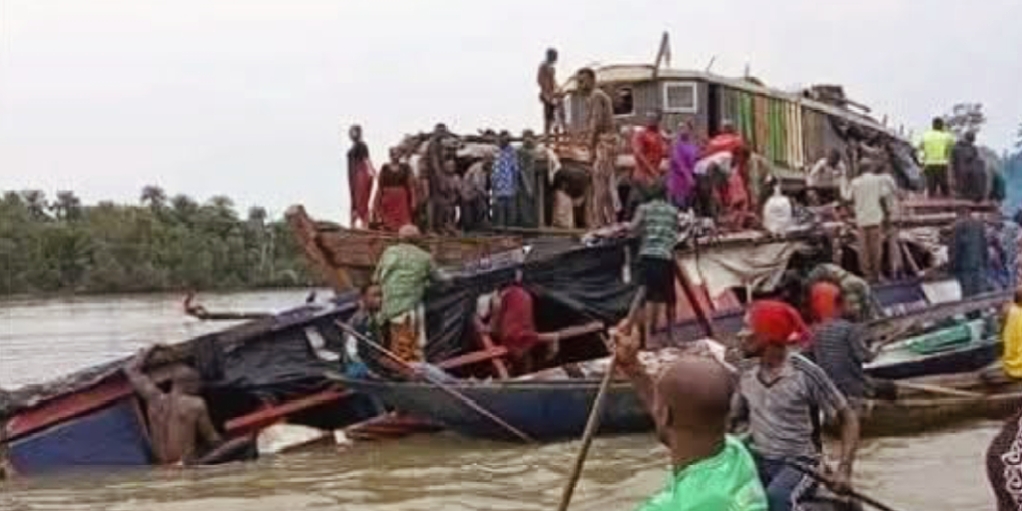
Bayelsa Boat Tragedy: Nigeria Must Fix Its Waterway Safety System, Rejig NIWA – Learn from Bangladesh
By Oru Leonard Oru
The recurring tragedies on Nigeria’s inland waterways, culminating in the recent fatal boat mishap in Bayelsa State, have once again exposed the weaknesses in the country’s water transportation safety management system.
It is becoming increasingly difficult to accept these incidents as mere accidents when many of the factors responsible for them are preventable through effective regulation, consistent monitoring, enforcement of safety standards and institutional accountability.
The Bayelsa tragedy, which claimed several lives and left others injured, should be a defining moment for Nigeria’s inland water transportation sector. It should compel the Federal Government, particularly the Ministry of Marine and Blue Economy and the National Inland Waterways Authority (NIWA), to move beyond expressions of sympathy, emergency interventions and financial donations to confront the systemic problems threatening the lives of Nigerians who depend on water transportation.
President Bola Ahmed Tinubu’s approval of ₦250 million in support for families of those who lost their loved ones is commendable as a humanitarian intervention. However, the question remains: what happens to those who survived but sustained injuries?
While the Bayelsa State Government has indicated its commitment to settling the medical bills of survivors, there should also be a comprehensive support framework for injured victims, particularly those who may require prolonged medical attention, rehabilitation and psychological support.
The distinction between those who lost their lives and those who survived should not become a basis for overlooking the suffering of injured passengers.
Nevertheless, the most important intervention is one that prevents another tragedy.
Nigeria must stop paying for the consequences of preventable accidents and start investing in the systems that prevent them.
Safety Standards Without Enforcement Are Meaningless
One of the fundamental problems confronting Nigeria’s inland water transportation system is not necessarily the absence of regulations but the failure to consistently enforce them.
The country has established institutions and regulatory provisions for the management of inland waterways. Yet, unsafe practices, including overloading, inadequate life jackets, poor vessel maintenance, unregulated loading points and the operation of boats without proper certification, continue to feature in reports of waterway accidents.
This raises serious questions about the effectiveness of regulatory supervision.
Who inspects commercial passenger boats before they are allowed to operate?
Who verifies the seaworthiness of vessels?
Who ensures that passengers do not exceed the approved carrying capacity?
Who monitors the availability and actual use of life jackets?
Who regulates informal jetties and unauthorised loading points?
Who ensures that boat operators possess the necessary qualifications and operational permits?
These are not complicated questions. They are basic responsibilities expected of an effective water transportation regulatory system.
Unfortunately, the recurring loss of lives suggests that the gap between regulations and implementation requires urgent attention.
The government must understand that safety regulations are not meant to exist on paper. They must be visible in everyday operations at jetties, riverbanks, waterways and passenger terminals.
NIWA Needs Leadership Rejigging and Institutional Repositioning
The National Inland Waterways Authority occupies a strategic position in Nigeria’s inland water transportation sector.
Its responsibility goes beyond the development and management of navigable waterways. The safety of millions of Nigerians who depend on these routes must remain a central consideration in its operations.
The Bayelsa tragedy should therefore trigger a comprehensive review of NIWA’s leadership structure, operational capacity, enforcement mechanisms and institutional effectiveness.
There is a compelling need to rejig the authority’s leadership and reposition it for better performance.
This is not about political considerations or changing personalities for the sake of it. It is about ensuring that the institution is driven by the right combination of technical expertise, administrative competence, maritime experience, operational discipline and measurable accountability.
NIWA needs leadership that understands the peculiarities of Nigeria’s extensive inland waterways and can translate regulatory responsibilities into practical safety outcomes.
The authority should establish stronger monitoring mechanisms across riverine communities, particularly in Bayelsa, Rivers, Delta, Cross River and Akwa Ibom states, where water transportation is indispensable to everyday life.
It should also undertake a nationwide audit of commercial passenger boats, ensuring that every vessel operating commercially is properly registered, inspected and certified.
Vessels that fail to meet minimum safety requirements should not be allowed to operate.
There must be strict enforcement of passenger limits, compulsory life-jacket requirements, regular vessel inspections, operator certification and the regulation of designated loading points.
Furthermore, NIWA should publish periodic reports detailing inspections conducted, vessels sanctioned, operators prosecuted, safety violations identified and accidents recorded.
Such transparency would provide a basis for measuring institutional performance.
Why Nigeria Should Learn from Bangladesh
Nigeria does not need to reinvent the wheel in addressing its inland waterway safety challenges. There are countries with comparable geographical circumstances whose experiences provide useful lessons.
One country Nigeria should pay particular attention to is Bangladesh.
Bangladesh, like Nigeria, has extensive river networks, large riverine populations and communities that depend significantly on water transportation for commercial, social and economic activities.
Its inland water transportation system plays an important role in connecting communities, facilitating trade and supporting economic activities.
Although Bangladesh continues to experience boat and ferry accidents, it has developed regulatory structures and operational measures from which Nigeria can learn.
For instance, Bangladesh operates under an inland shipping regulatory framework that provides for vessel registration, inspection, safety certification and the provision of life-saving equipment.
Its Department of Shipping has established technical requirements for inland vessels, including provisions for life jackets, life buoys and other emergency equipment.
The Bangladesh Inland Water Transport Authority (BIWTA) also plays an important role in managing inland water transport infrastructure, navigation facilities and passenger terminals.
These institutional arrangements demonstrate the importance of clearly defined responsibilities and regulatory coordination.
More importantly, Bangladesh has introduced practical measures to address unsafe passenger boarding practices.
In May 2026, its authorities announced restrictions prohibiting passengers from boarding large passenger launches directly from smaller boats and trawlers. Passengers were directed to use designated pontoon terminals, while round-the-clock surveillance was ordered at major river terminals during the busy Eid travel period.
The measures also provided for sanctions against operators who violated the directives.
This is an important lesson for Nigeria.
How many Nigerian waterways have clearly designated and properly regulated passenger boarding points?
How many jetties operate with functional monitoring systems?
How many commercial passenger boats are subjected to regular technical inspections?
How many operators face meaningful sanctions for violating established safety standards?
Nigeria should examine Bangladesh’s approach to designated terminals, vessel inspections, compulsory safety equipment and operational monitoring and adapt the relevant measures to its own circumstances.
However, the lessons should not be romanticised. Bangladesh also faces significant enforcement problems. A 2026 survey jointly conducted by its Bureau of Statistics and Department of Shipping reportedly identified a substantial gap between the number of vessels operating on its waterways and those registered with the Department of Shipping.
This reinforces an important point: having regulations is not enough. The real test is the ability of institutions to enforce them consistently.
Nigeria must learn both from Bangladesh’s regulatory initiatives and from the challenges that demonstrate why implementation matters.
From Regulation to Practical Enforcement
The Federal Government should consider developing a more comprehensive inland waterway safety programme, drawing useful lessons from Bangladesh and other countries with established water transportation systems.
Such a programme should include:
1. Nationwide Vessel Registration and Certification: Every commercial passenger boat should be registered, inspected and certified before being allowed to operate.
2. Compulsory Life Jackets: Every passenger must have access to an appropriate life jacket, with compliance monitored and enforced before departure.
3. Regulated Passenger Terminals: Unapproved loading and boarding points should be identified and addressed. Recognised terminals should have adequate safety infrastructure and monitoring personnel.
4. Strict Passenger Capacity Enforcement: Operators who overload boats should face meaningful penalties, including suspension or withdrawal of operating licences.
5. Professional Training for Boat Operators: Operators should undergo appropriate training and certification in navigation, passenger management and emergency response.
6. Technology-Based Monitoring: NIWA should deploy modern communication and monitoring systems to improve supervision of commercial passenger operations, particularly in remote riverine communities.
7. Emergency Response Infrastructure: Strategic waterways should have functional rescue facilities, trained personnel, communication equipment and emergency response arrangements.
8. Transparent Accountability: NIWA should publish regular performance and safety reports, while investigations into fatal accidents should result in enforceable recommendations.
These measures require adequate funding, inter-agency cooperation and sustained political commitment.
Water Transportation Is Too Important to Be Neglected
For millions of Nigerians living in riverine communities, water transportation is not an alternative to road transportation. It is often the only practical means of reaching markets, schools, hospitals, workplaces and neighbouring communities.
States such as Bayelsa, Rivers, Delta, Cross River and Akwa Ibom have enormous opportunities to develop their waterways as economic corridors.
A properly managed inland water transportation system can support tourism, agriculture, fishing, commerce, logistics and regional economic integration.
However, these opportunities cannot be fully realised without safety.
Government must therefore invest in modern passenger boats, functional jetties, navigational aids, rescue equipment, communication infrastructure and the training of operators.
The acquisition of new boats for riverine communities is commendable, but procuring vessels without a corresponding maintenance, monitoring and regulatory framework will not solve the fundamental problem.
What Nigeria needs is not simply more boats. It needs safer boats, qualified operators, regulated terminals and institutions capable of enforcing standards.
The Federal Government Must Demand Results
The Bayelsa incident should not end with the conclusion of rescue operations, the announcement of financial assistance or the submission of an investigation report.
The Federal Ministry of Marine and Blue Economy must demand measurable results from NIWA and other relevant agencies.
The investigation ordered into the tragedy should establish the immediate and remote causes of the accident, identify any regulatory failures and determine whether established safety procedures were violated.
The National Assembly should also exercise its oversight responsibilities by examining the performance of the agencies responsible for inland waterway safety.
There should be a national review of inland waterway operations, with particular attention to communities where commercial passenger boats operate daily without adequate regulatory supervision.
Most importantly, NIWA’s leadership should be evaluated against clearly defined safety and operational performance indicators.
The authority must demonstrate that it can prevent unsafe vessels from operating, stop overloading, regulate passenger terminals and ensure compliance with safety requirements.
Nigerian Lives Must Not Be Cheap
The Bayelsa boat tragedy is another painful reminder that the cost of regulatory failure is often measured in human lives.
The ₦250 million approved by President Tinubu may provide some relief to bereaved families, but it cannot replace the lives lost. Neither should it become the principal measure of government intervention.
The injured deserve attention, the bereaved deserve support, and the travelling public deserves a system that protects their lives.
Nigeria must move from reactive interventions to preventive governance.
Bangladesh provides useful lessons in vessel regulation, designated terminals, safety equipment and passenger monitoring. Japan and Singapore also demonstrate the value of institutional discipline, technical standards and systematic enforcement.
Nigeria should study these experiences, adapt relevant practices and develop a water transportation safety system suited to its own realities.
The time has come for a serious institutional repositioning of NIWA, stronger leadership, improved monitoring and uncompromising enforcement of safety standards.
The best tribute Nigeria can pay to the victims of the Bayelsa boat tragedy is to ensure that another family does not experience the same pain because government institutions failed to enforce rules that were designed to save lives.
The question is no longer whether Nigeria has the regulations to protect waterway users. The question is whether the institutions responsible for enforcing those regulations are prepared to do their jobs.
Beyond ₦250 million in donations, Nigeria must demonstrate that the lives of its citizens are worth protecting before tragedy strikes.