INEC: OUR FEARS, OUR HOPE AND OUR FUTURE
… A Global Appeal for a Peaceful, Free, Fair and Citizen-Owned Nigerian Election
By Citizen Bolaji Akinyemi
There is a question Nigeria must confront before 2027:
ARE WE PREPARED TO CONDUCT AN ELECTION THAT OUR CHILDREN WILL REMEMBER WITH PRIDE—OR ONE THEY WILL REMEMBER WITH FEAR?
This is not merely a Nigerian question.
It is a question for Africa.
It is a question for the democratic world.
And ultimately, it is a question about the kind of society we are prepared to hand over to the generation coming after us.
On my 60th birthday, my ten-year-old granddaughter, Oma, stood before distinguished Nigerians and began a conversation that has stayed with me.
She began with a number.
She spoke about child survival, data, citizenship and the responsibility of government.
Then she asked:
«“Whose Nigeria are we counting?”»
That question has become, for me, part of a much larger question about Nigeria’s democracy.
Because democracy, like development, begins with the recognition that every citizen counts.
If a child is not counted, that child can become invisible.
If a community is not counted, its suffering can become invisible.
If a voter is prevented from voting, that citizen becomes invisible in the exercise of sovereignty.
If a vote is not properly recorded, counted, collated and protected, the citizen behind that vote becomes invisible.
And if citizens lose confidence that their votes can genuinely influence who governs them, democracy itself begins to disappear.
That is why Oma’s conversation about “Data Is Life” has become, for me, part of a larger conversation about:
2027 AND BEYOND.
We must count the people.
We must count their votes.
We must count the consequences of our decisions.
And we must build an electoral system in which every Nigerian knows:
MY CITIZENSHIP COUNTS.
OUR CONSTITUTIONAL PROMISE
Nigeria’s Constitution begins from a profound democratic principle:
Sovereignty belongs to the people of Nigeria, from whom government derives all its powers and authority.
That principle should never become merely a sentence in a constitutional document.
It should become the living philosophy of every Nigerian election.
The President does not own sovereignty.
The Governor does not own sovereignty.
A Senator does not own sovereignty.
A political party does not own sovereignty.
A candidate does not own sovereignty.
Government does not own sovereignty.
THE PEOPLE DO.
Political office is therefore not ownership.
It is stewardship.
An election is not a transfer of the people’s sovereignty to politicians.
It is the constitutional mechanism through which citizens exercise that sovereignty in choosing those who will temporarily administer public authority.
That distinction matters.
Because if politicians begin to believe that electoral victory means ownership of the people, democracy has already been weakened.
And if citizens begin to believe that elections are merely opportunities to collect money, favours or ethnic patronage, citizenship itself has been diminished.
We must therefore recover the deeper meaning of the ballot.
THE VOTE IS AN INSTRUMENT OF SOVEREIGNTY.
OUR ELECTORAL HISTORY MUST NOT BECOME OUR DESTINY
Nigeria has lived with the painful history of electoral violence for far too long.
Our electoral history contains moments when political competition ceased to be competition and became confrontation—when citizens were intimidated, polling places disrupted, communities divided, property destroyed and lives lost.
The European Union Election Observation Mission to Nigeria’s 2023 elections documented serious concerns relating to political violence, intimidation, ethnic threats, partisan or poorly trained vigilantes and inadequate responses by security agencies in some areas.
The EU observers also raised concerns about widespread impunity and the failure of reported electoral offences consistently to result in effective prosecution and punishment.
These are not allegations to be weaponised against one political party.
They are warnings to all political actors.
Nigeria’s electoral problem cannot be reduced to APC.
It cannot be reduced to PDP.
It cannot be reduced to Labour Party.
It cannot be reduced to NNPP.
It cannot be reduced to APGA, SDP, ADC, YPP, PRP, ADP or any other political platform.
Wherever political violence occurs, whoever commits it, whoever sponsors it and whoever benefits from it:
NIGERIA LOSES.
The responsibility is therefore collective.
There have also been moments of particular tragedy involving those entrusted with administering elections.
In April 2015, Kano Resident Electoral Commissioner Munkaila Abdullahi died in a house fire alongside his wife and two children, only days after the presidential and National Assembly elections. Contemporary accounts attributed the deaths to smoke inhalation following a fire reportedly caused by an electrical or air-conditioning fault. There has been public speculation about the circumstances, but no established evidence that the deaths resulted from electoral violence.
Whatever the cause, the tragedy remains a sobering reminder:
Electoral officials are human beings.
They operate under enormous pressure.
They require protection.
They require professional independence.
And they require an environment in which their constitutional responsibilities can be performed without fear.
Such episodes must never become ordinary footnotes in our democratic history.
They must remain warnings.
No political victory is worth the life of a citizen.
No candidate is worth the destruction of a community.
No party is worth the death of a voter.
And no election is truly successful if Nigerians must choose between exercising their constitutional franchise and returning home safely.
OUR FEARS
The memories of the 2023 elections remain fresh.
Across different parts of Nigeria, voters and political actors experienced intimidation, harassment, disruption and violence.
In Lagos, the EU Election Observation Mission documented threats against certain ethnic groups and reported concerns surrounding the use of vigilantes and the intimidation of political opponents and voters.
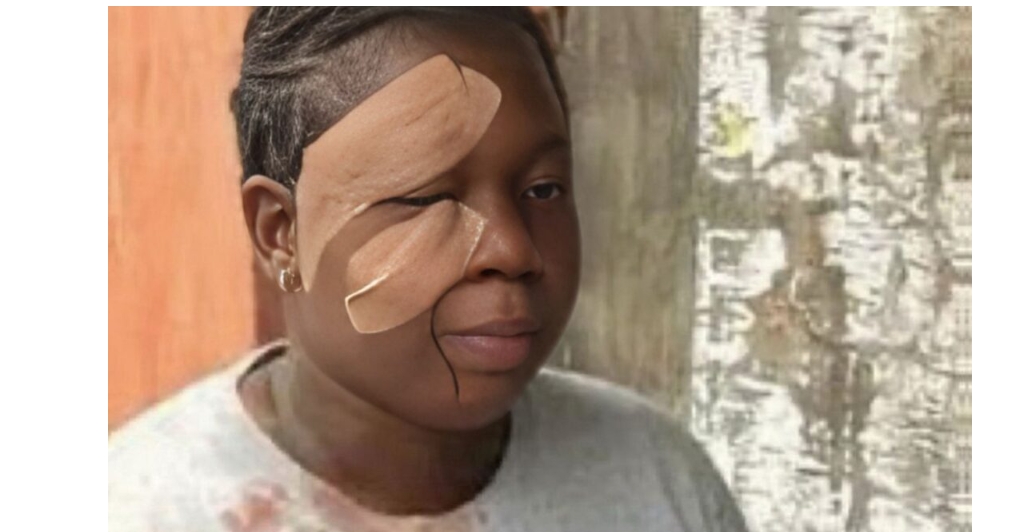
Human Rights Watch documented the experience of Bina Jennifer Efidi, who went to her polling unit in Surulere, Lagos, to vote and was attacked while waiting.
She sustained serious injuries to her face.
Her polling unit was disrupted.
Voters and polling officials fled for safety.
But after receiving medical treatment, she returned and exercised her right to vote.
Her image became a symbol.
A citizen had gone out to exercise a constitutional right.
She was not carrying a weapon.
She was carrying a democratic expectation.
Yet she was attacked.
THAT IS NOT WHAT DEMOCRACY SHOULD LOOK LIKE.
It is the opposite of what democracy promises.
A Nigerian should not be targeted because of how they look, where they come from, what language they speak, what ethnicity they are presumed to belong to, what religion they practise, or whom someone assumes they intend to vote for.
THE BALLOT IS A CONSTITUTIONAL INSTRUMENT OF CITIZENSHIP—NOT A DECLARATION OF TRIBAL ALLEGIANCE.
THE CHILD WAITING AT HOME
Imagine a child waiting for a mother who has gone out to vote.
The child expects her to return with stories of citizenship, participation and hope.
Instead, the mother returns injured.
Perhaps her face is bandaged.
Perhaps she is traumatised.
Perhaps she carries a fear she cannot explain.
What does that child learn about democracy?
What does that child associate with the word:
ELECTION?
And what happens when that child becomes old enough to vote?
Does the child approach the polling station with confidence—or apprehension?
This question is particularly personal to me.
My granddaughters, Oma and Damilare, are ten years old.
They belong to a generation that will inherit the consequences of the decisions we make today.
They should grow up believing that elections are peaceful occasions when citizens exercise their sovereignty.
They should not grow up believing that elections are seasons of fear.
They should not have to ask whether their parents will return safely from the polling unit.
They should not have to wonder whether their votes will count.
They are watching us.
And they are learning.
That is why the question before us is not simply:
What will happen in 2027?
It is:
WHAT ARE WE GOING TO DO TO MAKE 2027 DIFFERENT?
OUR FEAR. OUR HOPE.
Our fear is that 2027 may not be different.
But our hope is that:
2027 WILL BE DIFFERENT.
Between our fear and our hope lies our responsibility.
Fear cannot be our political inheritance.
Violence cannot become our democratic tradition.
Intimidation cannot become an accepted instrument of electoral competition.
Ethnic profiling cannot become a substitute for citizenship.
And electoral victory must never become a justification for the destruction of democratic legitimacy.
We must deliberately shift Nigeria’s electoral culture:
From fear to confidence.
From intimidation to participation.
From violence to peace.
From ethnic profiling to citizenship.
From manipulation to transparency.
From disputed processes to legitimate results.
This is not an impossible dream.
It is a democratic obligation.
WOULD IT MATTER IF MY CANDIDATE LOST?
Let us ask ourselves an uncomfortable question:
WOULD IT REALLY MATTER IF MY CANDIDATE LOST AND YOUR CANDIDATE WON—IF THE ELECTION WAS DEMONSTRABLY FREE, FAIR, TRANSPARENT AND CREDIBLE?
Would I not rather lose an election honestly than win through manipulation?
Would I not rather congratulate an opponent whose victory was secured transparently than celebrate a victory obtained through intimidation?
Would it not be a historic achievement if Nigerians could say:
The people voted.
The votes were counted.
The results reflected the legitimate choice of the people.
And would we not be proud if Nigerian citizens, domestic observers, international observers and the international press could broadly conclude:
THIS WAS A CREDIBLE ELECTION.
What if the greatest victory in 2027 was not the victory of APC?
Or PDP?
Or Labour Party?
Or NNPP?
Or APGA?
Or SDP?
Or ADC?
Or YPP?
Or PRP?
Or ADP?
Or any other political platform?
What if the greatest victory was:
THE VICTORY OF THE NIGERIAN PEOPLE?
If my preferred candidate loses a genuinely free and fair election, but Nigeria wins—
Have I really lost?
If your candidate wins transparently, and I know that my vote was counted and the people’s legitimate choice prevailed—
Have you really defeated me?
Nigeria is bigger than a candidate.
Citizenship is bigger than ethnicity.
Democracy is bigger than party.
And the future is bigger than the political ambitions of any individual.
INEC: THE MANDATE BELONGS TO THE PEOPLE
This is where the role of the Independent National Electoral Commission (INEC) becomes fundamental.
INEC is not an electoral department of the government of the day.
It is a constitutionally established electoral management body.
Its constitutional foundation is found in Section 153 and Part I of the Third Schedule of the Constitution.
Its responsibilities include organising, undertaking and supervising elections; registering political parties; monitoring political parties and campaigns; registering qualified voters and maintaining the voters’ register; and conducting voter and civic education.
INEC’s own institutional values emphasise autonomy, transparency, integrity and credibility.
This distinction matters enormously.
INEC IS NOT A POLITICAL PARTY.
It is not an arm of APC.
It is not an arm of PDP.
It is not an arm of Labour Party.
It is not an arm of NNPP.
It is not an arm of APGA, SDP, ADC, YPP or any other political platform.
Nor should it ever be perceived as such.
Government is a participant in democracy.
Political parties are participants.
Candidates are participants.
Civil society is a participant.
The media is a participant in democratic accountability.
Security agencies have defined supporting responsibilities.
But INEC is the constitutionally mandated election management body.
And the sovereignty exercised through the ballot belongs to the Nigerian people.
The election is administered by INEC.
BUT THE SOVEREIGNTY BELONGS TO THE PEOPLE.
THE TEST OF INEC’S MANDATE
INEC’s constitutional mandate is not fulfilled merely because an election takes place.
The deeper question is:
CAN NIGERIANS REASONABLY BELIEVE THAT THEIR VOTES WERE GIVEN A FAIR OPPORTUNITY TO DETERMINE THE OUTCOME?
That is the standard by which 2027 should be judged.
INEC itself has recognised the importance of voter and civic education, knowledge of sound democratic processes and engagement with political parties and other stakeholders.
Following its review of the 2023 General Election, the Commission identified 142 recommendations covering voter management, voter education, public communication, political parties and candidates, logistics, election personnel, stakeholder partnerships, election technology, voting and result management, election security, electoral offences and the legal framework.
This is significant.
It means the lessons of 2023 are not merely being discussed by civil society or international observers.
INEC ITSELF HAS IDENTIFIED AREAS REQUIRING IMPROVEMENT.
That is an opportunity.
OUR APPEAL TO INEC
Therefore, this is not merely a criticism of INEC.
IT IS AN APPEAL TO INEC.
We ask the Commission to see 2027 as an opportunity to restore and deepen citizens’ confidence in the democratic process.
We ask INEC to place citizen ownership at the heart of voter education.
Not merely:
How to vote.
But:
Why your vote matters.
Not merely:
Where to vote.
But:
How the electoral process works.
Not merely:
How results are announced.
But:
How citizens can understand, observe and lawfully protect the integrity of the process.
Voter education should empower citizens to understand the entire electoral journey:
REGISTRATION → ACCREDITATION → VOTING → COUNTING → POLLING-UNIT RESULTS → COLLATION → DECLARATION → LAWFUL DISPUTE RESOLUTION.
An informed citizen is less vulnerable to manipulation.
An informed citizen is more difficult to intimidate.
An informed citizen understands the value of evidence.
An informed citizen is more likely to choose peaceful democratic remedies over violence.
An informed citizen understands:
DEMOCRACY BELONGS TO CITIZENS.
DATA IS LIFE—AND DATA MUST BE TRUSTED
Nigeria’s deployment of electoral technology, particularly BVAS and the IReV platform, represents an important attempt to strengthen electoral administration and transparency.
But technology alone cannot create trust.
Technology must be accompanied by:
clarity,
reliability,
transparency,
auditability,
public understanding,
effective communication,
and clear legal rules.
The objective should not be technology for technology’s sake.
The objective is:
TRUSTWORTHY EVIDENCE.
This is where Oma’s birthday message becomes relevant to electoral democracy.
Data Is Life.
But data must not merely exist.
It must be credible.
It must be understandable.
It must be verifiable.
And where citizens or political actors lawfully challenge the integrity of electoral information, there must be mechanisms for verification and redress.
OUR APPEAL TO ALL POLITICAL PARTIES
This appeal is deliberately addressed to all political parties.
To the All Progressives Congress (APC).
To the Peoples Democratic Party (PDP).
To the Labour Party.
To the New Nigeria Peoples Party (NNPP).
To the All Progressives Grand Alliance (APGA).
To the Social Democratic Party (SDP).
To the African Democratic Congress (ADC).
To the Young Progressive Party (YPP).
To the People’s Redemption Party (PRP).
To the Action Democratic Party (ADP).
And to every other political party lawfully participating in Nigeria’s democratic process.
No party should be singled out as the owner of Nigeria’s democratic future.
No party should be treated as the enemy of Nigeria.
No candidate should be treated as more important than the country.
The democratic responsibility is shared.
Political parties must therefore compete.
But they must compete democratically.
Compete on ideas.
Compete on records.
Compete on competence.
Compete on character.
Compete on capacity.
Compete on vision.
Compete on the quality of the social contract offered to Nigerians.
But do not turn ethnicity into a weapon.
Do not turn religion into a weapon.
Do not turn poverty into a weapon.
Do not turn young Nigerians into instruments of violence.
Do not teach supporters that political opponents are enemies of the people.
Your opponent is another Nigerian.
The election will end.
THE COUNTRY WILL REMAIN.
OUR APPEAL TO CANDIDATES
To every presidential, governorship, senatorial, House of Representatives, State House of Assembly and other candidate:
Remember what you are asking Nigerians to give you.
They are not giving you Nigeria.
They are giving you a mandate to serve Nigeria.
That mandate is temporary.
Citizenship is permanent.
The office will eventually be left behind.
The consequences of your decisions may remain for generations.
Therefore:
If you win, govern for those who voted for you and those who did not.
If you lose, remain a citizen.
If your opponent wins, hold them accountable without destroying the country.
If you believe the election was flawed, use evidence and lawful institutions.
Do not turn disappointment into violence.
Do not turn political ambition into national destruction.
OUR APPEAL TO SECURITY AGENCIES
This is a call to the security agencies:
Protect the voter.
Protect the polling unit.
Protect electoral personnel.
Protect election materials.
Protect the constitutional right of Nigerians to participate peacefully.
The citizen should encounter the security officer at the polling unit and feel:
SAFE.
Not:
AFRAID.
Security must never become an instrument of political intimidation.
OUR APPEAL TO CIVIL SOCIETY
Civil society must help build the informed citizen.
Not the angry citizen.
Not the partisan mob.
Not the citizen trained only to reject an opponent.
But the citizen who understands:
My vote is my constitutional right.
My evidence matters.
My voice matters.
My peaceful participation matters.
My responsibility does not end when I leave the polling unit.
Civil society should strengthen citizens’ capacity to observe, document, understand and lawfully engage with the electoral process.
OUR APPEAL TO THE MEDIA
The media must do more than report the horse race.
Report the process.
Interrogate claims.
Verify facts.
Expose manipulation.
Educate voters.
Give all parties fair scrutiny.
Report violence wherever it occurs, regardless of the political identity of the perpetrators or victims.
Do not allow misinformation to become a weapon of electoral warfare.
The public deserves journalism that helps citizens make informed choices.
OUR APPEAL TO TRADITIONAL AND RELIGIOUS LEADERS
To our traditional rulers and religious leaders:
Your influence carries enormous responsibility.
Do not allow ethnicity or religion to become weapons of political mobilisation.
Tell your people:
You may vote differently and remain brothers.
You may support different candidates and remain neighbours.
You may belong to different parties and remain Nigerians.
Nigeria must never become a country where political disagreement destroys social relationships.
OUR APPEAL TO THE INTERNATIONAL DEMOCRATIC COMMUNITY
And this is a call to the international democratic community watching Nigeria:
Do not merely watch the result.
WATCH THE PROCESS.
Support democratic institutions.
Support citizen education.
Support credible observation.
Support peaceful participation.
Support transparency.
Support electoral reform.
Nigeria’s democratic success matters beyond Nigeria.
If Nigeria demonstrates that a large, diverse and politically competitive country can conduct credible elections peacefully, it sends a powerful message across Africa.
If Nigeria fails, the consequences will also extend beyond our borders.
But one principle must never be forgotten:
NIGERIANS MUST REMAIN THE OWNERS OF THE PROCESS.
International observers may observe.
International partners may support.
International institutions may advise.
But Nigerians must own their democracy.
OUR CHILDREN ARE WATCHING
There is a constituency that cannot vote in 2027, yet has perhaps the greatest stake in the outcome:
OUR CHILDREN.
They will inherit the schools we build—or fail to build.
They will inherit the security environment we create.
They will inherit the economy.
They will inherit our institutions.
They will inherit our national reputation.
They will inherit Nigeria.
That is why I keep returning to the voice of my ten-year-old granddaughter, Oma.
On my birthday, she stood before adults and asked us to:
COUNT THE CHILDREN.
Her question was about data.
But beneath the data was something deeper:
DO THEIR LIVES COUNT?
That same question must be asked about our democracy.
Does every voter count?
Does every vote count?
Does every community count?
Does every citizen’s right to participate count?
Does the safety of the voter count?
Does the integrity of the polling unit count?
Does the truth contained in the result count?
Oma cannot vote in 2027.
But one day she will.
And millions of Nigerian children of her generation will become voters.
They are the future electorate.
They are also the present moral constituency of our democracy.
What will we tell them about the elections of their childhood?
Will we tell them:
“We were afraid to vote because violence was everywhere”?
Or will we be able to tell them:
“WE CHANGED NIGERIA.”
OMA’S QUESTION
This is the inspiration behind the intergenerational dimension of:
2027 AND BEYOND.
Oma Okonkwo represents a generation that will inherit the Nigeria we build—or fail to build—today.
Her voice is not a partisan voice.
She is not being asked to endorse a political party.
She does not represent a candidate.
She represents:
THE GENERATION THAT WILL INHERIT THE NIGERIA WE BUILD TODAY.
Her message is directed particularly to parents, grandparents and every Nigerian who has the right to vote:
«“Do not vote only for what you can gain today. Vote for the future your children will inherit tomorrow.”»
That future includes:
Security.
Peace.
Education.
Opportunity.
Healthcare.
Prosperity.
Justice.
Dignity.
Freedom.
National unity.
The question is not simply:
WHAT WILL I GET FROM THIS ELECTION?
It must become:
WHAT KIND OF NIGERIA AM I VOTING TO LEAVE MY CHILDREN?
YOUR CHILDREN CANNOT VOTE TODAY
But:
YOUR VOTE WILL SHAPE THEIR TOMORROW.
The question of 2027 should therefore not be limited to:
“What will I get?”
It must also become:
“What will my vote help build for my children?”
We must move from transactional politics to intergenerational value.
Vote beyond today.
Vote beyond yourself.
Vote beyond inducement.
Vote beyond ethnic manipulation.
Vote beyond religious manipulation.
VOTE FOR VALUE.
A NEW CULTURE OF NON-VIOLENT DEMOCRACY
We must teach a new generation that political disagreement does not make us enemies.
You can disagree without becoming violent.
You can compete without destroying one another.
You can lose without losing your dignity.
You can win without humiliating your opponent.
You can challenge a result without destroying the country.
Democracy must become:
Ideas rather than violence.
Evidence rather than intimidation.
Persuasion rather than coercion.
Ballots rather than bullets.
Dialogue rather than destruction.
Our ambition should be that when Oma reaches voting age, she and millions of young Nigerians will understand:
YOU CAN DISAGREE WITHOUT BECOMING ENEMIES.
YOU CAN COMPETE WITHOUT BECOMING VIOLENT.
YOU CAN LOSE AN ELECTION WITHOUT LOSING YOUR DIGNITY.
YOU CAN WIN AN ELECTION WITHOUT OWNING THE PEOPLE.
The winner does not own Nigeria.
The winner receives a mandate to serve Nigeria.
The defeated candidate does not cease to be a citizen.
The voter does not surrender citizenship after casting a ballot.
And the electorate does not disappear after election day.
THE MANDATE IS A CONTINUING SOCIAL CONTRACT.
2027 AND BEYOND
This is the inspiration behind:
OWN THE PROCESS.
Citizens must understand that democracy belongs to them.
VOTE FOR VALUE.
Citizens must interrogate candidates—not merely their slogans, but their records, competence, character, capacity, policies, track record and understanding of Nigeria.
DEFEND YOUR VOTE.
Citizens must participate peacefully, lawfully and responsibly.
Where citizens are legally entitled to observe, document and retain evidence of electoral proceedings, they should do so responsibly and within the law.
Where irregularities occur, citizens must know the legitimate institutional channels through which complaints can be made and rights defended.
The answer to electoral wrongdoing cannot be mob violence.
It must be:
EVIDENCE. LAW. ACCOUNTABILITY.
ACTIVATE PERFORMANCE DEMOCRACY.
Citizens must remain engaged after election day.
They must ask elected leaders:
WHAT HAVE YOU DONE WITH THE MANDATE ENTRUSTED TO YOU?
The democratic mandate must not be treated as a blank cheque.
It is a continuing social contract.
The citizen’s responsibility therefore does not end when the ballot enters the box.
IT BEGINS THERE.
A CALL TO NIGERIA
This is a call to INEC.
It is a call to APC, PDP, Labour Party, NNPP, APGA, SDP, ADC, YPP, PRP, ADP and every other political party.
It is a call to every candidate.
It is a call to security agencies.
It is a call to civil society.
It is a call to traditional and religious leaders.
It is a call to the media.
It is a call to the business community.
It is a call to every institution entrusted with lawful electoral dispute resolution.
It is a call to Nigerian citizens.
And it is a call to the international democratic community watching Nigeria.
Let us make 2027 different.
Let women vote without fear.
Let mothers return safely from polling stations.
Let young people participate without intimidation.
Let ethnic minorities be protected.
Let every Nigerian be free to support the candidate of their choice.
Let no political victory be purchased with blood.
Let no Nigerian be attacked because of how they look, where they come from, what language they speak, what religion they practise or whom they support.
Let the polling unit become a place of citizenship—not a theatre of war.
Let the ballot become an instrument of choice—not a trigger for violence.
Let evidence replace rumour.
Let law replace retaliation.
Let accountability replace impunity.
Let citizenship replace ethnic hostility.
Let service replace political ownership.
WHAT IF NIGERIA WON?
If the election is free and fair:
NIGERIA WON.
If citizens vote without intimidation:
NIGERIA WON.
If women participate freely:
NIGERIA WON.
If young people participate peacefully:
NIGERIA WON.
If votes are counted transparently:
NIGERIA WON.
If legitimate results emerge:
NIGERIA WON.
If the defeated candidate accepts the outcome because the process was credible:
NIGERIA WON.
And if the winner understands that victory gives them responsibility—not ownership of the people:
NIGERIA WON.
That should be our standard.
Not merely:
Who won?
But:
DID NIGERIA WIN?
OMA’S CRY
Oma and millions of Nigerian children like her may not yet have a vote.
But they have a future.
And that future is being shaped today.
Let the children remind us—not as political actors, but as the generation that will inherit the consequences of our choices:
“We want to grow up in a country where elections are peaceful.”
“We want our parents to vote without fear.”
“We want our mothers to return home safely from polling stations.”
“We want our votes to count when we become voters.”
“We want leaders who will build security, schools, healthcare, opportunity and prosperity.”
“We want a Nigeria in which political disagreement does not make citizens enemies.”
And let parents answer:
WE HEAR YOU.
WE WILL DO BETTER.
WE WILL CHANGE THE CULTURE.
Because the children are not merely waiting for tomorrow.
THEY ARE WATCHING WHAT WE DO TODAY.
OUR FEARS. OUR HOPE. OUR FUTURE.
Our fears are real.
But our hope must be greater.
Hope is not the denial of fear.
HOPE IS THE DECISION TO ACT DESPITE FEAR.
We can choose peace.
We can choose transparency.
We can choose participation.
We can choose evidence.
We can choose lawful democratic action.
We can choose accountability.
We can choose citizenship.
We can choose the future.
The Nigeria of tomorrow is being shaped by the choices we make today.
So before we ask:
“Who will win in 2027?”
Let us ask:
“WHAT KIND OF ELECTION WILL WE LEAVE OUR CHILDREN?”
And before we ask:
“Will my candidate win?”
Let us ask:
“WILL NIGERIA WIN?”
That is the hope.
That is the challenge.
That is our responsibility.
And that is why:
2027 AND BEYOND
OWN THE PROCESS.
VOTE FOR VALUE.
DEFEND YOUR VOTE.
ACTIVATE PERFORMANCE DEMOCRACY.
Because:
YOUR CHILDREN CANNOT VOTE TODAY.
BUT YOUR VOTE WILL SHAPE THEIR TOMORROW.
And ultimately:
THE NIGERIA WE BUILD TODAY BELONGS TO THE CHILDREN OF TOMORROW.
Citizen Bolaji Akinyemi
30 August 2026