INEC Launches AI Safeguards, Assures Nigerians of Human-Driven 2027 Elections
Oru Leonard
The Independent National Electoral Commission (INEC), has launched measures to guard against the misuse of artificial intelligence (AI) in the 2027 general elections, assuring Nigerians that technology will not replace human judgement in determining electoral outcomes.
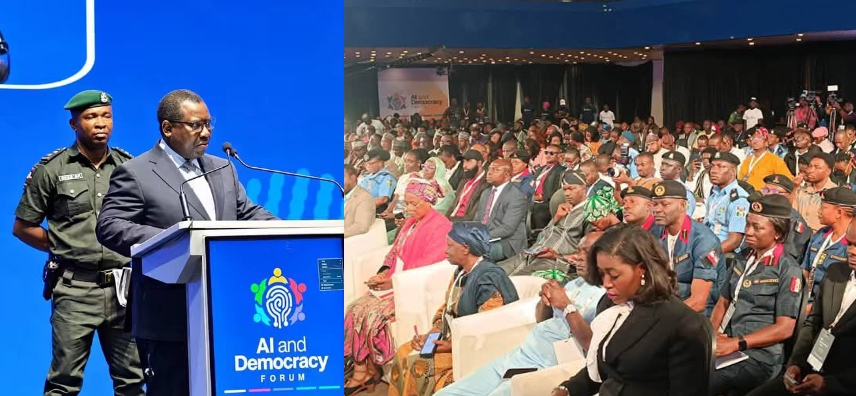
INEC Chairman, Prof. Joash Amupitan, SAN, gave the assurance on Wednesday in Abuja while delivering the keynote address at the Artificial Intelligence and Democracy Forum 2026, organised in collaboration with Yiaga Africa.
Speaking on the theme, “Safeguarding the 2027 General Elections in the Age of Artificial Intelligence,” Amupitan said the outcome of the elections would be determined by citizens rather than algorithms.
“Algorithms will not, and must never, decide the 2027 vote,” he declared, stressing that the choice of Nigeria’s leaders remained exclusively with the electorate.
He warned, however, that advances in artificial intelligence had created new challenges for electoral management, particularly through the spread of misinformation, deepfake videos, cloned audio recordings and the impersonation of election officials.
According to him, AI-generated content could be manipulated to make candidates appear to have withdrawn from elections, announce false postponements or spread inflammatory ethnic and religious statements.
He said such content could circulate widely within minutes, potentially misleading voters and undermining confidence in the electoral process.
“The greatest threat we face is not the hacking of a ballot box, but the hacking of the voter’s mind,” the INEC chairman stated.
Amupitan explained that the Commission had established an AI Unit within its Information and Communication Technology Directorate to monitor digital threats and detect attempts to manipulate electoral information.
He said the unit would be equipped with real-time digital monitoring tools, deepfake detection software and data analytics expertise to identify threats targeting the electoral process.
The chairman also declared that no critical electoral decision, result collation, voter accreditation or candidate qualification would be fully automated or delegated to an autonomous system.
He emphasised that human accountability, statutory oversight and judicial review would remain central to every stage of election administration.
According to him, all AI tools deployed by the Commission for logistics, database management and operational support would undergo rigorous audits to ensure transparency, fairness, explainability and security.
INEC is also developing a digital strategy to monitor the information environment and collaborating with technology platforms to facilitate the rapid identification and labelling of AI-generated electoral content.
Despite the risks, Amupitan said artificial intelligence could improve election administration through better logistics planning, enhanced security and more effective voter education.
He explained that AI-powered geospatial analytics could help the Commission deploy ad hoc staff, vehicles, boats and sensitive election materials to 176,846 polling units before 7:30 a.m. on election day.
The technology, he said, could analyse traffic patterns, weather forecasts, road conditions and security incidents to determine efficient deployment routes.
He added that automated inventory systems could help forecast demand for non-sensitive election materials and monitor warehouse stock in real time.
On electoral integrity, Amupitan said AI could conduct parallel statistical audits of polling unit result sheets uploaded through the EC8A forms on the INEC Result Viewing Portal.
Such systems, he explained, could flag mathematical inconsistencies, unusual entry patterns and image-quality defects for administrative review.
He clarified that the use of AI for these purposes would not replace the statutory process of human result collation.
The chairman also disclosed that AI-enhanced Automated Biometric Identification Systems were helping detect duplicate facial and fingerprint records in the National Register of Voters, which contains more than 103 million registered voters.
He said the technology would strengthen efforts to protect the principle of one voter, one vote.
On voter education, Amupitan said natural language processing tools could translate educational materials, polling unit location information and Permanent Voter Card collection guidelines into several indigenous languages.
The tools could also provide audio formats for visually impaired and low-literacy citizens, while automated systems could help identify accessibility barriers affecting persons with disabilities.
He added that AI-driven threat detection could strengthen the security of INEC’s digital platforms, including the Result Viewing Portal and Candidates Nomination Portal, by identifying and isolating cyber threats rapidly.
Amupitan said the innovations built on technological reforms introduced over the past decade, including the Smart Card Reader, the Bimodal Voter Accreditation System and the Result Viewing Portal.
He also disclosed that INEC had digitised candidate nominations, processing more than 15,000 nominations across 22 political parties.
According to him, the Commission has introduced online voter registration for the first time in Nigeria and is implementing a decentralised, multi-phased PVC collection exercise nationwide.
He further confirmed that additional BVAS units had been procured, with consignments already being received.
The INEC chairman described the 2027 general elections as the largest democratic exercise on the African continent, involving more than 103 million registered voters across 774 local government areas.
He added that 10 of the 14 major operational milestones under the Electoral Act 2026 had been successfully completed.
Amupitan stressed that protecting the elections from AI-related threats required collaboration among electoral authorities, technology companies, political parties, civil society organisations and the media.
He called on Meta, X, Google, TikTok and Telegram to act swiftly against unlabelled synthetic media impersonating candidates, election officials and security personnel.
He also urged the platforms to enforce disclaimers on political advertisements and restrict political micro-targeting based on ethnicity, religion or local origin.
The chairman proposed expanding an Electoral Information Integrity Coalition involving INEC, civil society organisations, the Nigerian Guild of Editors, the Nigeria Fact-Checking Coalition, media organisations and telecommunications operators.
The proposed coalition, he said, would serve as an early-warning network for detecting and countering viral AI-generated falsehoods.
He added that INEC would work with the National Orientation Agency, civil society groups and the media to incorporate AI media literacy into voter education, encouraging citizens to verify sensational information before sharing it.
Political parties and candidates were also urged to sign an Ethical AI Code of Conduct committing them to refrain from using deepfakes, synthetic impersonation, deceptive political advertisements and automated bot networks.
Amupitan further called on civil society organisations and development partners to monitor algorithmic transparency and digital campaign spending, while urging security agencies to strengthen their capacity for cybercrime investigations and digital forensics.
He said the judiciary should prepare for emerging disputes involving AI-generated evidence, while media organisations should establish digital forensic desks to verify user-generated content before publication.
The chairman maintained that although artificial intelligence could improve electoral administration, it lacked the moral responsibility and constitutional obligations required to determine the country’s political future.
“On election day in 2027, it will be the thumbprint of the Nigerian citizen, guided by their own will and their own hopes, that decides our future,” he said.
“INEC’s job is to ensure that the voice of the people is heard clearly, above the noise of the machines,” he added.
The two-day forum was attended by the Chairperson of the Economic Community of West African States Network of Electoral Commissions and Chairman of the Senegal Electoral Commission, Abdoulaye Sylla, alongside INEC national commissioners, resident electoral commissioners, representatives of African electoral bodies, political parties, civil society organisations, security agencies, technology companies and the media