Harvard Scholars Applaud NASENI-Troment Biotechnologies Factory, Hail Local Drive Against Malaria
Oru Leonard
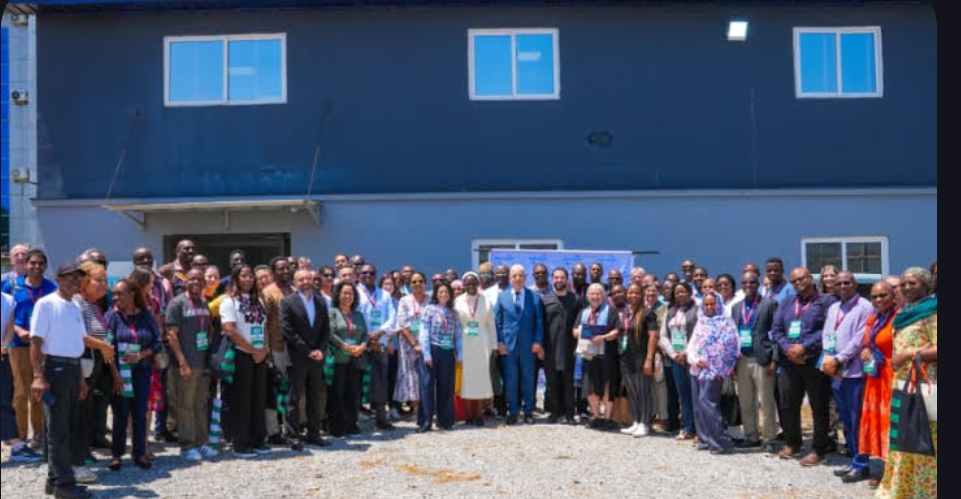
A delegation of about 85 global medical professionals, scientists and policymakers from Harvard University has praised the establishment of the NASENI-Troment Biotechnologies factory in Abuja, describing it as a major step towards combating malaria and other infectious diseases in Nigeria and across Africa.
The delegation, participating in the “Science of Defeating Malaria” leadership development programme, made the commendation during a tour of the state-of-the-art facility on Sunday.
The visitors expressed admiration for the factory’s capacity to produce Polymerase Chain Reaction (PCR) kits and Rapid Diagnostic Tests (RDTs), noting that the development would significantly strengthen local healthcare systems and reduce dependence on imported diagnostic products.
Chief Executive Officer and Co-Founder of NASENI-Troment Biotechnologies, Dr. Selim Hani, said the factory was established through a strategic partnership between the National Agency for Science and Engineering Infrastructure (NASENI) and Troment Nigeria Limited to enhance Nigeria’s healthcare sovereignty through local manufacturing of diagnostic technologies.
According to him, the facility, which was built within 18 months, focuses on the production of RDTs and in-vitro diagnostic products aimed at improving early detection of major infectious and public health diseases.
He explained that diagnostic kits under the N-CheckUP brand would be used for testing malaria, hepatitis B and C, HIV, pregnancy, COVID-19 antigen, typhoid, syphilis and blood glucose levels, among others.
Dr. Hani added that the factory has the capacity to produce up to 600 million diagnostic kits annually, a development expected to improve accessibility and affordability of healthcare diagnostics while reducing Nigeria’s reliance on imported medical products.
Technical Partner at NASENI-Troment Biotechnologies, Dr. Engin Narinc, described the facility as Africa’s first fully localized Rapid Diagnostic Test kit factory.
“From concept to full-scale launch, our end-to-end production process is designed to deliver world-class diagnostic solutions built entirely in Africa, for Africa,” he said.
Leading the visiting team was Professor Dyann F. Wirth of Harvard University, one of the world’s foremost malaria researchers and leader of the Science of Defeating Malaria Initiative.
After touring various sections of the facility, Professor Wirth described the factory as an impressive investment that would contribute significantly to efforts aimed at eliminating malaria and other public health challenges on the continent.
“This is an amazing facility that would add value to the eradication of malaria and other public health diseases in Nigeria and Africa,” she said.
The Science of Defeating Malaria leadership development programme, holding in Abuja from June 7 to 13, 2026, brings together global health professionals, scientists and policymakers committed to advancing strategies for malaria elimination and eradication worldwide.
The visit highlights growing international recognition of Nigeria’s efforts to strengthen local manufacturing capacity in the health sector and position itself as a hub for diagnostic innovation in Africa.