Democracy: Ishiaka Urges Youth to Move Beyond ‘Leaders of Tomorrow’ Mindset
Maryam Aminu
The Convener of the Heroes of Nigerian Democracy, Culture and National Development Award and Book Launch, Idakwo Oruma Ishiaka, has urged Nigerian youths to move beyond the mindset of being “leaders of tomorrow” and recognise themselves as important stakeholders in the country today.
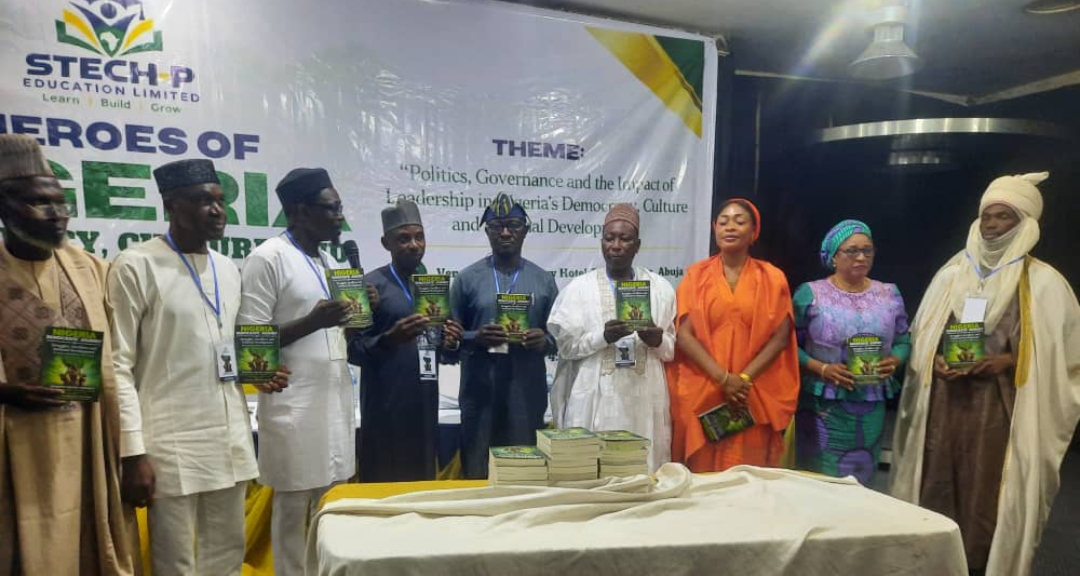
Ishiaka made the call in Abuja at the event, themed “Politics, Governance and the Impact of Leadership in Nigeria’s Democracy, Culture and National Development,” which also featured the launch of Nigeria Democratic Journey: Struggles, Sacrifices and National Development from Pre-Colonial Era to the Present.
He said the book was intended to document important experiences, struggles and sacrifices in Nigeria’s democratic journey while stimulating conversations about the country’s past, present and responsibilities for the future.
Ishiaka said the younger generation had an important role to play in determining the future of Nigeria’s democracy and national development, urging youths to equip themselves with knowledge, character, creativity, courage and commitment to the country.
He also urged participants to see the gathering not merely as a celebration, but as an opportunity for reflection, dialogue and renewed commitment to the Nigeria they desire.
The convener congratulated the award recipients, saying their recognition should serve not only as an honour but also as a reminder of the responsibility attached to public recognition.
The Chairman of the Code of Conduct Tribunal, Hon. Justice M. N. Umaru Kogo, in his lecture titled “Nigeria’s Nationhood: How Far So Far?”, called for a broader understanding of Nigeria’s historical development.
Kogo said Nigeria’s 66 years of independence should be considered alongside the history of the societies and systems of governance that existed before independence.
He traced aspects of the country’s journey through pre-colonial societies, colonial rule, the 1914 amalgamation, the struggle for independence and the emergence of the country’s early political leadership.
The CCT Chairman also reflected on the leadership of the independence era, discussing figures including Sir Ahmadu Bello, Abubakar Tafawa Balewa, Nnamdi Azikiwe and Obafemi Awolowo.
He used the experiences of the period to discuss issues of national interest, political responsibility, cohesion and leadership.
Kogo said the democratic practices and leadership considerations of earlier periods offered lessons for understanding Nigeria’s contemporary political development.
He was, however, unable to complete his intended presentation on the post-independence period, including the Civil War, reconstruction and subsequent political developments, after the Master of Ceremonies asked him to conclude.
Reviewer Highlights Historical Scope of Book
Reviewing the book, Dr. Isah Husein Adagiri, Lecturer in the Department of Economics, FCT College of Education, Zuba, and member of the Nigerian Economic Society, described it as an attempt to preserve Nigeria’s historical and democratic experiences in a single resource.
Adagiri said the 14-chapter book, divided into five parts, covers Nigeria’s historical foundations and indigenous governance, colonialism, the struggle for independence, the First Republic, military rule, the Civil War, the struggle for democracy and the Fourth Republic.
He said the publication also examines contemporary political developments, including the 2023 elections, youth mobilisation and the role of social media in political participation.
According to him, one of the book’s strengths is that it goes beyond the stories of political office holders to acknowledge the contributions of farmers, teachers, workers, traders, women and young people to Nigeria’s history.
Adagiri recommended the book to students, researchers, journalists and members of the public, describing it as a potential textbook, reference work and civic resource.
He, however, suggested that a future edition could give greater attention to the contributions of women to Nigeria’s political history and recent electoral reforms, including BVAS and IReV.
The Hakimi of Galadimawa District, HRH Musa Barde, endorsed the initiative and called for continued recognition of individuals whose contributions have positively impacted their communities and the country.
Barde encouraged those whose contributions had earned national recognition to continue serving as examples to others.
He said initiatives that recognise positive contributions can inspire younger Nigerians while promoting patriotism, responsible citizenship, peaceful coexistence and service to humanity.
The event brought together stakeholders from the judiciary, traditional institution, academia, media and other sectors for the book launch and recognition of individuals for their contributions to Nigerian democracy, culture and national development.