NIAEXPO 2026: Stakeholders Seek Investment, Mechanisation, Global Market Access for Nigeria’s Agriculture
Oru Leonard
Agricultural stakeholders, investors and industry experts have called for increased investment in agricultural mechanisation, innovation, entrepreneurship and export development as critical pathways to transforming Nigeria’s agricultural sector and unlocking its economic potential.
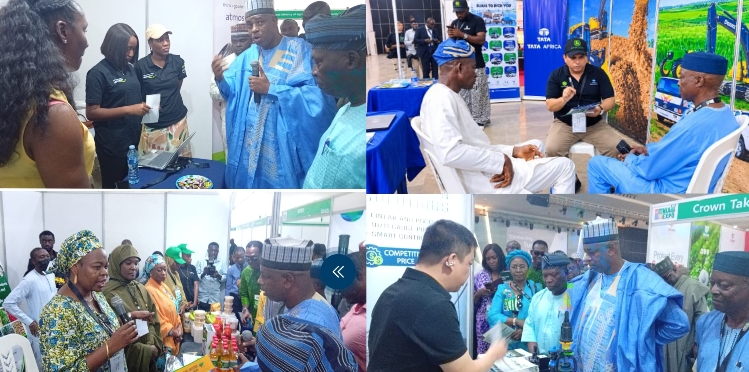
The call featured prominently at the 8th edition of the Nigeria International Agricultural Expo (NIAEXPO) 2026, which commenced on November 17 at the Abuja Trade and Convention Centre, Abuja.
The three-day exhibition, organised by CEMS Tradeshow, is themed, “Transforming Agriculture Through Innovation, Climate Change Resilience, Investment and Global Trade.”
Speaking at the opening ceremony, the Project Lead of CEMS Tradeshow, Mr Yekeen Kazeem, said the expo was conceived as a strategic platform for connecting agricultural stakeholders, investors, policymakers, technology providers and industry experts to stimulate economic growth through agriculture.
Kazeem explained that the exhibition provides opportunities for participants to explore emerging technologies, investment prospects and practical solutions to challenges affecting agricultural production and rural development.
He said the programme features trade and exhibitor presentations, industry discussions, agricultural research and rural development sessions, all aimed at promoting knowledge exchange and strengthening collaboration across the agricultural value chain.
At the exhibition, the Country Director of Tata Africa Services and John Deere Tractors, Mr Bharat Nikam, highlighted the importance of agricultural mechanisation in improving productivity, expanding farming operations and building a sustainable agricultural economy.
Nikam said the company’s over 20 years of operations in Nigeria had focused on developing a sustainable mechanisation ecosystem rather than merely supplying agricultural equipment.
According to him, Tata Africa’s interventions have supported the cultivation of more than 10 million hectares of farmland across Nigeria, with mechanisation initiatives contributing to estimated yield improvements of between 30 and 40 per cent in areas where its equipment has been deployed.
He identified sales, service and spare parts as the three major pillars of the company’s operations, supported by a network of dealers, business partners and Mechanised Service Providers (MSPs) across the country.
“Our belief is that mechanisation is not just about deploying machines. It is about building the nation,” he said.
Nikam added that the company had invested in training farmers, equipment operators, technicians, young people and women, stressing that human capacity development remains essential to maximising the benefits of modern agricultural technology.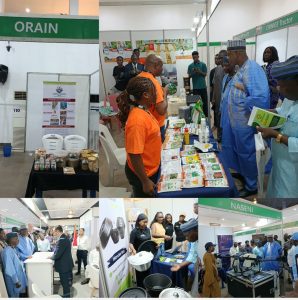
He noted that access to properly maintained tractors and other agricultural machinery would enable farmers to cultivate larger areas within shorter periods, reduce operational difficulties and improve overall farm efficiency.
Meanwhile, the African Food Changemakers (AFC) has identified limited access to business information, inadequate market visibility and poor understanding of export requirements as major obstacles preventing African agricultural entrepreneurs from competing effectively in international markets.
The organisation, represented by its Membership Officer, Mr Nosa Obano, used the expo to showcase its interventions aimed at strengthening African-owned food and agricultural businesses.
Obano said AFC was pursuing an ambitious target of developing one million successful entrepreneurs capable of earning global recognition and competing favourably in international markets.
He explained that the organisation supports entrepreneurs through capacity building, business networking, access to opportunities and the provision of relevant market intelligence to strengthen business decisions.
According to him, Africa possesses enormous agricultural and entrepreneurial potential, but many businesses remain constrained by inadequate visibility, limited market knowledge and insufficient understanding of international trade requirements.
He particularly identified product branding, certification, market-specific regulations and export procedures as critical areas requiring attention by Nigerian agricultural entrepreneurs.
Obano argued that the inability of many locally produced agricultural products to penetrate foreign markets does not necessarily arise from poor product quality, but often from entrepreneurs’ inadequate knowledge of the standards and procedures governing international trade.
He stressed that producing quality agricultural commodities alone does not guarantee access to export markets, noting that businesses must also understand product positioning, packaging, branding and destination-country certification requirements.
Among AFC’s initiatives, he highlighted export development programmes designed to prepare African businesses for international markets, as well as the Leading African Women in Food Fellowship, which equips women entrepreneurs with leadership skills, business networks and opportunities to assume influential positions in the food industry.
He maintained that improving access to market information and strengthening the business capabilities of agricultural entrepreneurs would enable more African-owned enterprises to move beyond local markets and participate meaningfully in global trade.
The discussions at NIAEXPO 2026 underscored the need for a more integrated approach to agricultural development, combining mechanisation, technology, investment, entrepreneurship and export readiness to improve productivity, create employment and strengthen Nigeria’s position in the global agricultural economy.