Nigeria-China Trade: NCBC Challenges Women to Move from Importing to Manufacturing
Maryam Aminu
The Nigeria-China Business Council (NCBC) has challenged Nigerian women entrepreneurs to look beyond the importation of Chinese goods and position themselves to benefit from manufacturing, technology transfer, investment and export opportunities arising from the Nigeria-China bilateral relationship.
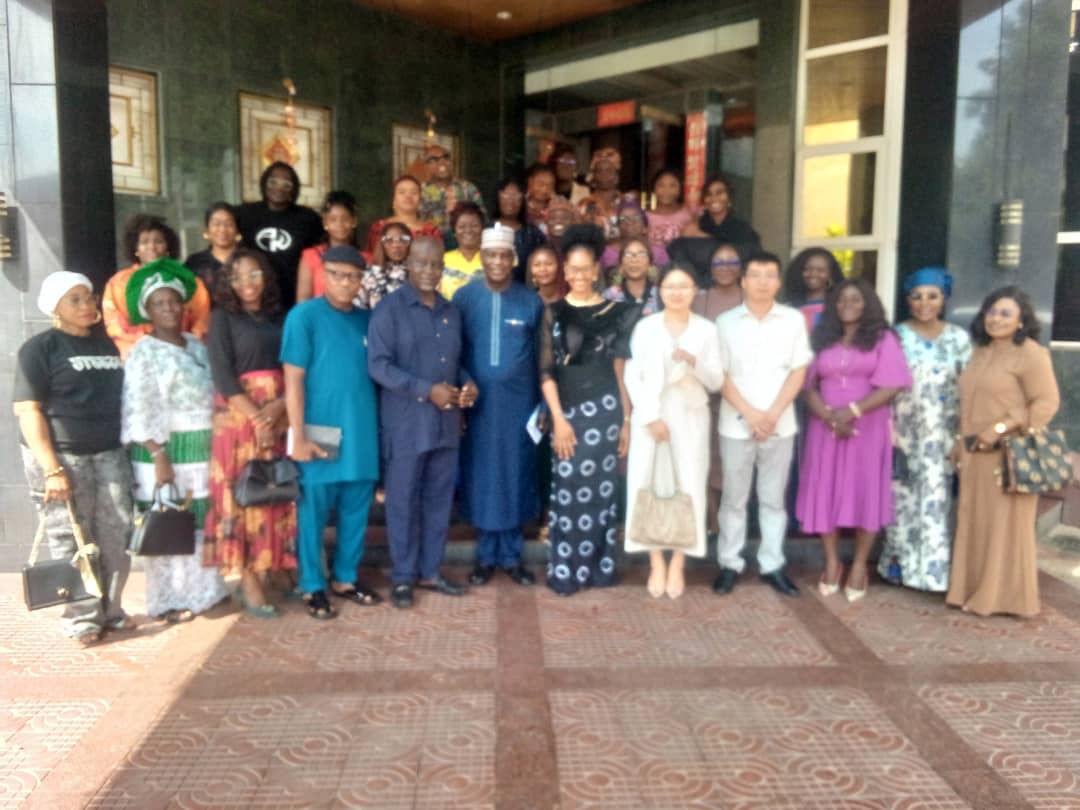
The call was made at the Nigeria-China Women Business Forum organised by the NCBC in collaboration with Women Inspire Africa (WIA Nigeria) in Abuja, with the theme, “The Role of Women and the Benefits of Nigeria-China Bilateral Business Relations.”
Speaking at the forum held at Golden Gate Hotel, Abuja, the Chief Executive Officer of NCBC, Dr Sam Agbi, said the Council was established to deepen commercial ties between Nigeria and China while ensuring that Nigerian businesses derive greater value from the relationship.
Agbi stressed that Nigeria-China economic cooperation should go beyond importing finished products, urging Nigerian entrepreneurs to explore opportunities in local production, assembly, technology transfer, skills development, job creation and investment.
He said the country needed to move “from trade to transformation” by encouraging Chinese companies and investors to establish production and assembly operations in Nigeria.
According to him, NCBC had already facilitated engagements between Nigerian businesses and Chinese investors involving possible equity investments, manufacturing and assembly projects.
Agbi described women as major contributors to Nigeria’s economy, noting their roles in entrepreneurship, business management, market development and family support.
He said the forum was therefore designed to expose women entrepreneurs to financing opportunities, technology, international markets and partnerships that could help them scale their businesses.
Representing the Chairman of NCBC, Chief Jacob Wood, Mr Wang Yingnan advised Nigerian women seeking to establish business relationships with Chinese companies to approach the market with adequate preparation and a strong emphasis on trust.
Wang urged entrepreneurs to conduct proper market research, identify their target customers, compare suppliers, assess product quality and calculate the total cost of transactions, including freight, customs duties and local delivery.
He also advised prospective buyers to verify Chinese business partners, begin with samples or small orders and ensure that contracts clearly define product specifications, quality requirements, prices, payment arrangements and delivery terms.
He identified communication as another critical factor, particularly given language and cultural differences between Nigerian and Chinese businesses.
According to him, entrepreneurs should make use of written specifications, photographs, videos, measurements and product samples to minimise misunderstandings during negotiations.
Wang encouraged Nigerian women to see themselves as equal players in international commerce, stressing that China’s vast business opportunities were not exclusively available to large corporations.
Also speaking, Deputy Director at the Nigerian Investment Promotion Commission (NIPC), Mrs Victoria Aigbedion, said Nigerian women were already active in agriculture, retail, technology and the creative economy but needed to increase their participation in international trade.
She identified agriculture and agro-processing, fashion and cultural products, technology and fintech, manufacturing and textiles as areas with significant potential for partnerships between Nigerian women and Chinese investors.
Aigbedion urged entrepreneurs seeking access to the Chinese market to pay attention to international standards, product certification and regulatory requirements.
She also encouraged women to take advantage of international trade platforms, financial institutions and special economic zones that could facilitate business expansion, manufacturing and exports.
She said the NIPC could support Nigerian businesses through investor matchmaking, capacity building and connections to credible investment opportunities.
Speaking on NCBC Membership & Canton Fair Opportunities, Head of China Desk, Federal Ministry of Industry, Trade & Investment, Mr. Ali Adamu said that there are many opportunities for Nigerian Women entrepreneurs to access Chinese manufacturers, build reliable partnerships, source products competitively and explore investment.
He encouraged businesses, particularly women-owned enterprises, to move beyond importation into manufacturing, technology transfer, export and sustainable Nigeria-China commercial partnerships.
Adamu also underscored the importance of trust in Nigeria-China commercial relations, noting that concerns about payment, credibility and the reliability of business partners could discourage potential transactions.
He disclosed that NCBC had facilitated connections between Nigerian exporters and Chinese buyers, including discussions involving Nigerian cassava products.
A Media and Business Development Practioner, Oru Leonard, advised Nigerian entrepreneurs that physical travel to China was no longer a prerequisite for accessing Chinese markets and business partners.
Leonard said Nigerian businesses could engage foreign customers and partners from within Nigeria by deploying digital platforms and technology.
He urged entrepreneurs to take the initiative rather than depend entirely on government intervention, stressing that credible documentation, professional online profiles and compliance with market standards were essential for winning international business.
He said Nigeria should focus not only on increasing the volume of exports to China but also on exporting processed and value-added products capable of generating greater economic returns.
Leonard encouraged women entrepreneurs to join business networks, form cooperatives where appropriate and utilise international trade platforms such as the Canton Fair to identify buyers, suppliers, investors and technology partners.
He said NCBC could assist Nigerian businesses with registration, documentation, verification of Chinese companies and business matchmaking, adding that the Council had representatives in China capable of supporting due diligence on prospective partners.
He further urged entrepreneurs to explore Chinese technologies and production systems that could be deployed locally to establish manufacturing businesses and reduce dependence on imported finished goods.
Another speaker, Ms Lydia, Manager of Lianxin Company, Abuja, called on women to venture into sectors traditionally regarded as male-dominated, including engineering, construction, energy, mining and infrastructure.
She said competence, professionalism and determination should determine success in business rather than gender, while advocating policies and programmes that would expand women’s access to training, markets and industry opportunities.
Lydia also advised Nigerian entrepreneurs to understand the preferences of local consumers instead of simply importing products designed primarily for the Chinese market.
She said Nigerian entrepreneurs could combine China’s strengths in manufacturing, technology and business operations with their understanding of the Nigerian market to create sustainable and mutually beneficial enterprises.
She further noted that artificial intelligence could assist women entrepreneurs in overcoming some of the challenges associated with international business, including translation, research, data analysis, writing and business planning.
The speakers collectively urged Nigerian women to take a more strategic role in Nigeria-China economic relations by moving from sourcing and importation to production, value addition, export and investment.
They emphasised the need for credible business structures, international standards, effective partnerships and greater utilisation of available financing, technology and market-access platforms.
The forum organised in collaboration with Amb Tina Kenechukwu led Women Inspire Africa (WIA), provided an opportunity for women entrepreneurs and other stakeholders to examine practical strategies for expanding women’s participation in international trade and ensuring that the Nigeria-China bilateral relationship produces greater opportunities for Nigerian businesses.