CITIZEN BOLAJI AKINYEMI: A PROLIFIC WRITER WITH A BOOK EVERY NIGERIAN SHOULD READ THIS OCTOBER
At 60, a nation builder turned his birthday into a national conversation. Now, he is putting a citizen’s handbook for 2027 in our hands.
By Shiloh Akinyemi-OTOIBHI
There are birthdays where you cut a cake, take pictures, dance a little, make speeches, receive gifts and go home grateful for another year. And then there are birthdays that make you stop and ask yourself, “What else can I do with this moment?”
For Citizen Bolaji Akinyemi, turning 60 was the latter.
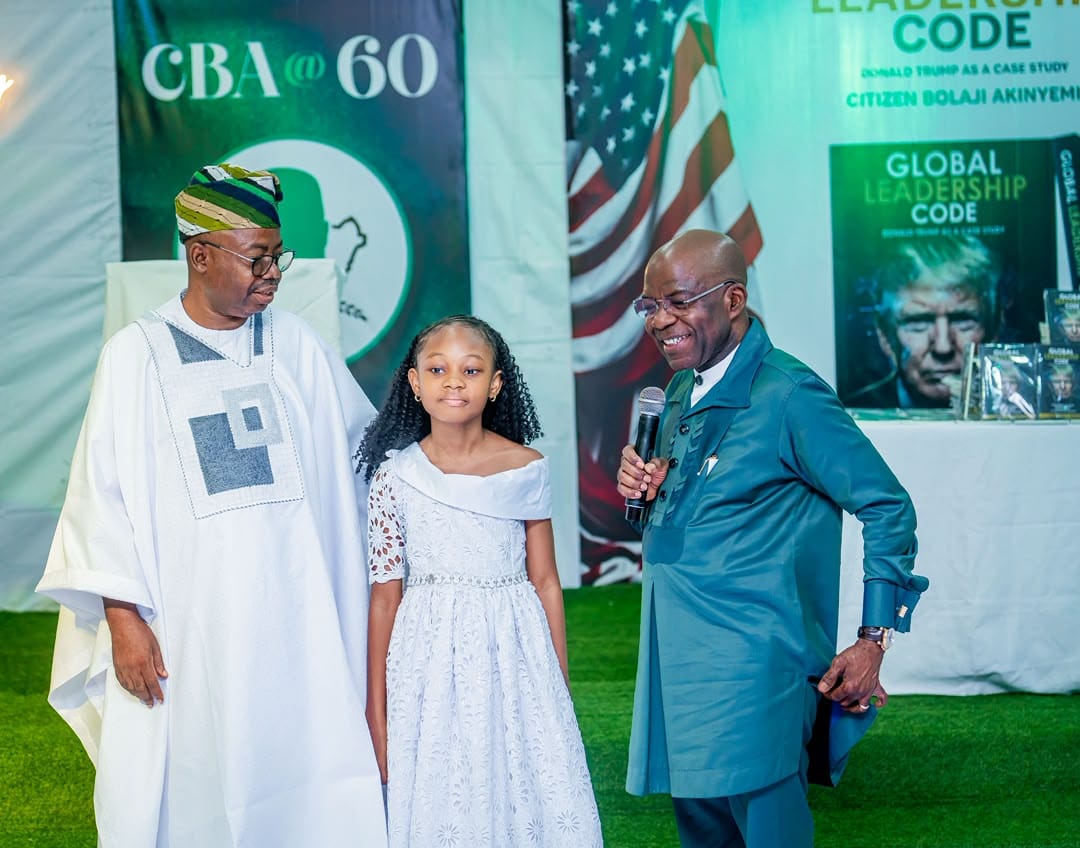
On August 5th, 2026, instead of making his 60th birthday all about himself, he gathered people for a National Citizens’ Conversation. And honestly, if you know CBA, this should not come as a surprise. For a man who has spent years talking, writing and working around leadership, citizenship and nation-building, it was perhaps one of the most fitting ways to mark such a milestone.
He did not just celebrate the years. He used the occasion to ask a bigger question: What kind of Nigeria are we building?
Now, he is taking that conversation a step further with a new book coming out on October 1st, 2026.
THE BOOK
2027 AND BEYOND: OWN THE PROCESS. VOTE FOR VALUE. DEFEND YOUR VOTE. ACTIVATE PERFORMANCE DEMOCRACY
The Citizen’s Handbook for Choosing Leaders, Making Social Contracts, and Defending Your Vote for Legitimate Results.
That is quite a title.
But then again, this is not a small conversation.
Nigeria is heading towards another general election and, as usual, the political machinery is already in full swing. There are candidates, campaigns rolling, promises, defections, political alliances, social media arguments and, of course, plenty of noise.
And if history has taught us anything, Nigerians will have a lot to say before the election—and then, somehow, many of us disappear immediately after it.
That is where this book comes in.
It asks a very simple question: What exactly are we, the citizens, supposed to do?
Are we only supposed to vote, or are we supposed to participate? Are we supposed to pick a party, or should we be asking what the people seeking our votes actually intend to do? And after voting, are we supposed to go home and wait for the next election, or should we be watching, asking questions and demanding results?
CBA’s answer is clear: the citizen has to own the process.
That is where the four words at the heart of this book come in: OWN. VOTE. DEFEND. ACTIVATE.
They are simple enough to remember, but there is a lot packed into them.
OWN THE PROCESS
Let’s start here, because before we talk about voting, we need to remember something many Nigerians seem to have forgotten: democracy belongs to us too.
Politicians are not the owners of democracy. They are people asking citizens to trust them with public office. Somehow, however, we have allowed politics to become this exclusive space where the people with money, connections and political structures seem to have all the power.
This book pushes back against that mindset.
To own the process means knowing how the system works, knowing your rights and understanding what you are voting for. It means paying attention to the candidates, asking questions and participating instead of handing your democratic responsibility over to someone simply because they have a bigger platform, a louder voice or more money to spend.
You are a citizen. Your vote is not a favour you are doing anybody.
VOTE FOR VALUE
This is probably my favourite part of the conversation, because CBA is not writing a book to tell Nigerians which candidate to vote for. Thank God.
Instead, he asks us to ask a better question: What exactly are you voting for?
Are you voting for competence, character, capacity, credibility, vision or results? Are you voting for a realistic plan and a credible social contract? Or are you voting because “na our party”? Because your favourite politician posted a nice video? Because someone gave you money? Because everybody around you is supporting the same person?
The book challenges Nigerians to look beyond the excitement of election season and actually examine the people asking for their votes. What are you promising? How will you do it? What will it cost? When should we expect to see results? And perhaps most importantly, how will we know when you have delivered?
That is a very different way of looking at elections. It moves us away from “my candidate must win” to “the best candidate should earn my vote.”
DEFEND YOUR VOTE
Now, this one is particularly important.
Voting is not the end of our responsibility. What happens to that vote afterwards matters too. But defending your vote does not mean becoming a soldier for your preferred candidate. It does not mean fighting everybody on Twitter because they support someone else, and it certainly does not mean refusing to accept a legitimate loss.
It means protecting the integrity of the electoral process.
If your candidate wins fairly, protect the legitimacy of that victory. If your candidate loses fairly, accept it. And if someone else’s legitimate vote is being threatened, that should concern you too.
Because the goal is not simply, “My candidate must win.” The goal is, “The legitimate choice of the people must prevail.”
There is a big difference.
And in a time when almost everybody has a smartphone capable of recording what is happening around them, citizens have more tools than ever to document, preserve evidence and report what they see—responsibly and within the law. The book does not just tell you to vote; it reminds you that your responsibility does not end when you leave the polling unit.
Perhaps the events surrounding the recent Osun election controversy make this conversation even more urgent. Whatever one’s political leanings may be, the lesson for citizens should be bigger than which candidate or party eventually comes out on top. Elections are only meaningful when citizens can trust that their votes have been properly cast, counted and respected.
The Osun experience is a reminder that citizens cannot afford to be interested in democracy only when their preferred candidate is winning. We must care about the process itself. We must be willing to document, ask questions, seek the facts and defend the integrity of the vote through lawful and responsible means. Because tomorrow, the person whose vote needs defending may not be the candidate you support—it may simply be another Nigerian exercising the same democratic right you expect to enjoy.
ACTIVATE PERFORMANCE DEMOCRACY
And this conversation around Performance Democracy did not happen in isolation. It was significantly stirred by a paper presented by His Excellency, Dr. Alex Otti, Governor of Abia State, which challenged the way we think about democracy and, more importantly, what citizens should expect from those they elect.
That paper opened up an important conversation: democracy cannot simply be about who gets into office; it must also be about what happens when they get there. What does performance look like? What should citizens demand? And how do we begin to measure leadership beyond speeches, promises and election victories?
CBA has taken that conversation and pushed it further, turning an important idea into something ordinary citizens can understand, engage with and ultimately use.
And then we get to the part that, for me, makes this conversation bigger than 2027: what happens after the election?
Because politicians do not stop being politicians when they win, and citizens do not stop being citizens either. The campaign promises should not disappear simply because the election is over. If a candidate told you what they would do, then you should be able to ask: What have you done? What has changed? What is still pending? Why? When should we expect it?
That is the thinking behind Performance Democracy—a democracy where winning an election is not considered the final achievement, where citizens are paying attention to what government actually delivers, and where leadership is measured by performance, not just by how well someone campaigns.
And I think that is a conversation Nigeria desperately needs.
NO, THIS IS NOT A PARTY BOOK
Let me say this clearly because, well, Nigeria.
This is not an AAC book. It is not an Accord book. It is not an ADC book. It is not an APC manual. It is not a Labour Party book. It is not PDP propaganda. It is not an NDC or SDP supporters’ handbook. It is not a campaign document for any candidate.
It is a citizen’s book.
You can vote for whoever you want. That is your right. But the book asks you to make that choice thoughtfully. Know who you are voting for. Know what they are promising. Know what you should expect from them. And after they win, do not disappear.
Stay involved. Watch. Ask questions. Demand accountability.
Because democracy should not be something we remember every four years.
THE MAN BEHIND THE BOOK
Perhaps the reason this book feels like a natural progression for Citizen Bolaji Akinyemi is that this is not a subject he suddenly discovered because 2027 is approaching.
Leadership, citizenship, communication and nation-building have been recurring themes in his work for years. From his early involvement with the Nigeria Fellowship of Evangelical Students (NIFES) to his work in ministry, strategic communication, civic mobilisation and public affairs, CBA has consistently found himself in conversations about leadership and responsibility.
He is the President of Voice of His Word Ministries, Convener of Apostolic Round Table, Founder of Citizen Advancement and Development Initiatives, and Chief Executive Officer of Masterbuilder Communications. Through Project Victory Call Initiatives (PVC-Naija), he has also spent years encouraging Nigerians to move beyond simply talking about politics and become active citizens.
And then there is the writing.
His earlier book, Global Leadership Code: Donald J. Trump as a Case Study, looked at leadership through the lens of one of the most talked-about political figures of our time. This time, however, he brings the conversation home.
Nigeria. 2027. The citizen.
And that shift is significant because this time, the politician is not the main character.
We are.
A 60TH BIRTHDAY THAT WASN’T REALLY ABOUT THE BIRTHDAY
I keep coming back to this because there is something beautiful about celebrating 60 by asking what you can still contribute.
On August 5th 2026, Citizen Bolaji Akinyemi could have simply celebrated his milestone. Instead, he convened a National Citizens’ Conversation.
At 60, he was asking: What conversation should Nigeria be having?
And now, a few months later, he is putting a book behind that conversation.
That is what I find interesting.
It is not just, “Here is another book about Nigerian politics.” It feels more like, “We have talked about the problem. Now, what are citizens going to do?”
And that is a much more uncomfortable question because it puts some responsibility back in our hands.
FROM CONVERSATION TO HANDBOOK
This is perhaps what makes the book different.
CBA does not seem content with simply pointing at what is wrong. The next question is usually, “So what do we do about it?”
And this book attempts to answer that.
It takes the conversation from ideas to action, from political commentary to citizen preparation, and from election-day excitement to what happens after the results are announced.
It gives us four words to carry into 2027.
OWN — take responsibility for your democracy.
VOTE — choose based on value, not just noise.
DEFEND — protect the integrity of your vote and the process.
ACTIVATE — stay involved and demand performance after the election.
CAN THIS REALLY BE A BOOK FOR EVERY NIGERIAN?
Maybe that is a big claim.
But I understand why someone would make it.
Because this is not a book written only for politicians or political analysts. It is for the young Nigerian voting for the first time, the student, the market woman, the professional, the farmer, the artisan, the business owner, the community leader, the journalist, the civil society activist and the religious leader.
It is for the Nigerian who has voted several times and is still wondering, “Why are we not seeing the Nigeria we were promised?”
And perhaps even for the person who has completely given up on elections.
Because if there is one thing this book seems determined to do, it is to remind us that democracy is not something that happens to us.
We are part of it.
A BOOK TO READ BEFORE 2027
Some books tell us what happened. Some explain what is happening. And some ask us to think about what could happen next.
2027 AND BEYOND: OWN THE PROCESS. VOTE FOR VALUE. DEFEND YOUR VOTE. ACTIVATE PERFORMANCE DEMOCRACY wants to be that third kind of book.
But ultimately, its success should not be measured only by how many copies Nigerians buy. I think the real test is what happens after people read it.
Do we start asking candidates better questions? Do we begin to care about their plans and not just their personalities? Do we pay attention after they get into office? Do we remember the promises made during campaign season? Do we begin to see ourselves as participants rather than spectators?
Imagine a Nigeria where citizens ask candidates, “What is your social contract with us?”
And one year later, they are asking, “You promised this. Where are we now?”
Imagine citizens saying, “I am not defending your party. I am defending the integrity of my vote.”
Imagine understanding that Election Day is not the end of democracy.
It is where accountability begins.
That, to me, is the real conversation behind this book.
Citizen Bolaji Akinyemi is not simply writing another book about Nigerian politics. He is asking Nigerians to look at their own place in the democratic process. And perhaps that is exactly the conversation we need before 2027.
The campaigns will come. The promises will come. The candidates will come. The arguments will come. But before all of that, perhaps we should ask ourselves one fundamental question:
ARE WE READY TO OWN OUR DEMOCRACY?
Citizen Bolaji Akinyemi thinks we should be.
And on October 1st, 2026, he will be placing the handbook in our hands.
Now, what we do with it is up to us.
OWN THE PROCESS.
VOTE FOR VALUE.
DEFEND YOUR VOTE.
ACTIVATE PERFORMANCE DEMOCRACY.
2027 AND BEYOND.
A citizen’s handbook for a different kind of Nigerian democracy.
Shiloh Akinyemi-OTOIBHI, popular known as BookChef is the Executive Director Masterbuilder Communications. For sponsorship of the book and other enquiries regarding CBA’s new book. She can be reached through:
WhatsApp: 08172662588
Email: akinshiloh1@gmail.com