WILI Africa Puts Women, Youth At Centre Of Nigeria’s Security Future
Maryam Aminu
The Women in Leadership Initiative (WILI Africa) has called for a broader approach to Nigeria’s national security, arguing that lasting peace will remain elusive if efforts to combat insecurity are not matched by deliberate investments in women, young people, livelihoods and stronger communities.
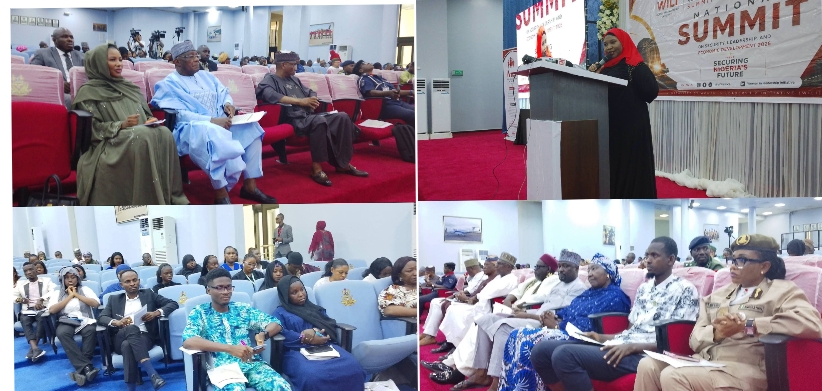
The organisation made the call on Saturday in Abuja at its National Summit on Security, Leadership and Economic Development, themed “Securing Nigeria’s Future,” where it brought together government officials, security stakeholders, political leaders, civil society representatives and development advocates to examine the relationship between security, leadership and economic development.
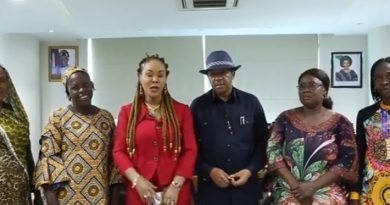
Founder of WILI Africa, Maryam Baba, said Nigeria’s security challenges could no longer be viewed solely through the lens of military operations, insisting that poverty, unemployment, exclusion and weak institutions could create vulnerabilities that criminal and extremist groups exploit.
“If we are serious about securing Nigeria, we must do more than secure our borders. We must secure opportunities. We must secure livelihoods. We must secure education. We must secure justice. And we must secure the dignity of every Nigerian,” Baba said.
She said a young person who could see a future worth living for would be less vulnerable to individuals and groups offering violence as an alternative to hope.
Baba also placed women at the centre of the security conversation, arguing that their experiences within homes and communities give them a critical role in preventing conflict, building resilience and shaping responses to insecurity.
“Women are not merely beneficiaries of security and development policies. Women are indispensable actors in creating them,” she said.
She called for greater participation of women in decision-making, peacebuilding, conflict prevention, community engagement and economic transformation, stressing that Nigeria could not afford to leave a significant part of its leadership capacity underutilised.
The WILI Africa founder also called for greater investment in young Nigerians, particularly through education, skills development, entrepreneurship and access to legitimate economic opportunities.
According to her, empowering young people is not only a development strategy but also an important component of national security, as economic exclusion and hopelessness can increase their vulnerability to criminal and extremist recruitment.
She cited WILI Africa’s community interventions as part of the organisation’s broader approach, including hygiene education, the provision of handwashing facilities and access to clean water in schools during the COVID-19 pandemic, as well as campaigns against child abuse and gender-based violence.
Baba disclosed that the organisation was also advancing plans for a safe-space centre for survivors of abuse and gender-based violence, maintaining that protecting vulnerable citizens and strengthening communities should form part of Nigeria’s security strategy.
The summit also witnessed the unveiling of plans for the proposed WILI Abuja Headquarters, which the organisation said would provide a permanent platform for leadership development, skills acquisition, policy engagement, innovation and community empowerment.
The proposed centre is expected to house an Executive and Policy Centre, Vocational Training Centre, Digital Innovation Hub, Library and Resource Centre, Counselling Units and a Multipurpose Conference Hall.
Baba described the project as a practical expression of WILI Africa’s vision and appealed to government, the private sector, development partners, academia, civil society and traditional institutions to support its realisation.
“We are a women-led organisation. We can do it, but we cannot do it alone,” she said.
The call for a broader security strategy was echoed by government representatives at the summit.
Representing the Secretary to the Government of the Federation, Senator George Akume, the Permanent Secretary, Special Services Office, Aminu Sani Yargaya, described the summit as timely, saying Nigeria’s security and development challenges required renewed hope, innovative leadership and a whole-of-society approach.
Yargaya said security, leadership and economic development were mutually reinforcing, noting that a secure environment provides the foundation for investment and social progress, while inclusive and accountable leadership strengthens institutions and public confidence.
He said the Federal Government, under President Bola Ahmed Tinubu’s Renewed Hope Agenda, remained committed to strengthening national security, promoting economic growth, improving governance and creating opportunities for Nigerians.
He called for active participation from the private sector, civil society, development partners, traditional institutions, academia, women and young people in achieving those objectives.
Representing the Minister of Defence, Christopher Gwabin Musa, the Senior Special Adviser to the Minister, Rear Admiral Olusanya Bankole, said Nigeria’s security architecture must evolve in response to the changing nature of threats confronting the country.
Bankole said modern defence required more than manpower, aircraft, ships, armoured vehicles and weapons, stressing the importance of intelligence, technology, cyber capabilities, resilient institutions and citizen confidence.
While acknowledging the necessity of military force in protecting Nigeria’s sovereignty and confronting threats to the lives of its citizens, he said force alone could not guarantee sustainable peace.
He called for stronger community confidence, protection of vulnerable populations, counter-radicalisation efforts, improved civil-military relations and expanded opportunities for young Nigerians.
According to him, young people with access to education, skills, employment and legitimate opportunities are less vulnerable to groups seeking to exploit poverty and frustration.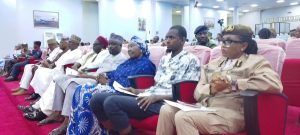
The Minister of Humanitarian Affairs and Poverty Reduction, Bernard Doro, also linked poverty and insecurity, warning that economic deprivation and hopelessness could create fertile ground for criminality and exploitation.
Represented at the summit, Doro said Nigeria’s future would not be secured by the force of arms alone, but also through efforts to confront poverty, equip young people and empower women to lead.
He said the ministry was implementing reforms centred on the One Humanitarian, One Poverty Response System, designed to provide a unified framework for humanitarian response, social protection and poverty reduction.
Doro stressed the importance of coordination, accountability and partnerships to ensure interventions reach vulnerable Nigerians, maintaining that preventing vulnerability before it becomes a crisis is more sustainable than waiting to respond after humanitarian emergencies occur.
The National Chairman of the All Progressives Congress, Professor Nentawe Goshwe Yilwatda, called for stronger community leadership and greater opportunities for women and young people.
He said Nigerian women possess significant resilience, creativity and leadership capacity, but stressed the need to create opportunities for them to contribute more fully to national development.
Yilwatda also identified weak community management as one of the factors contributing to insecurity, noting that residents are often the first to detect emerging threats within their communities.
He therefore called for stronger links between community leaders, residents and security agencies, stressing that security agencies cannot resolve Nigeria’s security challenges alone without active participation from citizens and community institutions.