Nigeria Targets Global Investment in Creative Economy Ahead of CANEX 2026
Oru Leonard
The Federal Government has called for increased international investment, stronger partnerships and improved access to global markets for Africa’s creative industries, describing the sector as a major driver of economic diversification, job creation and continental integration.
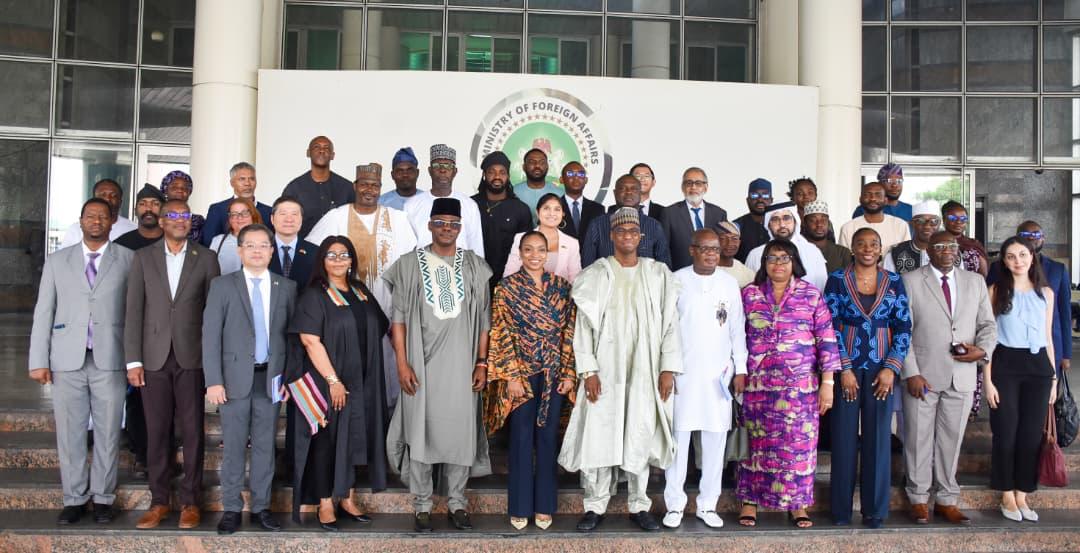
The call was made during a diplomatic briefing organised by the Ministry of Foreign Affairs in collaboration with the Federal Ministry of Industry, Trade and Investment on Friday, October 16, 2026, to prepare diplomatic missions for the forthcoming Creative Africa Nexus Weekend (CANEX WKND) 2026.
The event is scheduled to hold from November 5 to 8, 2026, at the Wole Soyinka Centre for Culture and Creative Arts, National Theatre Complex, Lagos.
Speaking on behalf of the Minister of Foreign Affairs, Ambassador Bianca Odumegwu-Ojukwu, the ministry’s Permanent Secretary, Ambassador Dunoma Umar Ahmed, said cultural diplomacy remained a vital instrument for strengthening international relations, promoting Nigeria’s cultural identity and converting cultural assets into economic opportunities.
Ahmed noted that Africa’s creative industries, including film, music, fashion, literature, visual arts, digital content and sports, had grown beyond their traditional cultural roles to become significant contributors to innovation, employment and economic growth.
He cited the international success of Nollywood and Afrobeats as evidence of Nigeria’s capacity to project African creativity globally while generating economic value.
However, he identified limited access to finance, inadequate intellectual property protection, skills gaps and restricted access to international markets as challenges requiring coordinated action.
The permanent secretary urged diplomatic missions to support four priority areas of CANEX WKND 2026: facilitating investment through the CANEX Deal Room and Finance Summit; attracting international buyers, distributors and cultural institutions; promoting strategic partnerships in co-production, creative residencies and technology transfer; and strengthening cultural diplomacy to connect Africa’s heritage with emerging commercial opportunities.
He added that the initiative would advance the objectives of the African Continental Free Trade Area (AfCFTA) by facilitating cross-border trade in creative goods and services, expanding market access and strengthening Africa’s participation in the global creative economy.
Ahmed also linked the initiative to President Bola Ahmed Tinubu’s Renewed Hope Agenda, particularly its emphasis on economic diversification, employment generation and the development of Nigeria’s cultural and creative assets.
In her remarks, the Minister of Industry, Trade and Investment, Dr Jumoke Oduwole, described CANEX WKND as a strategic platform for connecting African creative talents with investors, financiers, buyers and commercial partners.
She explained that the initiative was led by the African Export-Import Bank (Afreximbank), in partnership with the African Union Commission, the AfCFTA Secretariat and the Federal Government of Nigeria.
According to her, the platform seeks to unlock the economic potential of Africa’s creative and cultural industries through financing, investment, trade promotion, capacity development and improved access to international markets.
Oduwole disclosed that Nigeria’s successful bids to host CANEX WKND 2026 and the Intra-African Trade Fair (IATF) 2027 formed part of broader efforts to position the country as a leading destination for major continental trade, investment and creative economy engagements.
She also highlighted the CANEX Deal Room as an important avenue for connecting creative entrepreneurs with financiers and exploring funding and investment opportunities.
Citing the 2024 edition of CANEX WKND in Algiers, Algeria, the minister said the event attracted more than 4,000 participants from 81 countries and facilitated deals valued at over $540 million.
She said Nigeria intended to build on that achievement by linking local creative enterprises with international markets, strengthening intellectual property protection, expanding exports and creating sustainable employment opportunities.
The diplomatic briefing emphasised the role of international cooperation in mobilising investors, financial institutions, cultural organisations and creative professionals to support the development of Nigeria’s creative economy.
It also highlighted the potential of cultural diplomacy to advance Nigeria’s economic interests, deepen African integration and strengthen the continent’s position in the global creative marketplace.