Nigeria Pushes to Rebuild Ties With Sahel States, Proposes Development Compact
Oru Leonard
Nigeria has renewed its call for stronger diplomatic engagement with Burkina Faso, Mali and Niger, saying improved relations with the three Sahel countries are essential to regional security, economic integration and sustainable development.
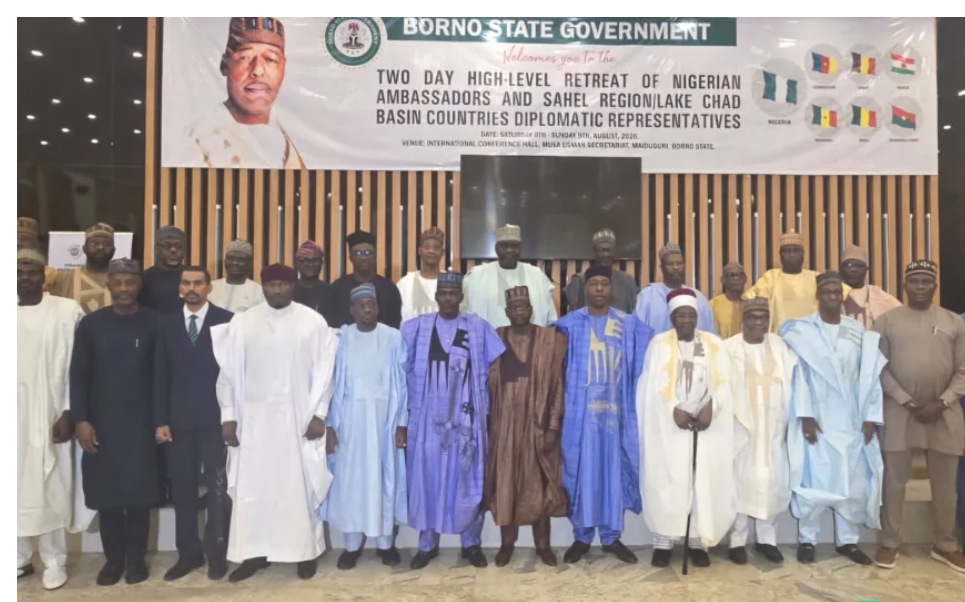
The Minister of State for Foreign Affairs, Ambassador Sola Enikanolaiye, made the call on Saturday in Maiduguri, Borno State, while opening a two-day high-level retreat involving Nigerian ambassadors and diplomatic representatives from the Sahel and Lake Chad Basin countries.
The retreat, themed “Strengthening Nigeria’s Engagement with the Sahel and Lake Chad Basin Countries: Towards Peace, Security and Sustainable Regional Development,” is aimed at reviewing Nigeria’s regional diplomatic strategy amid changing political, security and economic realities.
Enikanolaiye said Nigeria must “mend fences” with the Alliance of Sahel States (AES), comprising Burkina Faso, Mali and Niger, stressing that developments in neighbouring countries have direct consequences for Nigeria.
He said, “What happens in Niamey affects Maiduguri. What happens in N’Djamena influences Borno,” adding that developments in Bamako, Ouagadougou, Nouakchott and Yaoundé could significantly affect Nigeria’s security, economy and regional diplomacy.
According to him, Nigeria’s ties with the Sahel and Lake Chad Basin are built on centuries of shared history, trade, culture, religion, language and family connections, which should be used to rebuild trust and deepen regional cooperation.
The Minister listed terrorism, violent extremism, organised transnational crime, irregular migration, climate change, environmental degradation, humanitarian crises and geopolitical competition among the major challenges facing the region.
He argued that such challenges could not be effectively addressed by individual countries, stressing the need for coordinated regional action driven by diplomacy and collective responsibility.
As part of the renewed engagement, Enikanolaiye disclosed that the Ministry of Foreign Affairs had proposed a Sahel Development Compact aimed at moving the region from a predominantly crisis-response approach towards sustainable development.
The proposed compact would focus on infrastructure, agriculture, trade, transport connectivity, energy, education, climate resilience, water management, humanitarian assistance and human capital development.
Enikanolaiye also stressed that military action alone could not guarantee lasting peace, saying sustainable security must be supported by economic opportunities, social justice and inclusive growth, particularly for young people.
On the Lake Chad Basin, the Minister called for urgent efforts to restore the shrinking lake, describing its revival as crucial to the security, environment and livelihoods of millions of people across the region.
He urged stakeholders to move beyond discussions over the feasibility and environmental implications of the proposed restoration project and begin mobilising the more than $50 billion required for its implementation.
He further called for renewed commitment to the Multinational Joint Task Force (MNJTF) as part of efforts to strengthen the collective fight against terrorism and other security threats in the Lake Chad Basin.
The Minister described Maiduguri as an appropriate venue for the retreat, noting that the city had evolved from being associated with insecurity to becoming a symbol of resilience, recovery and renewed hope.
He said the retreat would produce the Maiduguri Roadmap for Nigeria’s Continued Engagement with the Sahel and Lake Chad Basin Countries, which would guide future political, security, economic and humanitarian cooperation.
The roadmap is expected to provide for sustained political dialogue, stronger security cooperation, economic integration and people-to-people relations, as well as regular high-level visits, political consultations, Joint Commission meetings and sectoral working groups.
Earlier, the Permanent Secretary of the Ministry of Foreign Affairs said the retreat provided an opportunity for Nigeria to reassess its engagement with the Sahel and Lake Chad regions in response to emerging geopolitical realities.
He said the formation of the AES and changing democratic dynamics in West and Central Africa required Nigeria to adopt renewed diplomatic strategies and innovative approaches to regional cooperation.
Participants are expected to deliberate on regional security and intelligence cooperation, trade facilitation, infrastructure and transport development, agriculture and food security, climate resilience, humanitarian response, youth empowerment and diplomatic confidence-building.
The retreat brings together Nigerian ambassadors and heads of mission, representatives of Sahel countries, the ECOWAS Commission, Lake Chad Basin Commission and MNJTF, alongside senior government officials, security agencies, development partners, humanitarian organisations, academics and private-sector representatives.
The Permanent Secretary commended the Ministry’s Planning, Research and Statistics Department and African Affairs Department, the Borno State Government and other partner institutions for their roles in organising the retreat.