Humanitarian Minister Reaffirms Support for National Farm Cities Project for Persons with Disabilities
Oru Leonard
The Honourable Minister of Humanitarian Affairs and Poverty Reduction, Dr. Bernard M. Doro, has reaffirmed the Federal Government’s commitment to the full operationalisation of the proposed National Farm Cities Project, describing it as a strategic initiative to promote inclusive development, reduce poverty, and improve the livelihoods of persons with disabilities across Nigeria.
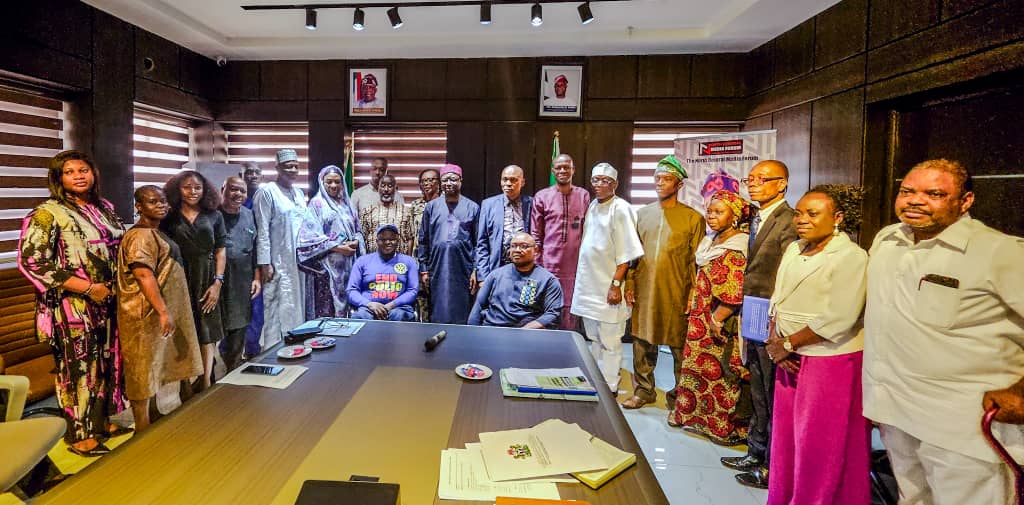
Dr. Doro gave the assurance while receiving the Executive Secretary of the National Commission for Persons with Disabilities, Mr. Ayuba Burki, alongside officials of the Commission and representatives of the Peace for Humanity Foundation, during a courtesy visit to his office in Abuja.
During the meeting, the Minister received a Memorandum of Understanding (MoU) between the National Commission for Persons with Disabilities (NCPWD) and the Peace for Humanity Foundation on the proposed project. He commended the initiative, noting that the document would be carefully studied and reviewed to ensure its successful implementation in line with President Bola Ahmed Tinubu’s Renewed Hope Agenda.
According to Dr. Doro, the National Farm Cities Project has the potential to become a national model for disability inclusion and sustainable development, ensuring that no one is left behind in Nigeria’s economic transformation.
Earlier, Mr. Burki explained that the delegation visited to formally present the MoU and brief the Minister on the objectives of the proposed project, which is designed to empower persons with disabilities through agriculture, skills development, employment, and economic inclusion.
He disclosed that about ₦70 billion has been proposed for the implementation of the project, with funding expected from government budgetary allocations, donor partners, the private sector, and internally generated revenue (IGR) of the Commission.
The NCPWD Executive Secretary noted that Nigeria has more than 35 million persons with disabilities, many of whom—particularly women and children—face high levels of unemployment and poverty.
He added that the National Farm Cities Project is planned for implementation across the country’s six geopolitical zones and the Federal Capital Territory (FCT), with the goal of creating sustainable opportunities and improving the quality of life for persons with disabilities.
The initiative is expected to strengthen the Federal Government’s efforts toward inclusive growth, poverty reduction, and social protection for vulnerable Nigerians.