NCAA Unions Call for Commercialisation or Privatisation of NAMA to Modernise
Oru Leonard
Nigeria’s Air Navigation Services
The Joint Action Committee of the Nigeria Civil Aviation Authority (NCAA) has called for the commercialisation or privatisation of the Nigerian Airspace Management Agency (NAMA), arguing that the move is essential to modernise Nigeria’s air navigation infrastructure, improve safety, and ensure long-term financial sustainability.
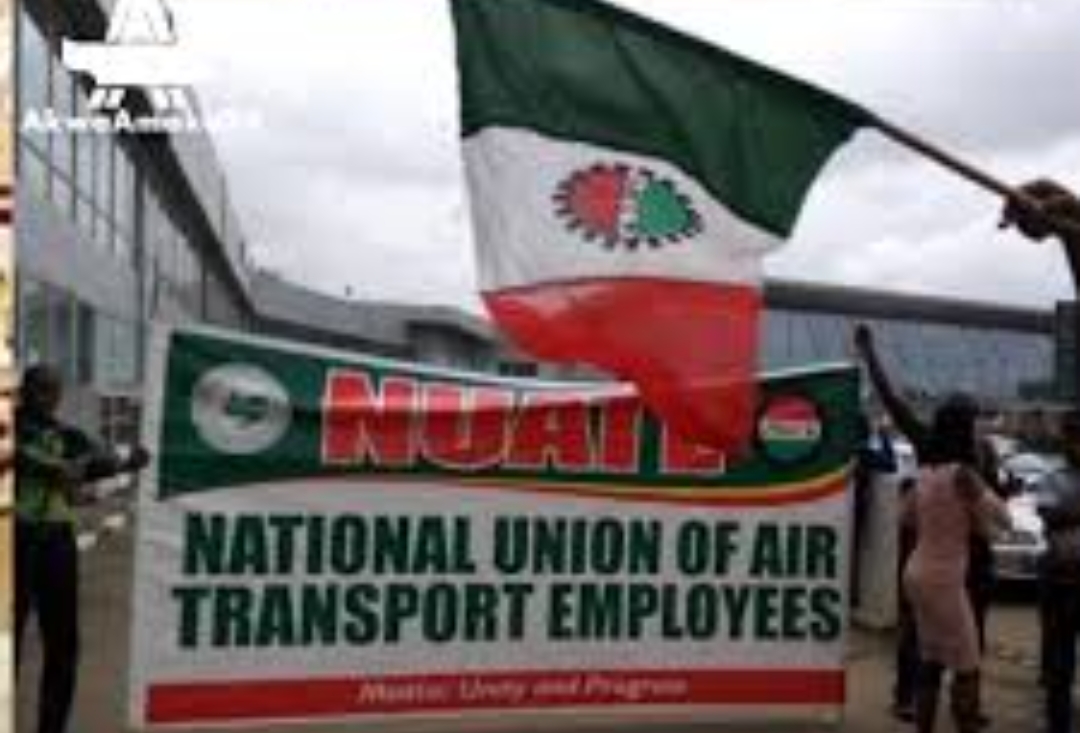
In a joint statement signed by the branch secretaries of the four aviation unions at the NCAA—Air Transport Services Senior Staff Association of Nigeria (ATSSSAN), Association of Nigerian Aviation Professionals (ANAP), National Union of Air Transport Employees (NUATE), and National Association of Aircraft Pilots and Engineers (NAAPE)—the committee said the current funding model for NAMA has become inadequate to meet the demands of a rapidly evolving aviation industry.
The unions noted that NAMA’s heavy dependence on government budgetary allocations and statutory funding has slowed the deployment of critical air navigation technologies due to funding constraints, bureaucratic delays, and changing political priorities.
According to the committee, commercialising or privatising NAMA would enable the agency to access private equity, international financing, capital markets, and bond issuances needed to invest in next-generation technologies, including satellite-based Automatic Dependent Surveillance-Broadcast (ADS-B) systems and modern backup infrastructure.
The unions pointed to successful international models such as Nav Canada, NATS Holdings in the United Kingdom, and Airways New Zealand, which operate under commercial user-pays systems that have delivered financial stability, operational efficiency, and continuous technological advancement.
They also observed that NAMA currently generates significant internally generated revenue from en-route charges, overflight charges, the five per cent Ticket Sales Charge (TSC), and non-navigational services, alongside other income sources including charter flight charges, Air Traffic Services at private and state-owned airports, calibration services, aeronautical telecommunications, obstacle evaluation, aeronautical information sales, aerial operations, and Hajj operations.
However, the committee called for greater transparency in the agency’s financial reporting, particularly regarding revenues from airspace violation fines and Extension of Service Hours charges. It expressed concern over NAMA’s proposal before the National Assembly seeking an increase of between 23 and 40 per cent in the Ticket Sales Charge instead of improving accountability.
The unions stressed that aviation safety requires clear institutional separation between service provision and regulation. They maintained that under a commercialised or privatised structure, NAMA would focus solely on the safe and efficient management of Nigeria’s airspace, while the NCAA would continue as an independent government regulator responsible for oversight, safety audits, and enforcement in line with the Civil Aviation Act and the International Civil Aviation Organization’s Standards and Recommended Practices (SARPs).
They advocated either full privatisation or a carefully structured Public-Private Partnership (PPP) model that would transform NAMA into an independent corporation with private sector participation, measurable performance targets, and safeguards to protect national security while maintaining effective government regulatory oversight.
The committee warned that maintaining the current structure, characterised by ageing infrastructure, funding shortages, and operational inefficiencies, could leave Nigeria behind global aviation standards.
“The status quo characterised by obsolete systems, persistent funding shortages, and operational inefficiencies risks leaving Nigeria behind global aviation standards,” the unions stated.
They added that modernising NAMA through commercialisation or privatisation would provide a pathway to safer skies, modern infrastructure, operational excellence, and improved competitiveness for Nigeria’s aviation industry.
The statement was jointly signed by Obasi Ugwumba (ATSSSAN Branch Secretary), Salami J. Adeniyi (ANAP Branch Secretary), Omaga Joshua (NUATE Branch Secretary), and Celestine N. Chukwu (NAAPE Branch Secretary).