Gbaja, Tinubu and the “Fake” Agency Saga: When Politics Silences Governance
By Citizen Bolaji O. Akinyemi
I would have assumed that the President is disconnected from the realities of the plight of ordinary Nigerians and concluded that articles by citizens like me mean little or nothing to him, until I heard him respond to the question posed in the title of one of my articles: “Who is this Iya Alakara?”
The President’s response was not a private conversation with his wife in the “oza room”, apologies to his predecessor. It was made publicly before invited media practitioners when he introduced the First Lady as “Iya Alakara.”
That moment told me something important: the President hears. He notices. He is aware of conversations in the public space. But he chooses what to address—and what to ignore.
We may assume that once the Presidential spokesperson issues a statement, the President has spoken. No—not on an issue of this magnitude, where the head of the so-called agency hosted diplomats and investors, posed for photographs with senior government officials, and operated openly from the comfort of his alleged “fake” agency office at the Federal Secretariat.
That is precisely why the President’s silence on matters of far greater national consequence has become even more troubling.
Why have Nigerians not heard directly from the President on issues that deserve presidential attention—the Prince Adeyemi Adeniyi Matthew and Rt. Hon. Femi Gbajabiamila saga, and the national embarrassment to which the so-called fake agency controversy has subjected Nigeria?
Recently, Femi Gbajabiamila, while explaining why he did not support Desmond Elliott’s bid to return to the Lagos State House of Assembly, openly disclosed that his position as Chief of Staff to President Bola Ahmed Tinubu was allegedly threatened because of the political crisis surrounding the impeachment of Mudashiru Obasa.
More significantly, he told Nigerians that the President considered the Surulere political crisis important enough to summon him to his private residence for discussions.
Whether one agrees with Gbajabiamila’s position on Surulere politics is beside the point.
The real issue is what that disclosure reveals about the priorities at the highest level of government.
If the Chief of Staff to the President can publicly suggest that political intrigues almost consumed his office, then Nigerians deserve to ask a simple but fundamental question:
Who is governing Nigeria while the political class remains perpetually occupied with managing politics?
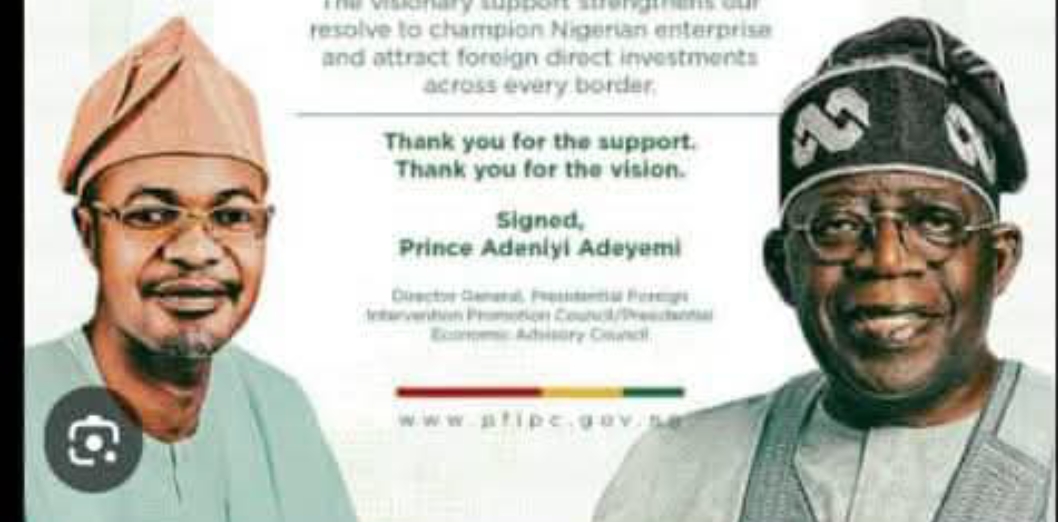
Then came the so-called fake agency saga.
Again, the nation watched another controversy dominate public discourse. Lawyers argued. Political commentators took sides. The media churned out endless analyses. Social media became a courtroom. Government supporters and critics traded accusations.
We are told that Gbajabiamila blew the whistle through a petition reportedly written as far back as October. The obvious question is this: Why was there silence until about three weeks ago, when Prince Adeyemi Adeniyi Matthew publicly presented his own side of the story?
Millions of voices have been heard on the matter.
Yet one voice has remained conspicuously absent.
The President’s
The number steward of our nation that ought to speak authoritatively have remained largely silent. There has been no comprehensive official explanation, no coordinated institutional briefing, no clear timeline of events, and no transparent account of how such an agency allegedly emerged, who approved it, what procedures were followed, or what corrective measures will prevent a recurrence.
That silence is more damaging than the controversy itself.
In every serious democracy, communication is governance.
Leadership is not merely about making decisions. It is about ensuring that citizens understand those decisions and retain confidence in the institutions making them.
When governments allow rumours to compete with facts, rumours usually win.
The real embarrassment, therefore, is not simply whether an agency was genuine or fake.
The greater embarrassment is that Nigerians have been left to depend on speculation instead of official information.
This is not how modern governments operate.
If the matter passed through any ministry, Nigerians deserve to know.
If any department processed the documentation, Nigerians deserve to know
.
If the Office of the Secretary to the Government of the Federation had any role, Nigerians deserve to know.
If the Federal Executive Council considered any aspect of it, Nigerians deserve to know.
If no institution approved it, Nigerians deserve to know precisely how the process failed.
To imagine that the Agency had a budget in the 2026 appropriation bill is the height of this revelation. Which committee of the Senate has oversight of the Agency?
What word can we get from Senator Olamilekan Adeola as the Chairman of the Appropriation Committee on the procedure that privileged the Agency to make it on the budget?
Every institution connected with the matter should issue a formal public account of its role—or lack thereof.
That is how confidence is rebuilt.
Anything less leaves government looking confused.
It is also unfair to innocent public servants whose reputations remain under suspicion because no official process has clarified responsibility.
The impression created by political marketers before the 2023 election was that President Bola Ahmed Tinubu had built his political reputation on organisation, discipline and strategic coordination, with Lagos frequently presented as the evidence of that pedigree.
Those strengths must now be demonstrated in governance—unless they were merely products of political branding.
Politics wins elections.
Governance builds nations.
Nigeria cannot continue operating as though political management is an adequate substitute for institutional leadership.
This episode should become a defining moment.
The President should direct every institution connected with the matter to publish a factual account of its involvement, identify procedural failures, recommend reforms, and implement sanctions where necessary.
Such openness is not a sign of weakness.
It is a demonstration of confidence.
Globally, effective leaders understand that credibility is preserved by confronting controversy early, directly and transparently.
A useful example is President Donald Trump’s handling of the 2025 unrest in Los Angeles. The administration moved swiftly to communicate its position publicly, announcing the deployment of federal forces, explaining the legal authority upon which it relied, and defending its decisions through coordinated White House briefings and official statements. Whether one agreed with the policy or not, there was little uncertainty about where the administration stood or who was accountable for the decisions taken. That clarity is an essential ingredient of effective leadership during moments of national controversy.
That is one of the enduring principles I explore in my forthcoming book, Global Leadership Code: leadership cannot outsource communication during crises. A vacuum of official information is quickly occupied by speculation, and speculation erodes institutional legitimacy.
Nigeria must embrace that code.
The Presidency should not merely react to crises.
It should define the national narrative through truth.
This is bigger than one agency.
It is about restoring confidence in the architecture of governance.
It is about reminding every public institution that silence is not neutrality.
Silence is communication.
And sometimes, silence communicates institutional failure.
Mr. President, this is your mandate! On this, no other person should stand on this for you.
Do I need remind the President of the key commitments in the oath of his mandate, which are:
To be faithful and bear true allegiance to Nigeria.
To discharge the duties of President faithfully and in accordance with the Constitution and the law.
To preserve the Fundamental Objectives and Directive Principles of State Policy.
Not to allow personal interests to influence official decisions.
To preserve, protect, and defend the Constitution.
To abide by the Code of Conduct.
To do right to all people without fear or favour, affection or ill-will.
To maintain the confidentiality of matters of state except as required by duty.
To devote himself to the service and well-being of the people of Nigeria.
Mr President, on the account of your mandate, call every institution to account.
Require every file to be traced.
Publish every stage of the process.
Tell Nigerians exactly what happened.
Where laws were broken, prosecute.
Where procedures failed, reform them.
Where officials erred, discipline them.
Then move the nation forward.
That is how democracies mature.
That is how institutions earn respect.
That is how presidents rise above politics to become statesmen.
Nigeria does not need another cycle of endless opinions.
Nigeria needs official truth.
History will remember not merely that a controversy occurred.
History will remember whether leadership had the courage to confront it with transparency, resolve it with integrity, and restore public confidence in the institutions of the Nigerian state.