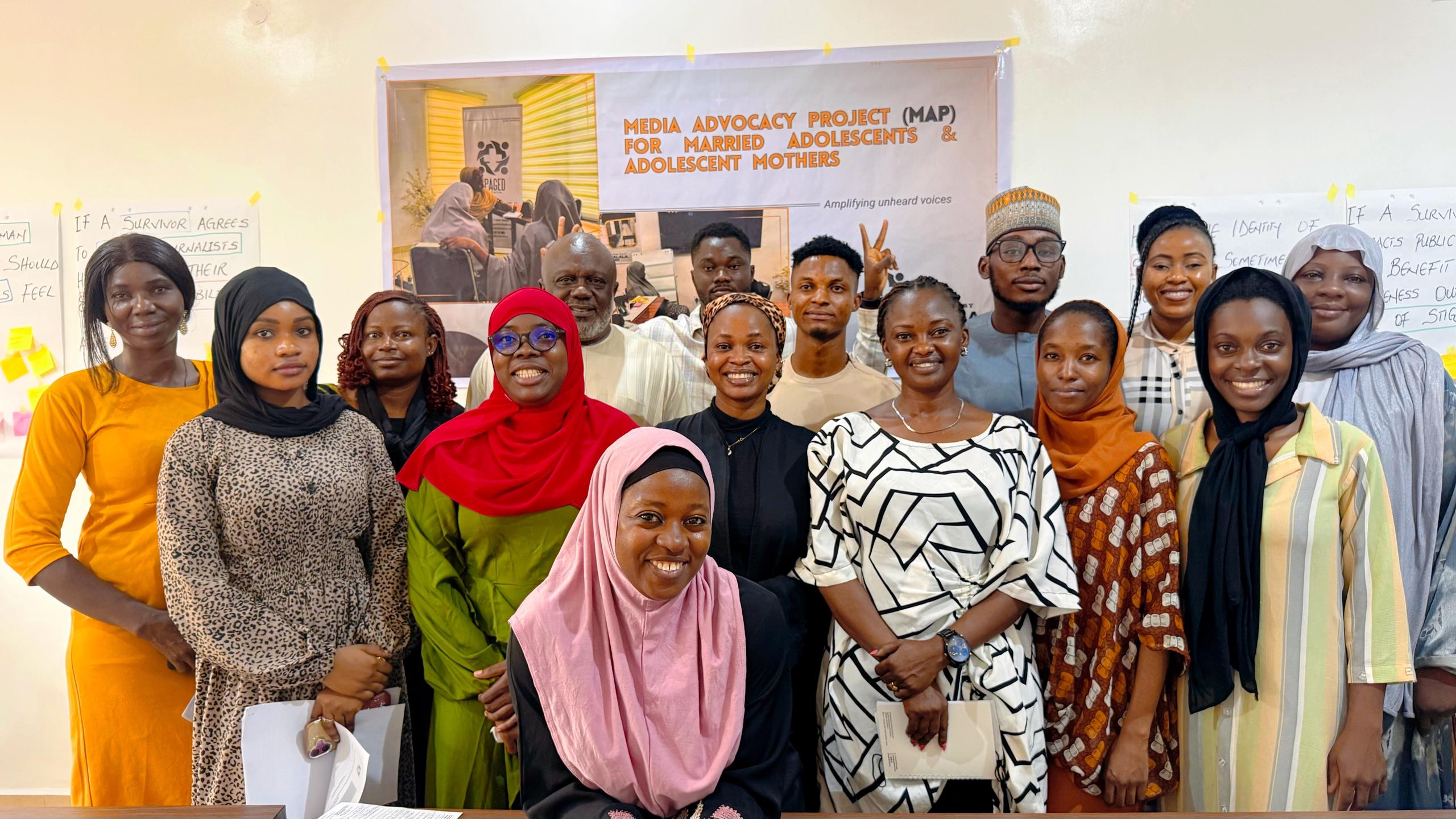
Don’t Let Marriage Bury Girls’ Dreams, PAGED Tells Government
State Correspondent
For thousands of Nigerian girls, marriage is not the beginning of a new chapter it is the abrupt end of an education, the burial of lifelong ambitions and the closing of doors that may never reopen. Seeking to change that narrative, the Participatory Communication for Gender Development Initiative (PAGED Initiative) has urged governments to introduce flexible school re-entry pathways that will allow married adolescent girls and young mothers to reclaim their education without sacrificing their responsibilities as mothers.
The call was made by the Programme Director of PAGED Initiative, Ummi Bukar, during a training for journalists under the Media Advocacy Project for Married Adolescents and Young Mothers in Abuja. She said the organisation is working to ensure that girls whose education was interrupted by child marriage are given a genuine opportunity to return to school through policies that respond to their unique realities.
According to Bukar, the proposed re-entry pathways must go beyond simply reopening school gates. She explained that the education system should be redesigned to accommodate the daily realities of married adolescent girls and young mothers, many of whom combine childcare, domestic responsibilities and, in some cases, income-generating activities with the desire to continue their education.
She advocated flexible learning schedules and other supportive measures that would make it easier for young mothers to remain in school, adding that the establishment of crèches within schools would allow them to attend classes without the anxiety of leaving their children unattended at home.
“Many of these girls genuinely want to continue their education, but the system must meet them where they are. If we expect them to return to school, we must recognise that they are also wives and mothers with responsibilities that cannot simply be ignored,” she said.
Bukar noted that PAGED Initiative is equally advocating the extension of Nigeria’s Universal Basic Education (UBE) programme from the current nine years to 12 years, insisting that every child should complete secondary education before leaving the country’s basic education cycle.
She explained that while child marriage remains a major reason girls leave school, it is not the only challenge.
Poverty, harmful social norms and the expectation that married girls should devote themselves entirely to domestic responsibilities continue to prevent many from returning to the classroom.
“Too many people still believe that once a girl gets married, her education should end. That mindset has denied countless girls the opportunity to fulfil their potential and contribute meaningfully to society,” Bukar said.
She stressed that access to education for married adolescent girls should not depend on the goodwill of parents, husbands or communities, but should be guaranteed through enforceable government policies that protect every girl’s right to learn.
While acknowledging existing legal frameworks such as the Child Rights Act and the Universal Basic Education Act, Bukar expressed concern that implementation remains weak in several states, leaving many girls without the protection those laws were intended to provide.
She, however, described the newly developed National Re-entry Pathways Framework for Married Adolescents and Young Mothers as a major step forward, expressing optimism that it would provide states with a clear roadmap for institutionalising support for girls returning to school.
According to her, Kaduna State has already validated the framework, while Kano State is finalising arrangements for its official launch.
The initiative, supported by the Malala Fund, is bringing together traditional rulers, community leaders, civil society organisations and the media to advocate reforms aimed at removing barriers to girls’ education and changing public attitudes towards child marriage.
Also speaking at the training, the project’s Strategic Communication Consultant, Iliyasu Ibrahim, said the challenge extends far beyond the project’s focus states of Borno, Kano and Kaduna, describing it as a national crisis that demands sustained public attention.
He urged journalists to keep the issue on the front burner by amplifying stories that would encourage policy reforms and greater public support for school re-entry pathways.
“There are girls across Nigeria who left school because of marriage, poverty and other circumstances and never found their way back. Through responsible reporting, the media can help shape conversations that lead to lasting change,” Ibrahim said.
Education experts maintain that helping married adolescent girls and young mothers return to school would deliver far-reaching social and economic benefits, including reducing poverty, improving maternal and child health, increasing women’s participation in the workforce and strengthening national development.
For PAGED Initiative, ensuring that marriage or motherhood does not permanently end a girl’s education is more than an education campaign it is a fight to restore hope, protect the rights of vulnerable girls and ensure that every Nigerian child has the opportunity to fulfil her potential, regardless of the circumstances that interrupted her education.