Nigeria Reaffirms Commitment to attracting Global Investment into Marine and Blue Economy
Oru Leonard
Nigeria has reaffirmed its commitment to attracting global investment into the marine and blue economy, as the Honourable Minister of Marine and Blue Economy, Dr. Adegboyega Oyetola, urged international investors to take advantage of the country’s vast maritime potential during a meeting with senior executives of Citibank in Abuja.
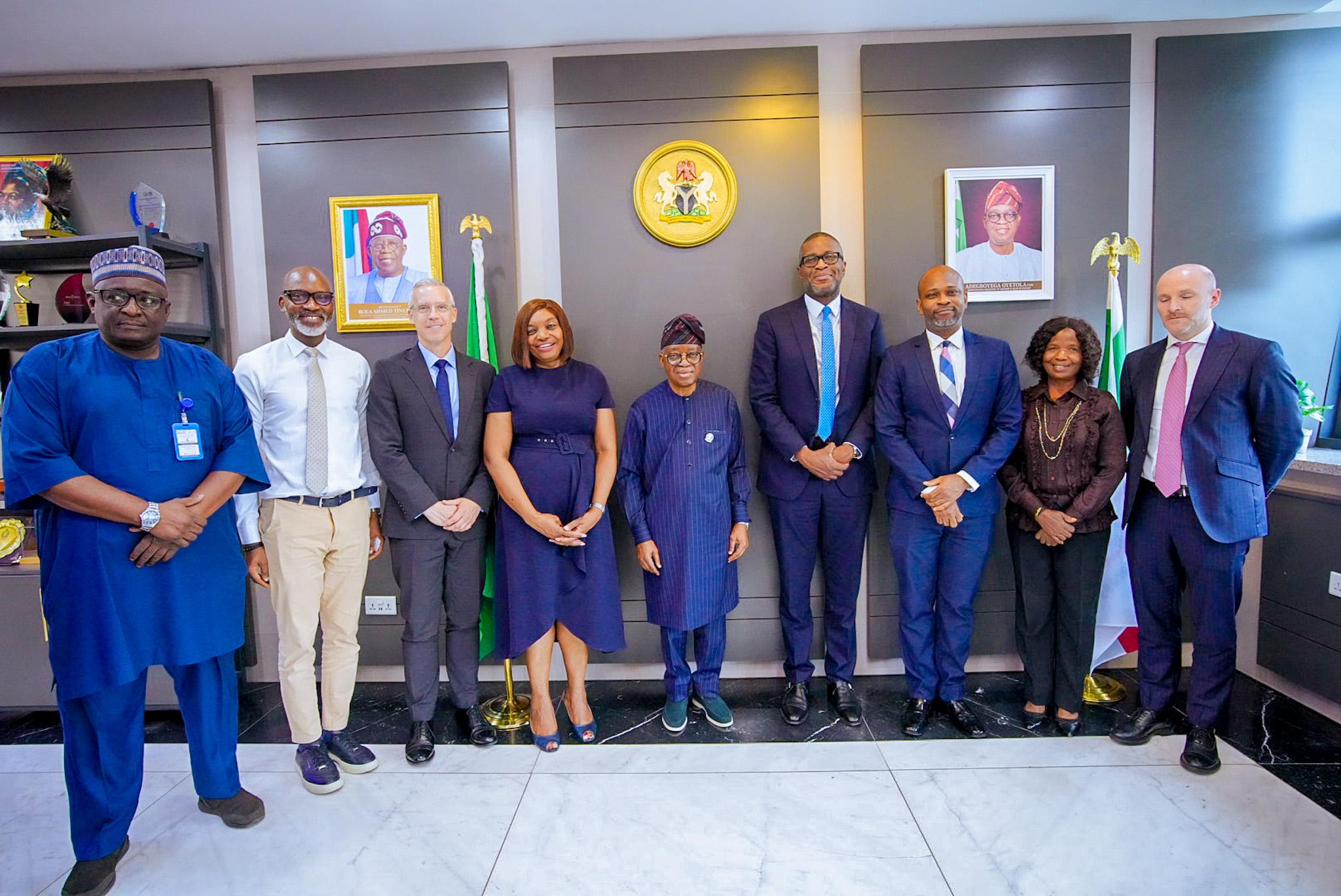
According to a statement issued on Thursday, Anastasia Ogbonna Director, Information & Public Relations, the Minister made the call while receiving a high-level Citibank delegation led by Akin Dawodu, the bank’s Sub-Cluster and Banking Head for Sub-Saharan Africa, alongside the Managing Director of Citibank Nigeria, Nneka Enwereji.
Oyetola said the Federal Government is implementing reforms aimed at transforming the marine and blue economy into a major driver of economic diversification, sustainable growth, job creation and industrial development.
He highlighted Nigeria’s extensive maritime assets, including an 853-kilometre coastline, over 10,000 kilometres of inland waterways and a 200-nautical-mile Exclusive Economic Zone (EEZ), describing them as key investment opportunities across multiple sectors.
The Minister disclosed that rehabilitation contracts have been awarded for the eastern ports of Port Harcourt, Warri and Calabar, while modernisation efforts continue at Apapa and TinCan Island ports.
He also revealed that the government is facilitating the development of at least six deep seaports, including those at Badagry, Ondo, Ibom and Bonny, under Public-Private Partnership (PPP) arrangements. Under the model, state governments will drive commercial investments, while the Federal Government provides the regulatory and licensing framework.
Oyetola identified fisheries, aquaculture and maritime security as priority sectors for investment, noting that Nigeria produces about 1.4 million metric tonnes of fish annually, far below national demand, which exceeds production by about 1.83 million metric tonnes.
According to him, the production gap presents significant opportunities for investment in aquaculture, fish processing, cold-chain logistics and export-oriented fish production.
The Minister also highlighted improvements in Nigeria’s maritime security, attributing nearly four years of piracy-free waters to the success of the Deep Blue Project. He said the achievement contributed to Nigeria’s recent election to Category C of the Council of the International Maritime Organization (IMO).
He encouraged Citibank to explore innovative financing options to support maritime surveillance systems and other critical security infrastructure needed to sustain the country’s maritime safety architecture.
Speaking on behalf of the delegation, Akin Dawodu commended the Ministry’s reform agenda and expressed Citibank’s interest in supporting investment opportunities within Nigeria’s marine and blue economy.
He added that the bank is also interested in strengthening engagement with the Nigerian Maritime Administration and Safety Agency (NIMASA), on major capital projects, building on its recent interactions with leading global maritime stakeholders, including the Mediterranean Shipping Company (MSC).
The meeting reaffirmed the Federal Ministry of Marine and Blue Economy’s commitment to positioning Nigeria as a leading destination for sustainable maritime investment and a hub for blue economy development in Africa.