How Bangladesh Foreign Minister Was Elected President of UN General Assembly After Tight Vote
Oru Leonard
Bangladesh’s Foreign Minister, Khalilur Rahman, has been elected President of the United Nations General Assembly (UNGA) following a closely contested vote that underscored his country’s growing diplomatic influence on the global stage.
Rahman secured victory in a secret-ballot election held on Tuesday, defeating Cyprus’ Ambassador Andreas Kakouris by 99 votes to 91, while three member states abstained from voting. He will assume office in September, succeeding former German Foreign Minister Annalena Baerbock, whose one-year tenure comes to an end.
The presidency of the 193-member General Assembly rotates among regional groups, and the position was allocated to the Asia-Pacific region for the upcoming session.
Although largely ceremonial, the presidency of the General Assembly is regarded as one of the most prestigious positions within the United Nations. The Assembly serves as the principal forum where member states debate global issues, adopt treaties, approve the UN budget, and pass resolutions reflecting international opinion. It also hosts the annual gathering of world leaders each September.
In recent years, the General Assembly has gained increased prominence in addressing major international crises, including the conflicts in Ukraine and Gaza, particularly as divisions among permanent members of the UN Security Council have often prevented decisive action.
Rahman’s election comes just months after he was appointed Foreign Minister by Bangladesh’s new Prime Minister, whose party won a landslide victory in elections held after the 2024 student-led uprising that ended the long rule of former Prime Minister Sheikh Hasina.
Before becoming foreign minister, Rahman served as National Security Adviser in Bangladesh’s interim administration led by Nobel Peace Prize laureate Muhammad Yunus. He also held several diplomatic positions, including ambassadorial assignments.
Congratulating the president-elect, UN Secretary-General Antonio Guterres praised Rahman’s extensive political and diplomatic experience, expressing confidence in his ability to guide the Assembly and contribute to broader United Nations reforms.
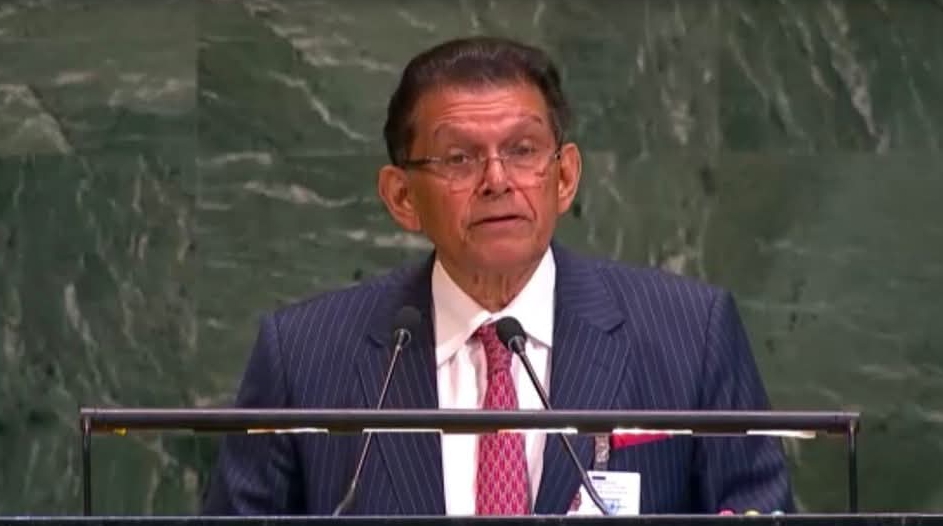
Addressing member states after his election, Rahman described the forthcoming 81st Session of the General Assembly as opening at a “historic crossroads,” warning that confidence in the United Nations is being tested by ongoing conflicts, humanitarian crises, financial constraints, and setbacks in human rights and development.
He highlighted the challenges posed by wars and instability around the world, stressing the need for renewed multilateral cooperation to address global problems. Rahman also acknowledged the UN’s growing financial difficulties, pledging to work closely with member states to confront the organization’s budgetary challenges.
The United Nations is currently facing significant financial pressure, with the United States—traditionally its largest financial contributor—owing billions of dollars in unpaid contributions.
Rahman’s election is widely seen as a diplomatic milestone for Bangladesh and places the country at the center of global discussions on peace, development, international cooperation, and institutional reform over the coming year.