Saudi Arabia Begins 2026 Food Aid Distribution to Support Vulnerable Nigerians
Oru Leonard
The Kingdom of Saudi Arabia has commenced the distribution of food aid to vulnerable populations in Nigeria under its 2026 Food Aid Project, aimed at supporting communities affected by displacement, insecurity, and other humanitarian challenges.
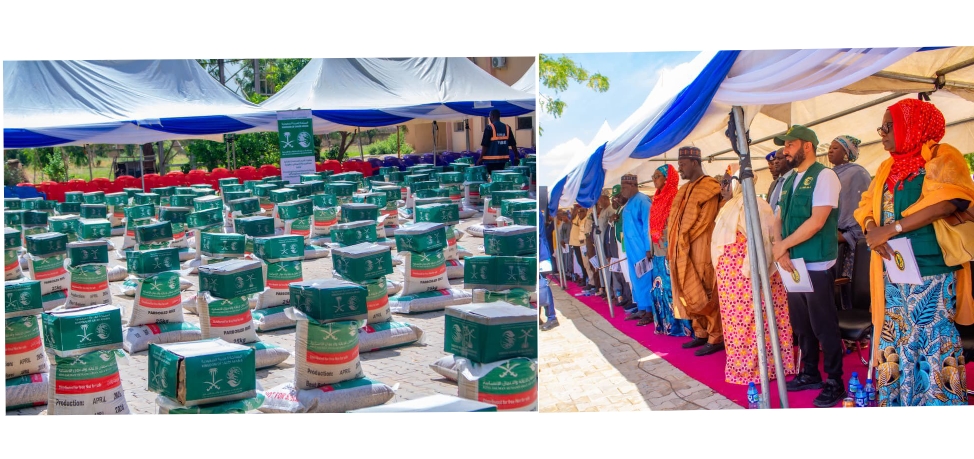
The initiative, implemented through the King Salman Humanitarian Aid and Relief Centre (KSrelief) in partnership with the National Emergency Management Agency (NEMA), was officially flagged off in Damaturu, Yobe State.
Under the programme, 24,302 food baskets weighing approximately 60 kilograms each will be distributed to beneficiaries across five states—Yobe, Benue, Anambra, Kebbi, and Taraba. The food packages contain essential items such as rice, cooking oil, white beans, salt, and other staple commodities.
Valued at more than $1.5 million, the intervention is expected to benefit 145,812 people, providing critical relief to households grappling with food insecurity and the impact of humanitarian crises.
Speaking at the flag-off ceremony, the Director-General of NEMA reaffirmed the agency’s commitment to ensuring the transparent and efficient distribution of the food items to identified beneficiaries in line with its mandate of coordinating disaster response and humanitarian assistance across the country.
The food aid programme highlights Saudi Arabia’s continued commitment to supporting vulnerable populations in Nigeria and the Lake Chad Basin region. Through KSrelief, the Kingdom has consistently provided humanitarian interventions aimed at improving food security and alleviating the suffering of people affected by conflict, displacement, and other emergencies.
The collaboration between NEMA and KSrelief also underscores the importance of international partnerships in addressing humanitarian challenges and strengthening support for communities in need.
The Federal Ministry of Information and National Orientation said the initiative would help ease the burden on thousands of vulnerable families while contributing to ongoing efforts to tackle food insecurity in affected areas.