RMAFC, Interior Ministry Hold High-Level Talks to Boost Investment, Revenue Drive
Oru Leonard
The Revenue Mobilisation Allocation and Fiscal Commission (RMAFC), has intensified efforts to strengthen Nigeria’s revenue base and attract foreign investment, following high-level talks with the Ministry of Interior in Abuja.
Leading the RMAFC delegation,
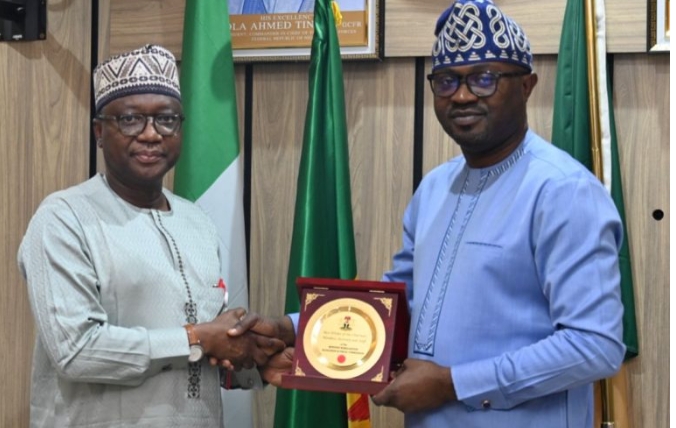
Chairman Mohammed Bello Shehu said the engagement with the Interior Minister, Olubunmi Tunji-Ojo, was aimed at fostering collaboration to enhance investment inflows, improve migration governance, and support national development.
Shehu disclosed that the Commission is planning a strategic oil and gas summit to attract investment into both upstream and downstream sectors, noting that inter-agency cooperation remains critical to achieving sustainable economic growth.
He reiterated the Commission’s constitutional mandate, which includes monitoring revenue accruals into the Federation Account, ensuring lawful disbursement, reviewing revenue allocation formulas, and determining remuneration for public office holders.
“Every legitimate revenue due to the Federation must be properly accounted for and distributed in accordance with the law,” he stated.
The RMAFC chairman also commended agencies under the Ministry of Interior for their support during inter-agency verification exercises, describing the collaboration as vital for accountability and effective governance. He further praised ongoing reforms across immigration, civil defence and related agencies, noting visible improvements in service delivery.
In his response, Tunji-Ojo welcomed the delegation and emphasised the importance of synergy among government institutions.
“Collaboration is the soul of governance. No institution can succeed in isolation, and our doors remain open to every agency committed to national development,” the minister said.
He highlighted the Ministry’s reform agenda, which leverages migration management and immigration processes as tools to drive economic growth, ease of doing business, and boost investor confidence.
According to him, ongoing reforms include digitisation of key processes, simplified visa systems, improved transparency, and reduced bureaucratic bottlenecks to make Nigeria more accessible to investors.
Tunji-Ojo also clarified that while citizenship is strictly governed by the Constitution, investor-friendly residency pathways and lawful long-term stay arrangements can be explored within existing legal frameworks to support economic objectives.
Earlier, Enefe Ekene, Chairman of the Commission’s Investment Monitoring Committee, stressed that attracting foreign direct investment depends on a stable, transparent, and investor-friendly environment. He identified the Ministry of Interior as a key stakeholder in facilitating efficient migration, residency, and business entry systems.
The meeting, attended by senior officials from both institutions including Permanent Secretary Magdalene Ajani, ended with a commitment to deepen cooperation, sustain strategic engagement, and pursue policies aimed at boosting revenue generation, attracting investment, and advancing national development priorities.