PARLIAMENTARY, STAKEHOLDERS ENGAGEMENT ON POWER SECTOR: TCN Affirms Readiness for Increased Output, Calls for Coordinated Reforms
Oru Leonard
The Managing Director and Chief Executive Officer of the Transmission Company of Nigeria (TCN), Engr. Sule Ahmed Abdulaziz, has stated that Nigeria’s transmission network is no longer the major obstacle to improved electricity supply, insisting that the grid has sufficient capacity to transmit significantly more power than is currently being generated.
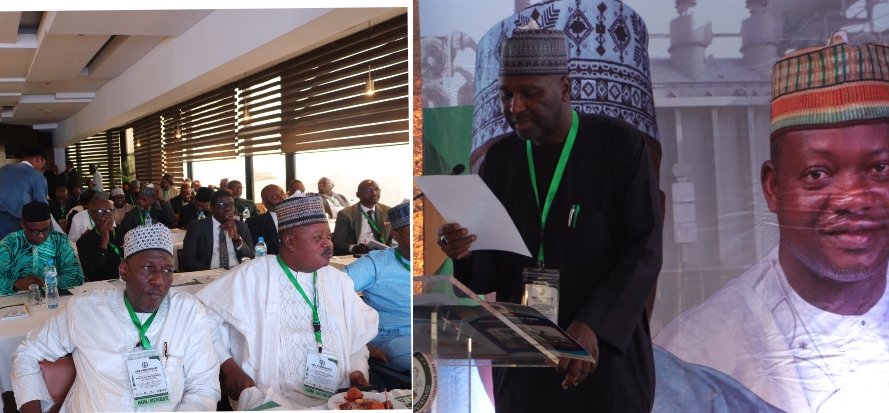
Abdulaziz, represented by the General Manager, Transmission Services, Engr. Ali Sharifai, made the remarks at the ongoing four-day Parliamentary/Stakeholders’ Engagement Summit on Power Sector Reforms in Lagos. The summit brought together lawmakers, regulators, government officials, power sector operators, development partners and other stakeholders to review reforms in Nigeria’s electricity and gas sectors.
In his presentation, the TCN chief described the transmission network as the backbone of Nigeria’s electricity supply industry, linking power generation plants to distribution companies through high-voltage transmission lines and substations. He noted that a strong and reliable transmission system is critical for energy security, efficient power delivery, grid stability and long-term economic development.
Addressing concerns that transmission remains the weakest link in the power value chain, Abdulaziz cited data from the Nigerian Electricity Regulatory Commission (NERC) to demonstrate that the grid can currently handle more electricity than is being produced.
According to him, Nigeria’s installed generation capacity stands at 13,625 megawatts (MW), while the highest power ever generated and delivered to the national grid was 5,801.84MW on March 4, 2025. On the same day, the grid recorded its highest-ever daily energy delivery of 128,370.75 megawatt-hours (MWh).
He explained that TCN’s current wheeling capacity has increased to 8,700MW, meaning the transmission network can transport considerably more electricity than has ever been supplied to it. This, he said, demonstrates that transmission infrastructure is not the primary limitation to increasing power supply in the country.
Highlighting the company’s achievements, Abdulaziz disclosed that TCN has expanded its wheeling capacity from about 7,000MW to 8,700MW through strategic investments supported by the Federal Government and international development partners. The increase represents an additional 1,700MW transmission capability added to the grid.
He also revealed that between January 2024 and November 2025, TCN commissioned 82 transformers across the country, adding approximately 8,500MVA of transformation capacity. Several substations and transmission line projects were also completed, improving network reliability, operational flexibility and redundancy across Nigeria’s geopolitical zones.
Among the major projects completed are the Ihovbor Transmission Improvement Through Transmission Operations (TITO) project on the Benin–Ajaokuta 330kV line and the Bauchi TITO project on the Jos–Bauchi 330kV transmission line.
The TCN boss further disclosed that the company has mobilised more than $1.4 billion in development financing from international partners including the World Bank, African Development Bank (AfDB), Japan International Cooperation Agency (JICA) and the French Development Agency (AFD). These funds are supporting transmission expansion and modernisation projects nationwide.
In addition, TCN is advancing the deployment of a nationwide Supervisory Control and Data Acquisition (SCADA) system to enhance real-time monitoring of the grid, improve fault management and support future smart-grid operations.
Despite these achievements, Abdulaziz acknowledged that the power sector continues to face significant challenges. He identified vandalism and sabotage of transmission infrastructure as major threats that disrupt power supply, increase repair costs and undermine investments. He called for stronger security measures, community cooperation and stricter legal penalties for offenders.
He also highlighted persistent encroachment on transmission rights-of-way, describing it as a serious safety risk that complicates maintenance activities and restricts future expansion projects. He urged government authorities at all levels to work together to protect transmission corridors.
Funding constraints remain another challenge, with foreign exchange pressures and counterpart funding requirements affecting project implementation. Abdulaziz stressed that expanding electricity supply requires coordinated investments across the entire power value chain, including generation, gas supply, transmission and distribution.
He further emphasized the need for a financially sustainable electricity market supported by cost-reflective tariffs, improved revenue collection, stronger payment discipline and a stable regulatory environment that encourages investment.
Reviewing Nigeria’s reform journey, he noted that the sector has witnessed major changes over the last two decades, including the unbundling of the former Power Holding Company of Nigeria (PHCN), the establishment of key institutions and the enactment of the Electricity Act 2023. He said TCN fully supports the implementation of the Act and remains committed to working with stakeholders to improve electricity supply.
The company called on the National Assembly to strengthen legal protection for electricity infrastructure, ensure adequate funding for transmission projects and support policies that promote investment across the entire electricity value chain.
Abdulaziz concluded that Nigeria’s electricity challenges are well understood and can be overcome through political commitment, coordinated action and effective implementation of existing reforms. He reaffirmed TCN’s commitment to building a stronger and more resilient transmission network capable of supporting the nation’s economic growth and development.