NSC Defends Federal Intervention in NPFL, Says Government Support Key to League Growth
Oru Leonard
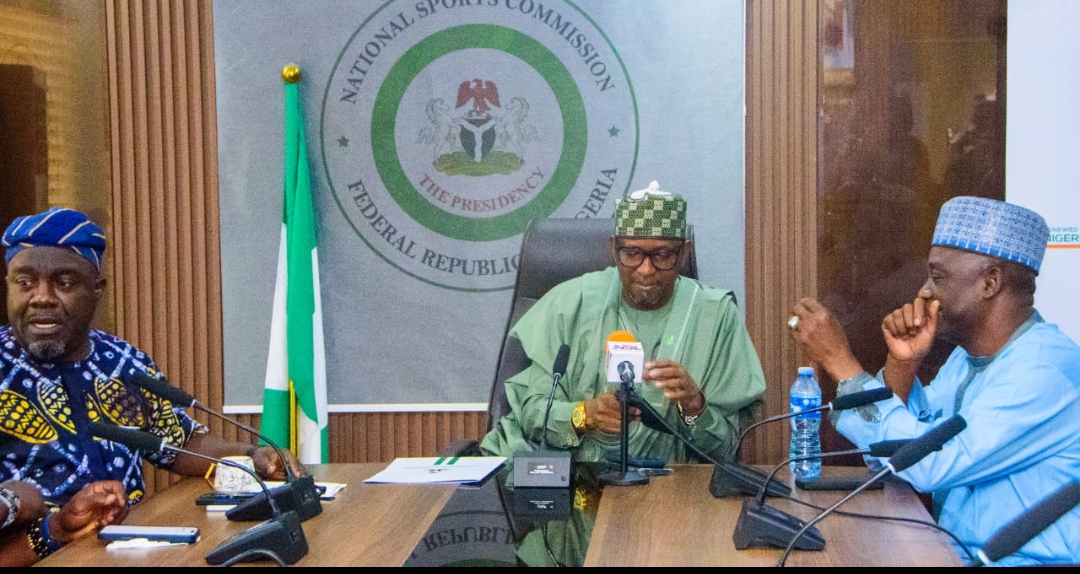
The Chairman of the National Sports Commission (NSC), Mallam Shehu Dikko, has defended the Federal Government’s intervention in the Nigeria Premier Football League (NPFL), insisting that public sector support is essential to reposition the domestic league for sustainable growth.
Speaking amid criticisms over the government’s involvement in the league, Dikko said the intervention was designed to create the right environment for football to thrive, stressing that successful leagues around the world had benefitted from government backing at different stages of their development.
The former Chairman of the League Management Company (LMC) recalled that during his tenure from 2013 to 2022, the league struggled due to a lack of political support.
“We should have been accused of negligence if we failed to do what we are doing, but now we are doing the needful and some people are against it,” Dikko said.
“If I had this type of support from government those days, we would have taken the league to a much higher level. Throughout my time in charge of the league, not one kobo came from government to support it. Instead, some government officials discouraged sponsors from partnering with us.”
According to him, the administration of President Bola Ahmed Tinubu is committed to providing the enabling environment needed for sports to flourish.
“Our assignment as a government is to provide enablers for all sports to succeed. Anywhere we can intervene directly or indirectly, we will do that,” he stated.
Dikko noted that the NSC had already demonstrated its ability to attract private investment into sports, revealing that the Commission secured N5 billion from a single sponsor for the National Sports Festival.
He said the same model could be replicated for the domestic league by introducing innovations that would make it more attractive to investors.
“We have put down N2.5 billion and are pushing towards a N2 million minimum wage. We have to make the product more attractive to investors,” he said, adding that the Commission had also secured commitments from top-tier sponsors to support school sports programmes.
Drawing comparisons with established football leagues, Dikko argued that government intervention was not unique to Nigeria.
He cited examples of government support for the English Premier League, South Africa’s domestic league, and Morocco’s football system, noting that strategic public investment had helped those leagues become commercially successful.
According to him, government investment in the Nigerian league would ultimately boost the economy by creating jobs, improving players’ welfare and generating tax revenues.
Also speaking, NSC Director-General, Hon. Bukola Olopade, expressed confidence in Dikko’s ability to transform the domestic league, given his years of experience in football administration.
“Mallam Dikko did this league for several years, so if there is anyone who should know where the problem lies, he is the one. He should be in a good position to proffer solutions. And we have a President who wants to get this sorted. Where there is a will, there will surely be a way,” Olopade said.
The President of the Nigeria Football Federation (NFF), Ibrahim Gusau, urged stakeholders and the media to support the Federal Government’s efforts to revive the league.
He recalled that in the past, potential sponsorship deals were often frustrated by government officials, saying the current administration’s willingness to support football development should be encouraged rather than criticised.
Chairman of the NPFL Club Owners Association, Sir Okey Kpaluku, also welcomed the intervention, describing government support as critical to attracting private investment.
“You need money to have a successful league. Without the government will, it is very difficult. The private sector can only come in after the government has put in so much. We have to make the league attractive first for investors to come in,” Kpaluku said.
The NSC maintained that its intervention is aimed at strengthening the domestic football league, improving its commercial value and positioning it as a driver of sports development and economic growth in Nigeria.