Nigeria Urges Delivery-Oriented Partnership, Invites Russian Investors at Russia-Africa Summit
Oru Leonard
Nigeria has called for a shift in its partnership with Russia and other African countries from political commitments to practical economic cooperation, measurable results and investment delivery.
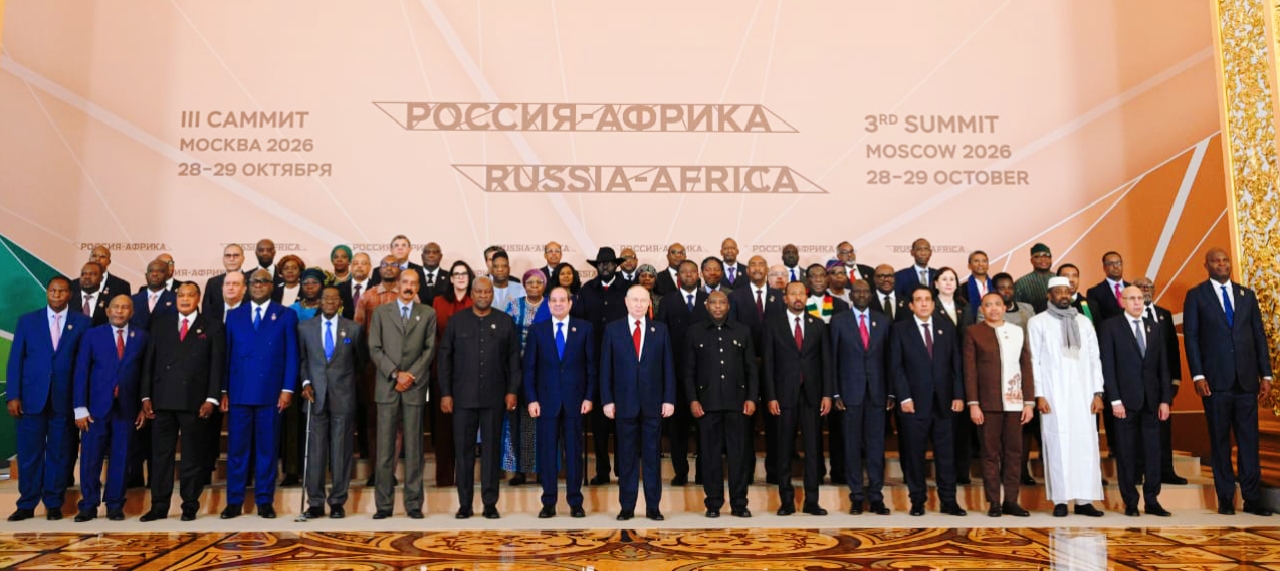
The Minister of State for Foreign Affairs and leader of Nigeria’s delegation to the Third Russia-Africa Summit, Ambassador Sola Enikanolaiye, made the call while delivering Nigeria’s national statement at the Grand Kremlin Palace, Russia.
Enikanolaiye, who conveyed President Bola Ahmed Tinubu’s greetings to Russian President Vladimir Putin and the African Union Chairman, President Evariste Ndayishimiye of Burundi, urged both sides to strengthen economic cooperation through sustainable investment and effective implementation mechanisms.
Addressing trade and investment, the minister identified improved banking channels, payment arrangements and financial infrastructure as critical to removing barriers to doing business between Africa and Russia.
He also emphasised the need for greater private-sector participation, noting that governments alone cannot drive the future of Africa-Russia relations.
On peace and security, Enikanolaiye reaffirmed Nigeria’s commitment to strategic autonomy and African-led solutions, stressing that terrorism, violent extremism, organised crime, arms trafficking, piracy and cybercrime remain major threats to regional stability and development.
He called for stronger international cooperation that would reinforce the capacity of the African Union, ECOWAS and other regional institutions.
The minister also invited Russia to partner with African countries on commercially viable infrastructure projects, particularly in railways, transportation, ports, energy, telecommunications and logistics.
He noted that investments in these sectors would strengthen regional connectivity and advance the objectives of the African Continental Free Trade Area (AfCFTA).
On digital development, Enikanolaiye advocated stronger cooperation in digital infrastructure, cybersecurity, artificial intelligence, software development and joint research, insisting that Africa must not remain merely a consumer in the emerging global digital economy.
He called for technology transfer, capacity building and the development of indigenous African technological capabilities.
The minister further highlighted agriculture and food security as priority areas for cooperation, urging Russia to support Africa through agricultural technology, fertiliser production, irrigation, mechanisation, agro-processing and agricultural research.
According to him, strengthening domestic production, storage and processing capacities would enable African countries to produce more food, retain greater value and build resilient food systems.
Reaffirming Nigeria’s commitment to sovereign equality, territorial integrity, non-interference and peaceful settlement of disputes, Enikanolaiye called for dialogue, diplomacy and respect for international law.
He also reiterated Nigeria’s support for the reform of the United Nations Security Council and the international financial architecture to guarantee Africa’s rightful representation in global decision-making.
On the implementation of summit resolutions, the minister said the success of the Third Russia-Africa Summit should be measured by concrete outcomes rather than declarations.
He therefore expressed Nigeria’s support for a focused Africa-Russia Action Plan for 2027–2029, with clearly defined priorities, financing arrangements and monitoring mechanisms.
Enikanolaiye specifically invited Russian investors to explore opportunities in Nigeria, describing the country as Africa’s largest market and a strategic gateway to West Africa and the AfCFTA.
He identified energy, including renewable and nuclear technology, solid minerals, agriculture, manufacturing, pharmaceuticals, defence and digital services as sectors offering significant investment opportunities.
He also disclosed Nigeria’s interest in deepening independent local-currency settlement arrangements with Russia through mutually agreed systems for cross-border payments.
The minister further expressed Nigeria’s support for a fair multipolar world order, opposing unilateral sanctions and the political manipulation of international trade rules.
He described Russia as a dependable and longstanding partner, recalling its historic support for Nigeria’s unity, sovereignty and territorial integrity since the Soviet era.
Meanwhile, Russian President Vladimir Putin, addressing the plenary session, described Russia and Africa as natural allies in building a just multipolar world order.
Putin reaffirmed Russia’s commitment to sovereign equality, expanded diplomatic engagement, security cooperation and greater African representation in global institutions.
Similarly, the African Union Chairman and co-chair of the summit, President Evariste Ndayishimiye, said Africa would not exchange one form of subordination for another in its international partnerships.
He explained that the 2027–2029 Action Plan would focus on addressing infrastructure gaps through technology transfer and talent development, with the ultimate objective of transforming Africa from an aid recipient into an independent global actor.
Ndayishimiye also identified water security as a major priority of the African Union’s 2026 agenda.
The summit, according to the Nigerian delegation, further consolidated the longstanding friendly relations between Nigeria and Russia while providing opportunities to strengthen economic cooperation, independent development and collaboration on regional and international issues.