India Moves to Bridge BRICS Divisions Ahead of New Delhi Summit
Oru Leonard
India is working to bridge differences among members of the expanded BRICS grouping as preparations intensify for the bloc’s 18th Leaders’ Summit in New Delhi on September 12–13, with negotiations ongoing over a joint declaration.
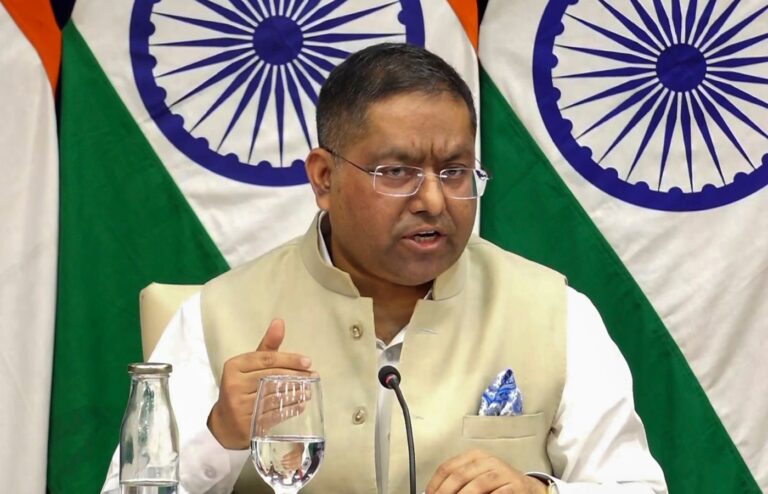
Speaking at a dinner for journalists and content creators in New Delhi ahead of the summit, Randhir Jaiswal, Additional Secretary and spokesperson of India’s Ministry of External Affairs, said India regarded all BRICS members as partners and was committed to bringing them together.
“India is friends with all BRICS member countries. As friends, it is our intention to bring all our partners together,” Jaiswal said.
Asked whether India had undertaken a specific initiative to resolve differences within the grouping, he pointed to the ongoing negotiations on the summit’s joint declaration.
“You will have to wait for the joint statement,” he said. “The joint statement is being negotiated and there you will see how India brings everybody together.”
Jaiswal said discussions were being conducted collectively with all BRICS members but declined to disclose which countries were involved in particular disagreements.
The summit comes as BRICS adjusts to its expanded membership of 11 countries, creating a more complex diplomatic environment and making consensus on sensitive geopolitical issues more challenging.
Under its 2026 chairmanship, India has placed emphasis on resilience, innovation, cooperation and sustainability, while seeking to strengthen development priorities and amplify the voice of the Global South.
The economic agenda includes the proposed BRICS Economic Partnership 2030, initiatives to expand trade in services, strengthen resilient supply chains and improve access to financing for small and medium-sized enterprises.
However, differences among members remain significant.
One area of tension has involved Iran and the United Arab Emirates. During discussions surrounding the BRICS foreign ministers’ meeting in New Delhi in May, the UAE rejected Iranian allegations and defended its sovereignty and right to protect its national security.
India and China also continue to face strategic differences despite recent efforts to stabilise bilateral relations following the 2020 border clashes.
Security, technology and market-access issues remain areas of competition between the two major Asian economies.
Another longstanding dispute involves Egypt and Ethiopia over the Grand Ethiopian Renaissance Dam and the use of Nile waters.
The issue received renewed attention following Chinese President Xi Jinping’s state visit to Egypt on September 1–2. In a joint communiqué issued during the visit, China recognised Egypt’s “legitimate right” to protect its water security, food security and development interests.
The two countries also called on Nile Basin states to comply with international law, including obligations relating to the prevention of harm.
Although the communiqué did not explicitly endorse Egypt’s position against Ethiopia, its reference to Nile-related concerns adds another layer to discussions within BRICS, where China, Egypt and Ethiopia are all members.
Economic differences also remain within the bloc, particularly over the future international financial architecture.
Russia and China have advocated greater use of national currencies and alternatives to traditional international payment systems, reflecting a broader push among some members to reduce dependence on Western-dominated financial structures.
India, meanwhile, has continued to emphasise practical economic cooperation, development, trade and investment while maintaining relationships with both Western economies and members of the expanded BRICS grouping.
Against this backdrop, the joint declaration expected from the New Delhi summit will be closely watched as an indication of how far India can reconcile the bloc’s divergent geopolitical and economic interests.
For the host country, the challenge is not simply to produce a declaration, but to demonstrate that an increasingly diverse BRICS can maintain a common agenda despite competing national priorities.